Closing the wealth gap in Indian Country.
Lab Leadership

Joseph Kunkel
Principal & Director, SNC Design Lab
Joseph Kunkel
Principal & Director, SNC Design Lab — Santa Fe
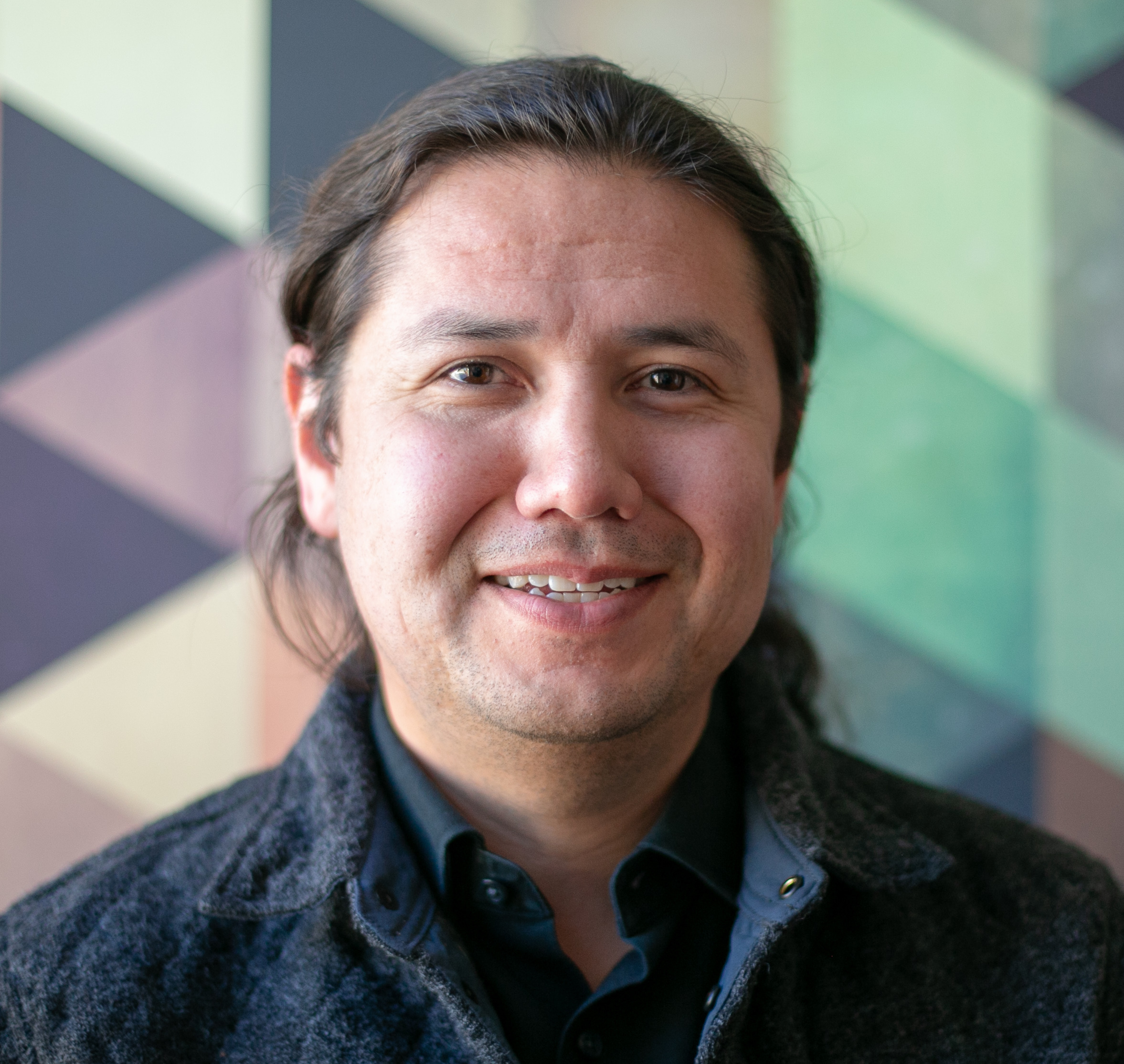
Joseph, a citizen of the Northern Cheyenne Nation, is the Director of MASS's Sustainable Native Communities Design Lab based in Santa Fe, New Mexico. As a community designer and educator, his work explores how architecture, planning, and construction can be leveraged to positively impact the built and unbuilt environments within Indian Country. Joseph’s early work focused on the research of exemplary Native American Indian housing projects and processes nationwide. This research work has developed into emerging best practices within Indian Country, leading to an online Healthy Homes Road Map for affordable tribal housing development, funded by HUD’s Policy, Development, and Research Office.
Joseph’s portfolio includes exemplary Indian housing projects and processes nationwide, including emerging best practices and a web-based “Healthy Homes Road Map” for tribal housing development, funded by the Department of Housing & Urban Developments’ Policy, Development, and Research Office. From 2013-2016 Joseph lead the development of a 41-unit Low-Income-Housing-Tax-Credit development, which started with an Our Town grant funded by the National Endowments for the Arts, and led to an ArtPlace America grant award.
In 2019, Joseph was awarded an Obama Fellowship for his work with Indigenous communities. He also received a 2018 Rauschenberg SEED grant from the Robert Rauschenberg Foundation and a 2019 Creative Capital Award. Joseph is a Fellow of the inaugural class of the Civil Society Fellowship, a partnership of ADL and The Aspen Institute, and a member of the Aspen Global Leadership Network. Most recently, Joseph was awarded the 2021 inaugural Elaine Johnson Coates Award, by the University of Maryland’s Alumni Association.

Nathaniel Corum, RA
Design Director
Nathaniel Corum, RA
Design Director — Santa Fe
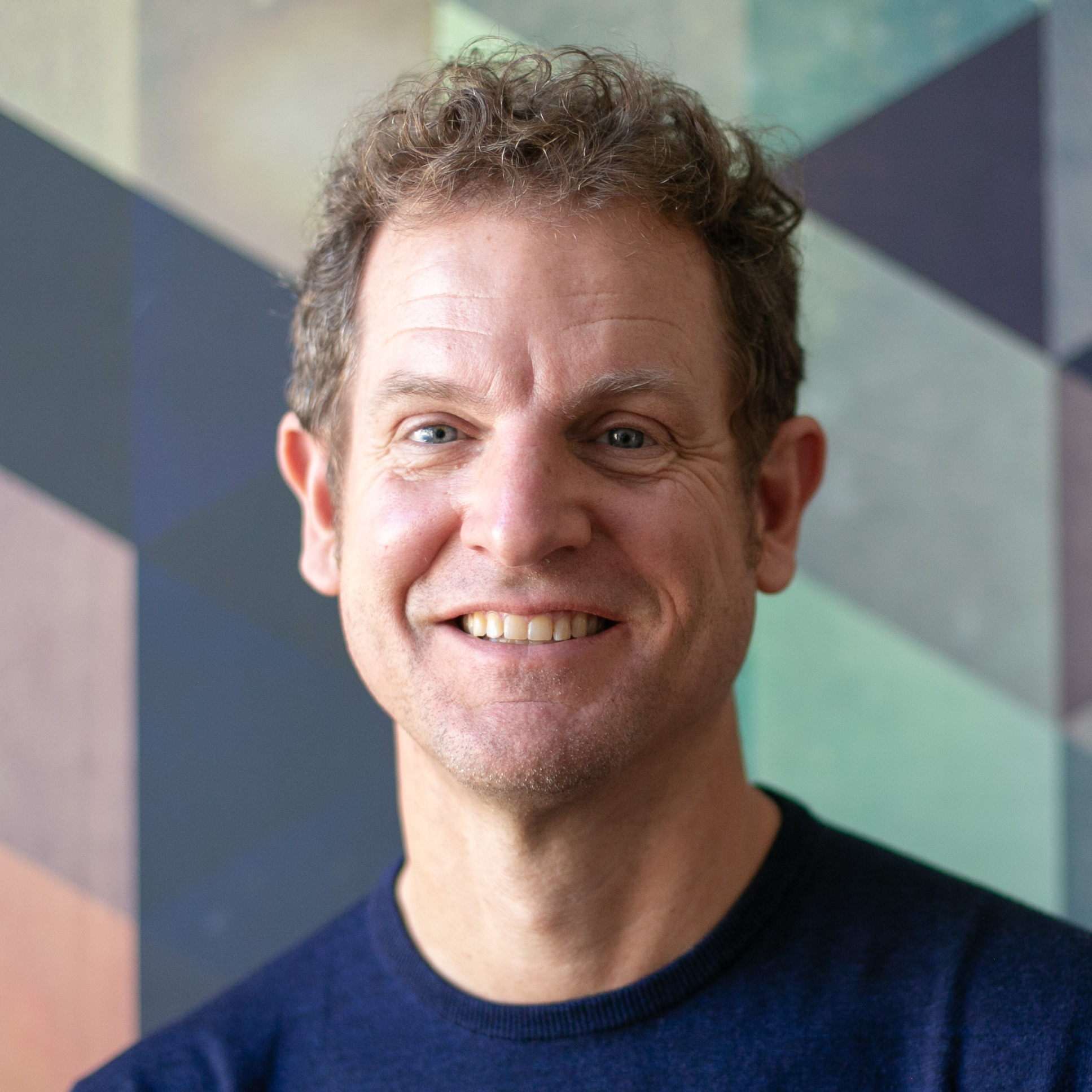
Nathaniel Corum is an architect, planner and a founding member of the Sustainable Native Communities Collaborative. His focus is culturally and environmentally responsive design, with work ranging from the Elder Hogan Homes Initiative, to the Plastiki Expedition cabin, to projects with more than twenty tribal community partners. He has also helped connect over 500 students to real-world design workshops and projects. Corum’s productions and publications include: Native American Green, a PBS episode featuring exemplary indigenous architecture; the Healthy Homes Road Map, an online housing-development tool; and Building a Straw Bale House from Princeton Architectural Press.
Prior to joining MASS, Nathaniel held leadership roles at Sustainable Native Communities Collaborative, Architecture for Humanity, and Indigenous Community Enterprises. A Fulbright Scholarship, a Senior Energy and Climate Partnership of the Americas Fellowship, an Enterprise Rose Architectural Fellowship and a Creative Capital Award have supported Nathaniel’s work, which has been featured in Dwell, Domus and The New York Times and exhibited at venues including SFMOMA, the Museum of Applied Arts in Vienna, and the Perot Museum of Nature and Science.
Nathaniel received a Master of Architecture from the University of Texas at Austin and a Bachelors of Arts in Design Synthesis: Architecture from Stanford University.
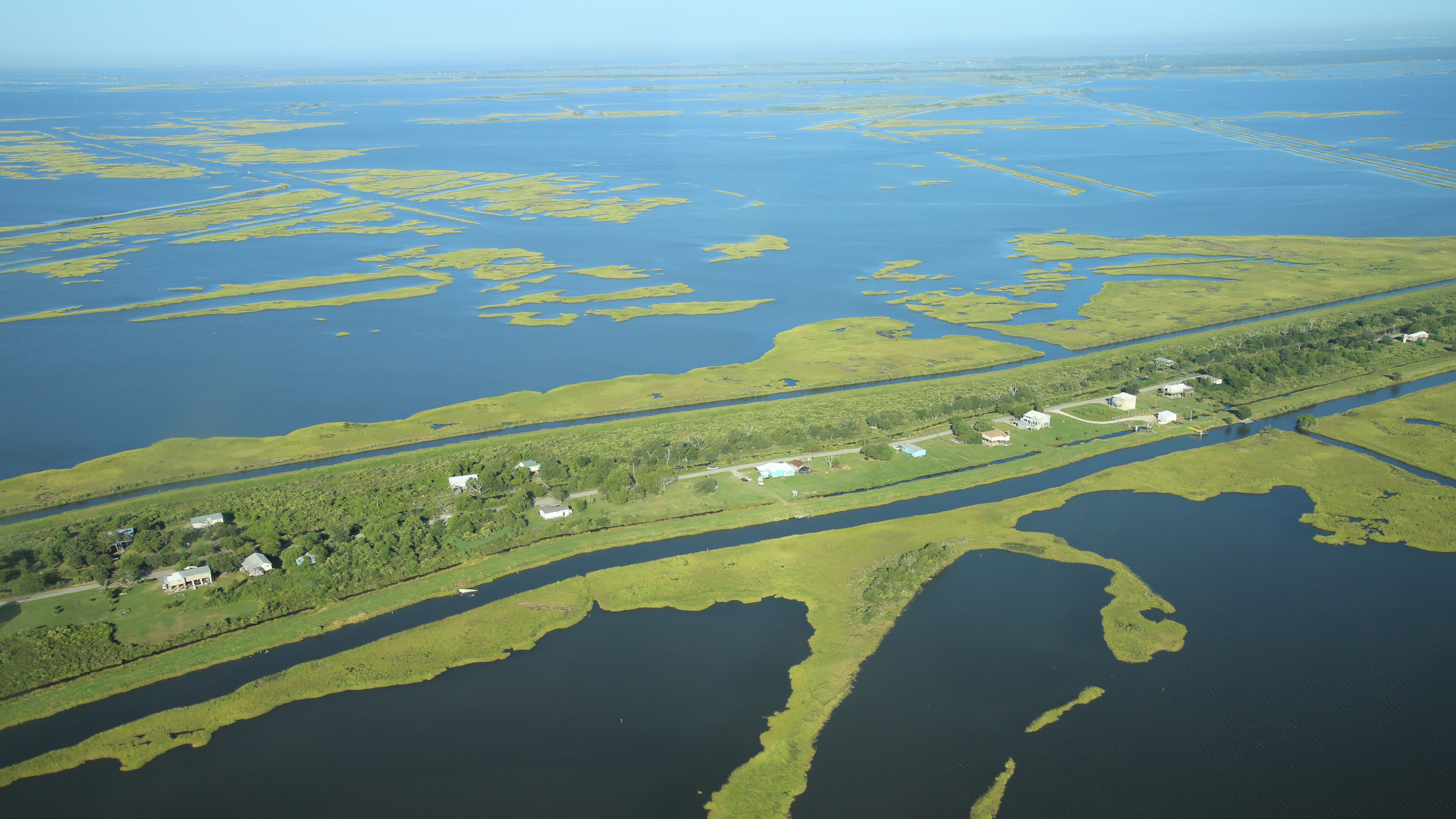
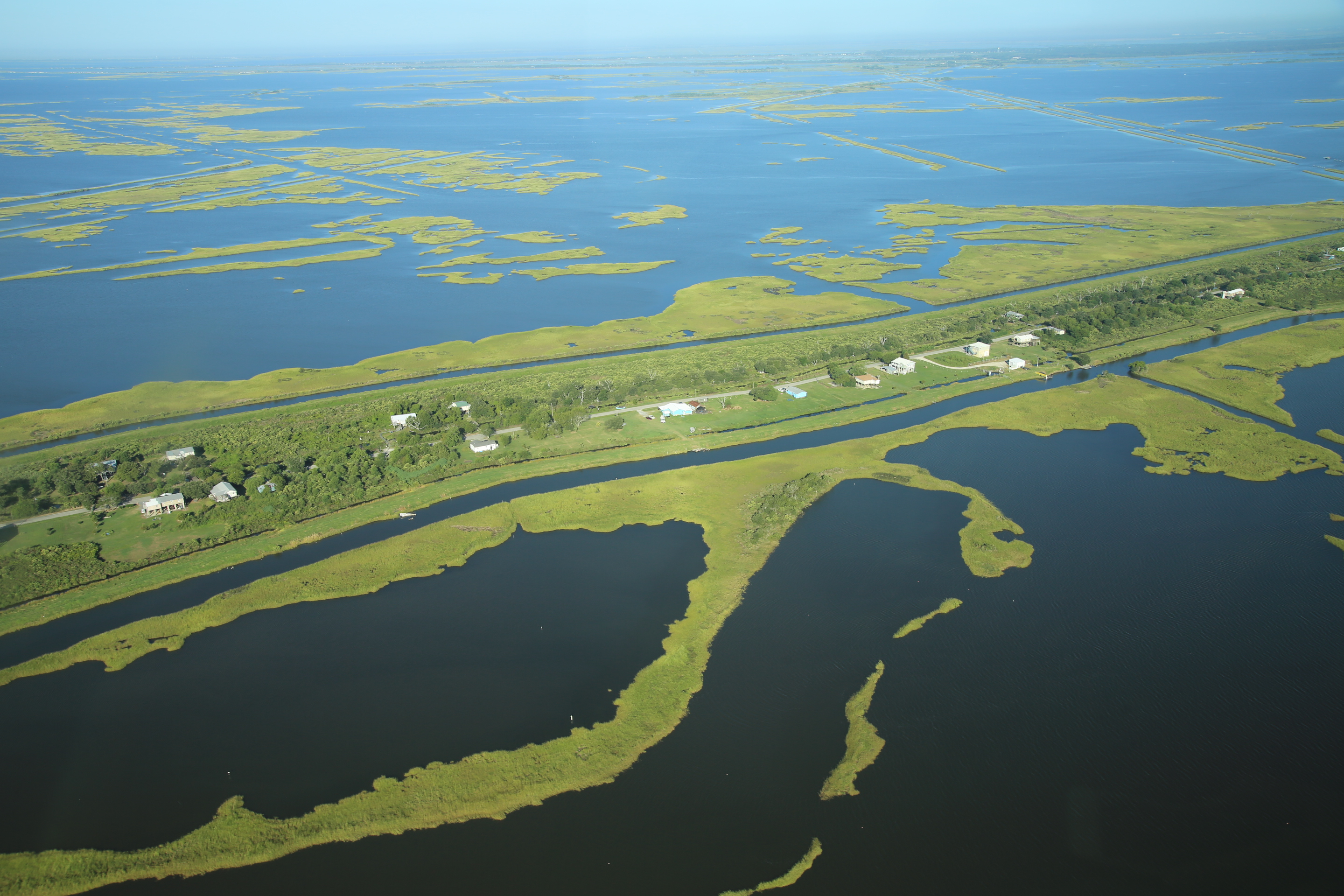
Isle de Jean Charles Band of the Biloxi-Chitimacha-Choctaw
There are over five million tribal members in the United States, belonging to one of 573 federally recognized tribes. Centuries of land dispossession, cultural genocide, and violence toward Native populations have produced a striking wealth gap: one in three Native American people lives below the poverty line, compared to 11.8% of the American population overall. While home-ownership has provided an engine of wealth creation and upward mobility for millions of Americans, Native American communities were largely denied this opportunity.
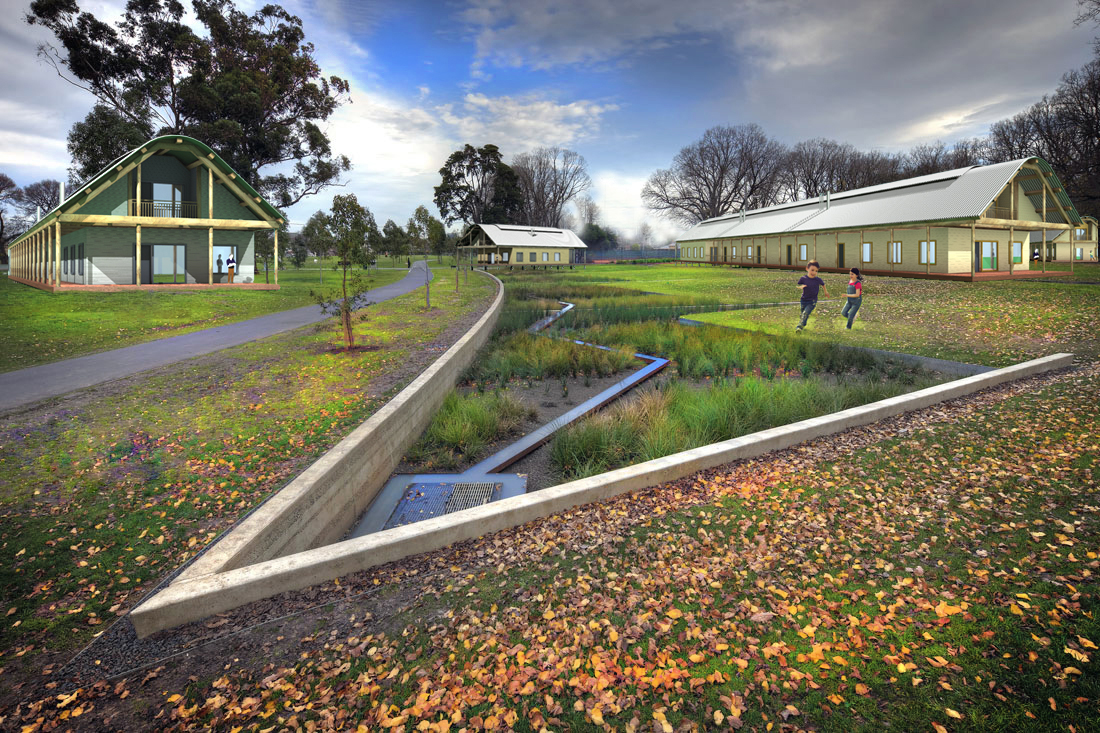
Akwesasne Ecovillage
Indian Country is in a housing crisis, facing a deficit of 200,000 housing units per year. This gross shortage in housing has resulted in poor living conditions and high rates of overcrowding. Under the current federal funding model, this shortage will take approximately 120 years to fill. There is an opportunity for private capital to proactively fill this funding gap; however, currently less than 0.03% of philanthropic dollars reach Indian Country, even though Native Americans make up 2% of the U.S. population. In order to advance equal opportunity, self-determination, and sovereignty, a new model of practice is needed to catalyze housing development in Indian Country.
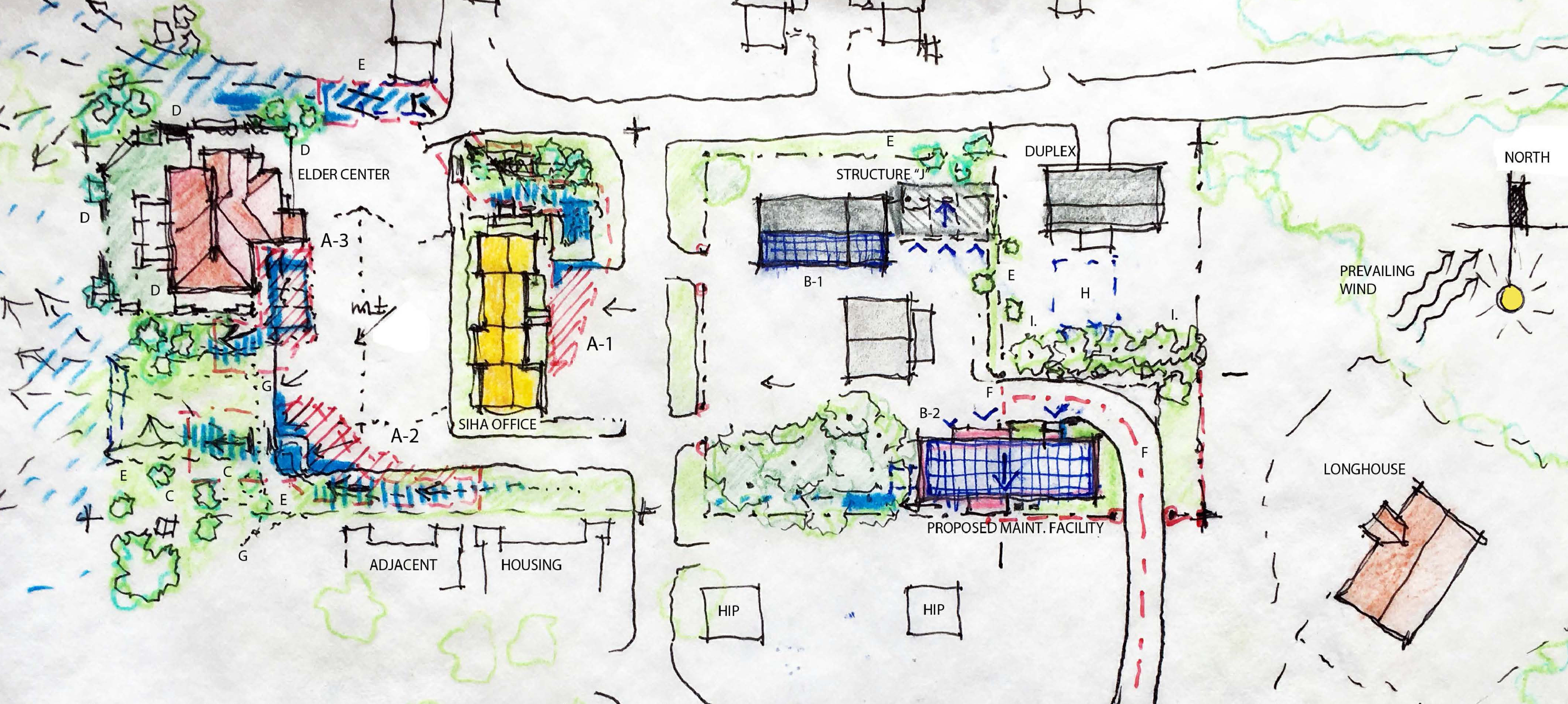
Spokane Master Planning
The mission of the Sustainable Native Communities Design Lab is to close the wealth gap in Indian Country through culturally-responsive housing development and Native home ownership. The design lab will create opportunities for philanthropic investment in the housing value chain through a process of accompaniment with strategic partners: tribal community development corporations, housing authorities, and other critical Native and non-Native stakeholders. We will work with these partners from the early visioning stages through construction, directing philanthropic dollars toward the creation of pre-design and development packages that can be leveraged to unlock additional capital.
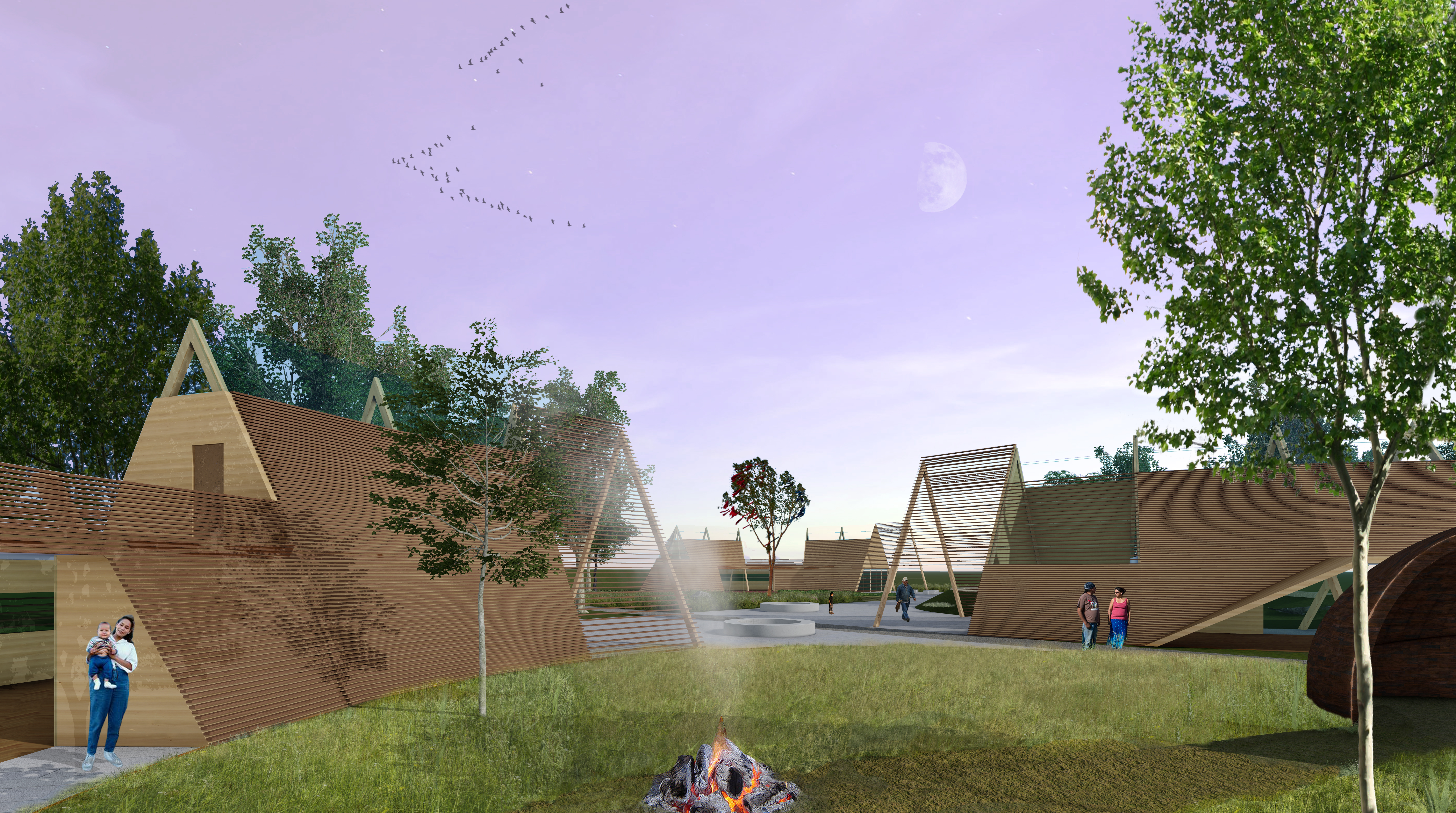
Mní Wičóni Community Health Clinic
Through this platform, we can assist designers, developers, and the philanthropic community to bridge gaps between community ambitions and capital investment. This upstream model seeks to redistribute power back into the hands of Native communities and together create a new model for housing creation in Indian Country that will not only be dignifying, contextual, and culturally-specific, but also a wealth-building engine for communities.
Ongoing projects and partnerships include the Akwesasne Ecovillage, Spokane Master Planning, Mni Wiconi Community Health Clinic, and climate change resilience planning with the Isle de Jean Charles Band of the Biloxi-Chitimacha-Choctaw.
News + Related
Design Project
Mní Wičhóni Community Health Clinic