
Size

Build: 15,000 sq. ft.

Year

2019

Status

Unbuilt

Client

Band of Biloxi-Chitimacha-Choctaw

Partners

Band of Biloxi-Chitimacha-Choctaw, Lowlander Center, ByWater Institute at Tulane University, Sustainable Native Communities Collaborative

Joseph Kunkel

Joseph Kunkel

Principal & Director, SNC Design Lab — Santa Fe

Joseph, a citizen of the Northern Cheyenne Nation, is the Director of MASS's Sustainable Native Communities Design Lab based in Santa Fe, New Mexico. As a community designer and educator, his work explores how architecture, planning, and construction can be leveraged to positively impact the built and unbuilt environments within Indian Country. Joseph’s early work focused on the research of exemplary Native American Indian housing projects and processes nationwide. This research work has developed into emerging best practices within Indian Country, leading to an online Healthy Homes Road Map for affordable tribal housing development, funded by HUD’s Policy, Development, and Research Office.

Joseph’s portfolio includes exemplary Indian housing projects and processes nationwide, including emerging best practices and a web-based “Healthy Homes Road Map” for tribal housing development, funded by the Department of Housing & Urban Developments’ Policy, Development, and Research Office. From 2013-2016 Joseph lead the development of a 41-unit Low-Income-Housing-Tax-Credit development, which started with an Our Town grant funded by the National Endowments for the Arts, and led to an ArtPlace America grant award.

In 2019, Joseph was awarded an Obama Fellowship for his work with Indigenous communities. He also received a 2018 Rauschenberg SEED grant from the Robert Rauschenberg Foundation and a 2019 Creative Capital Award. Joseph is a Fellow of the inaugural class of the Civil Society Fellowship, a partnership of ADL and The Aspen Institute, and a member of the Aspen Global Leadership Network. Most recently, Joseph was awarded the 2021 inaugural Elaine Johnson Coates Award, by the University of Maryland’s Alumni Association.

Sierra Bainbridge, RLA

Sierra Bainbridge, RLA

Senior Principal & Managing Director — Boston

"I believe that every project is an opportunity to create a movement. To inspire this momentum, we must be one with the community, and together, go beyond the bare minimum."

Sierra began work with MASS in 2008 focusing on landscape architecture and joined full time in 2009 to finalize design and oversee implementation of the Butaro Hospital, MASS’s first project. Currently Sierra directs the ongoing design and implementation of MASS’s planning and architectural projects and is currently overseeing The Kayanja Center, an academic facility supporting rural health care delivery and research in Uganda, a number of African Conservation Schools in DRC, Tanzania, Zambia, and Rwanda, and the Butaro Hospital Expansion Plan, among others. Those completed include Butaro Hospital, the Umubano Primary School, the Butaro Doctors’ Housing, and the Butaro Ambulatory Cancer Center.

Prior to joining MASS, Sierra worked for four years at James Corner Field Operations, primarily in design and oversight of implementation of Section 1 of the New York City High Line. Sierra has taught graduate level studios at various universities and from 2010-2012, Sierra served as Head of the Architecture Department at the Kigali Institute of Science and Technology (KIST) in Rwanda. At KIST, Sierra was instrumental in shaping the current curriculum. She is invited to speak regularly, including the keynote address at the Healthcare Design Conference, serving as a Sasaki Distinguished Visiting Critic at the Boston Architectural College, and lecturing at the Carter ‘Lectures In African Studies’ series, the University of Pennsylvania, Harvard University, University of Toronto, and the American Institute of Architects, among others. Select features of Sierra’s work with MASS Design Group include A+U Magazine, Lotus, Mark Magazine, and Detail.

Sierra received her Bachelors of Arts in Art and Architectural History from Smith College and her Masters of Landscape Architecture and Masters of Architecture from the University of Pennsylvania.

Design Team

Joseph Kunkel, Sierra Bainbridge, Michael Murphy, Amie Shao, Mayrah Udvardi, Taylor Sinclair, Jeff Mansfield

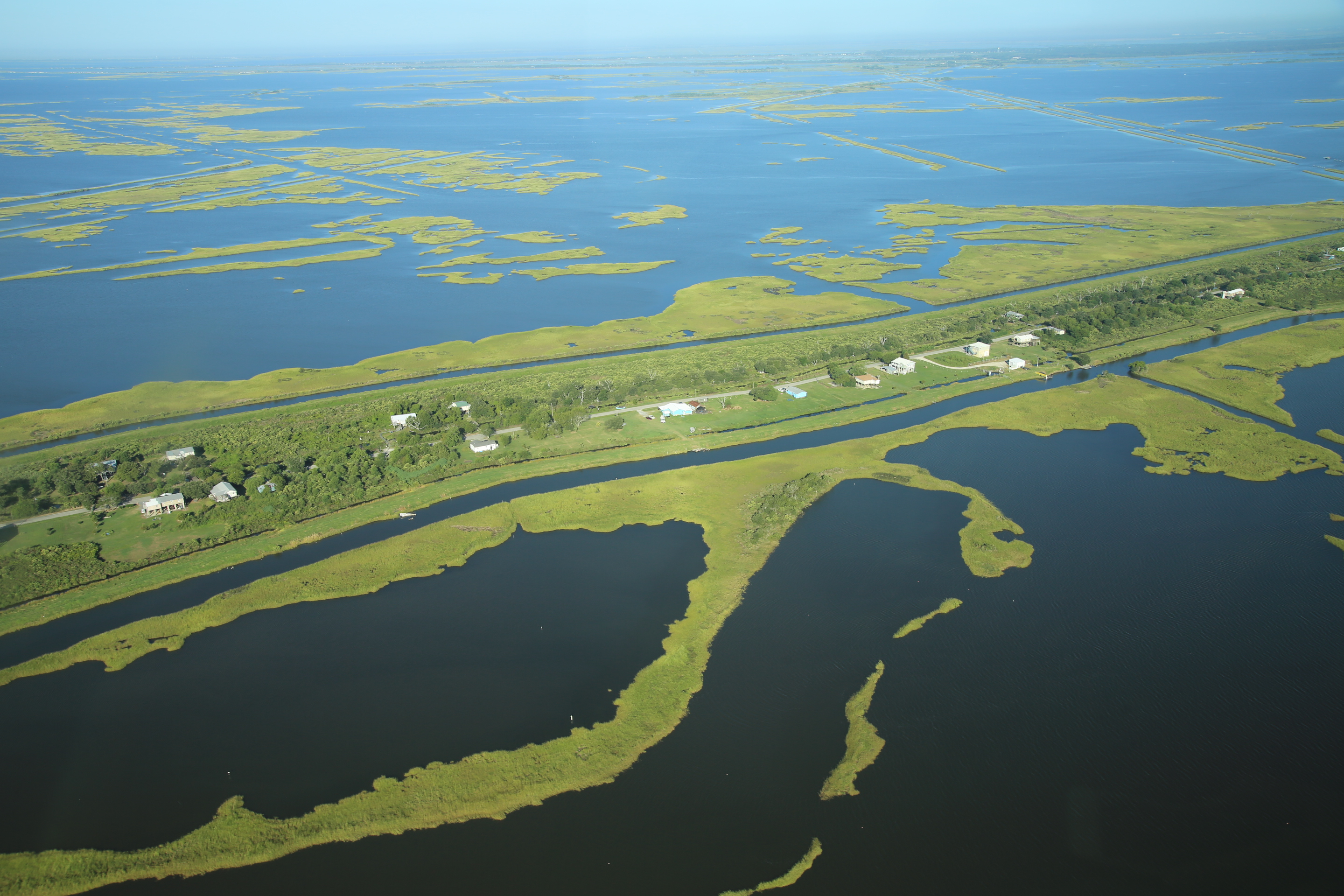
Starting in the mid 1950’s, The Band of Biloxi-Chitimacha-Choctaw have lost 98% of their land due to a combination of threats, including rising sea levels, coastal erosion, lack of soil and sediment renewal, and dredging for oil and gas pipelines.

The community now must migrate in response to continued rising sea levels. Within the larger resettlement plan, the Isle de Jean Charles Tribe sought opportunities to preserve their cultural heritage and regenerate new lifeways, identifying a site on which to build a museum and resource center.

MASS provided architecture and landscape services for the Tribe, designing a site that integrates the wetland to facilitate a responsive and resilient relationship between the community and natural ecology. Our collaboration sought to empower the Tribe, modeling a relationship between Native and non-Native actors that increased agency and self-determination.

The Living Resource Center will house classrooms, an exhibition space, and greenhouse, and will provide space for weaving, farming, and fishing to help facilitate cross-generational cultural exchange. The center will also provide educational programming around issues related to coastal ecology and climate change.

To preserve the ecological identity and sovereignty of the Isle de Jean Charles community’s ancestral land, the design includes a communal seed bank and seed-cutting library. The seed bank will host the botanical island species critical to the traditions of the Tribe, while a network of trails will provide processing space for planted seeds to be cultivated and replanted, creating a naturalized landscape that regenerates the tribe’s ecological environment.

These initiatives will develop a replicable model for cross-disciplinary collaboration, generating innovative solutions to address the many complex problems facing coastal communities worldwide and building capacity within the Tribe to preserve their cultural resilience.