
Size

Site: 77,500 sq. ft.
Build: 50,000 sq. ft.

Year

2019

Status

Unbuilt

Client

onePulse Foundation

Partners

Little Diversified Architectural Consulting, Ralph Appelbaum Associates, Sasaki, Sanford Biggers, Richard Blanco, Porsha Olayiwola

Jha D Amazi

Jha D Amazi

Principal — Boston

Jha D is the Director of the Public Memory and Memorials Lab which is an initiative that advances research, training, and built work around a central thesis: spatializing memory can heal us and inspire collective action for generations to come. Projects in the Lab’s portfolio include the Sugar Land 95 Cemetery Revitalization Project, Harris County Remembrance Project and several initiatives with the National Trust for Historic Preservation.

At MASS, Jha D has also contributed to the Gun Violence Memorial Project, Franklin Park Action Plan, and the Louise B. Miller Memorial and Freedom Garden at Gallaudet University. Previously, she worked as a Designer at Sasaki Associates. She received her Bachelor of Science in Architecture from Northeastern University and her Master of Architecture I from the University of Pennsylvania.

Prior to pursuing her graduate degree, she taught design studios at the Boston Architectural College. Outside of architecture, Jha D is a spoken word artist, event producer, and SpaceMaker for the LGBTQ+ communities of color.
Design Team

Jha D Amazi, Chris Kroner, Gabriel Hernandez Solano, Claire Coletti, David Mutabazi, Nadia Perlepe, Youssef Renzaho, Emma Colley, Thatcher Bean, Victor Iyakermye

Team Roles

Michael Murphy - Principal in Charge
Alan Ricks - Principal / Project Architect
Jha D Amazi - Project Manager
Chris Kroner - Architect
Gabrielle Hernandez Solano - Designer
Claire Coletti - Designer
Thatcher Bean - Film Producer
David Mutabazi - Film Editor

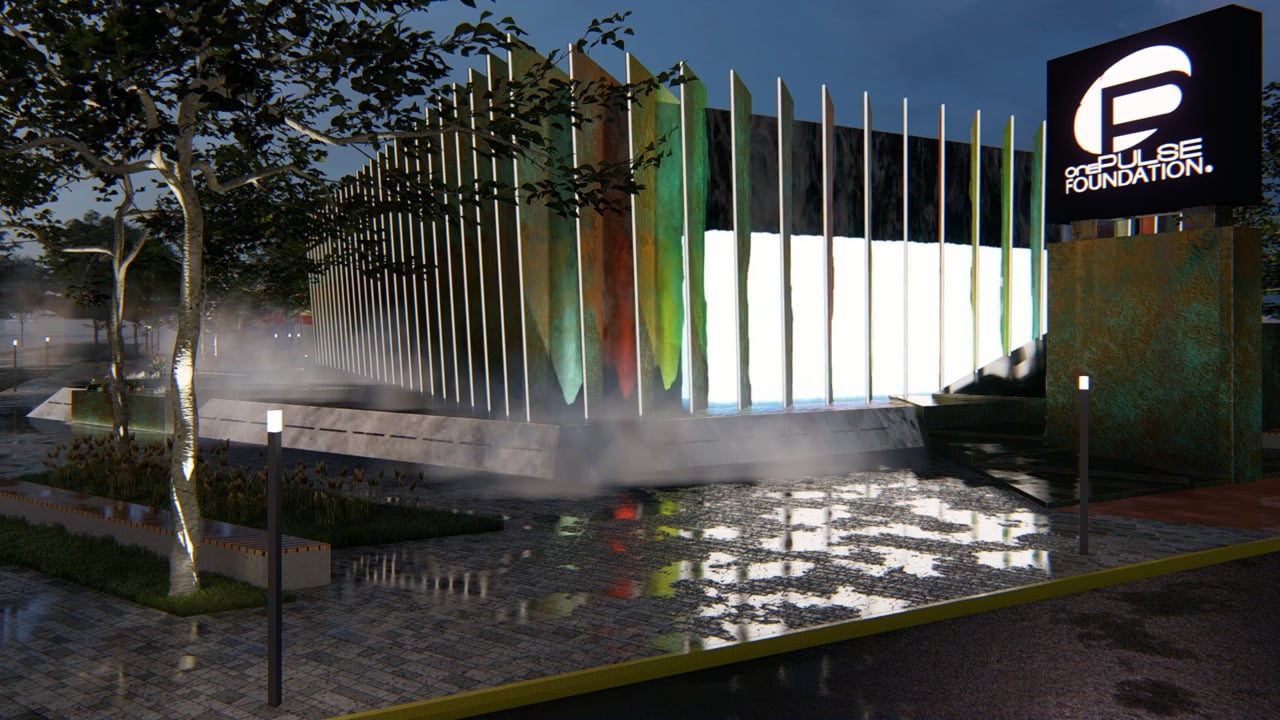
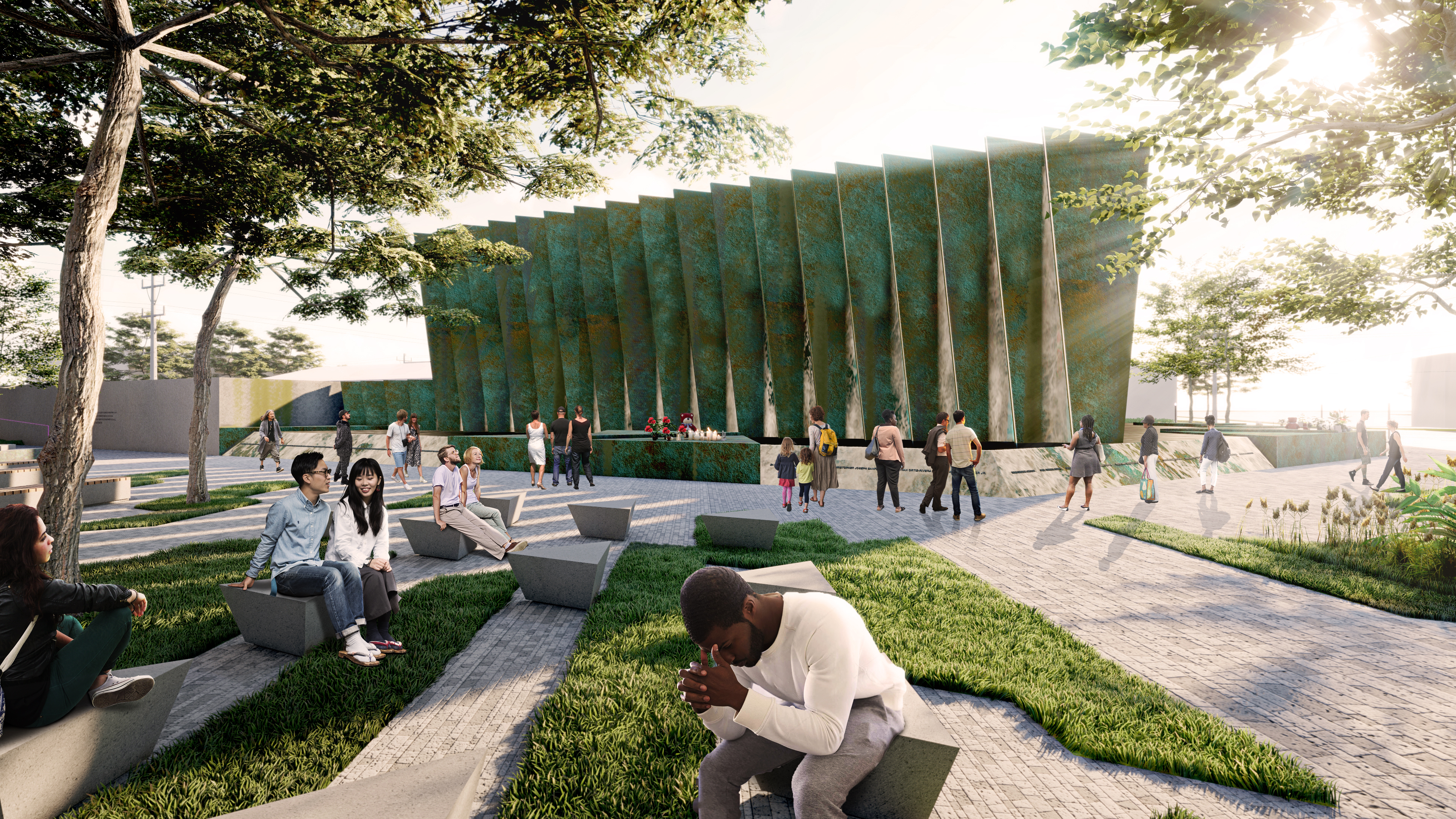
No thing, no tribute, no space will replace the 49 lives lost on June 12, 2016 at the Pulse nightclub. And yet, in tragedy we become something new, we transform. The Pulse community teaches the public what it is to become. To become is not simply to transform from one to another, but to hold a state of multiple identities together in tension. The Museum for Equality tells this broader history of LGBTQ+ communities in Orlando and globally, contextualizing the Pulse tragedy and highlighting the activism that can be inspired and nurtured in Orlando in the pursuit of a more just and equal society. Half a mile down the street, the Memorial focuses on honoring victims, survivors, and first responders of the Pulse tragedy.

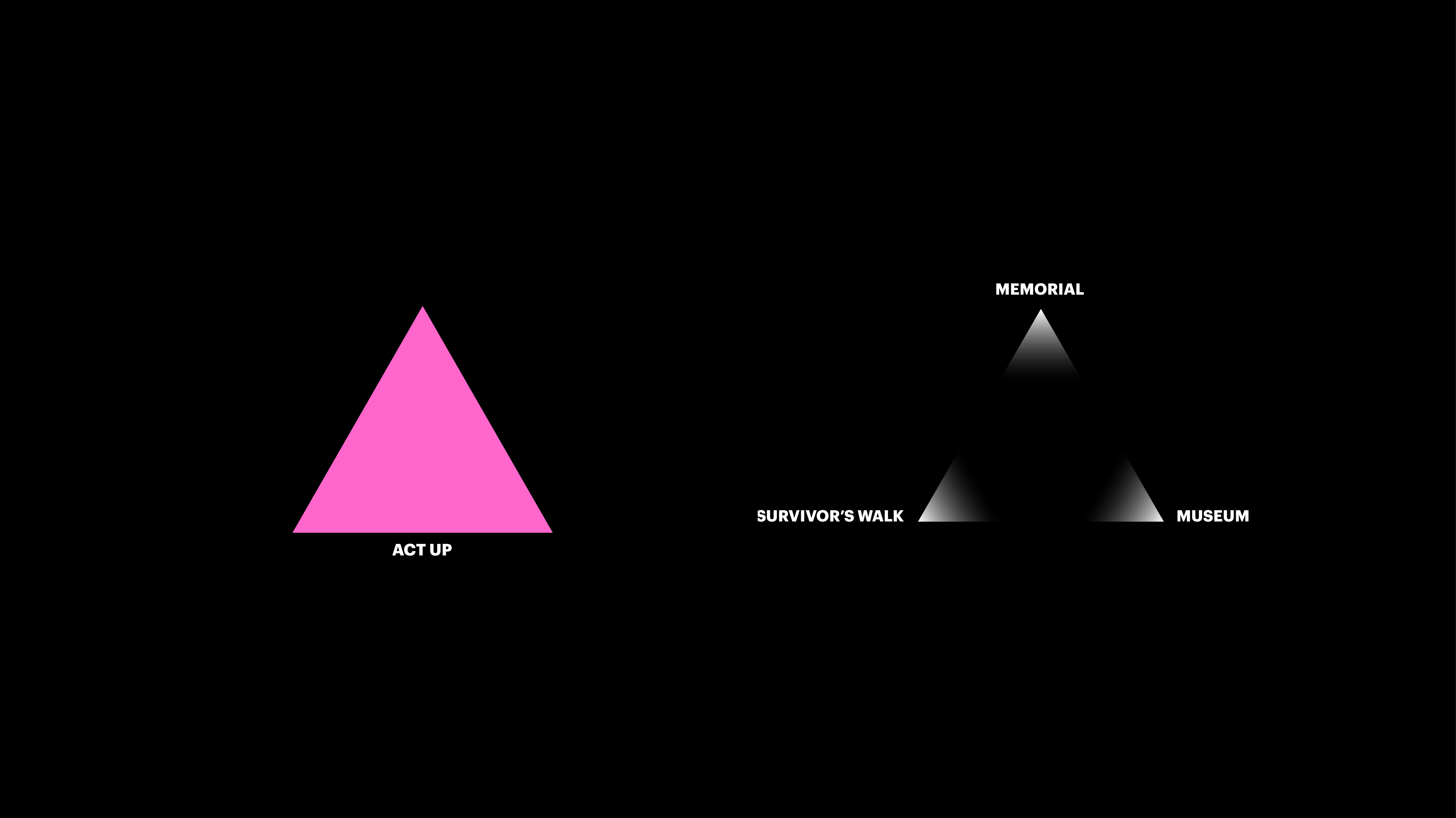
ACT UP Pink Triangle and memorial concept

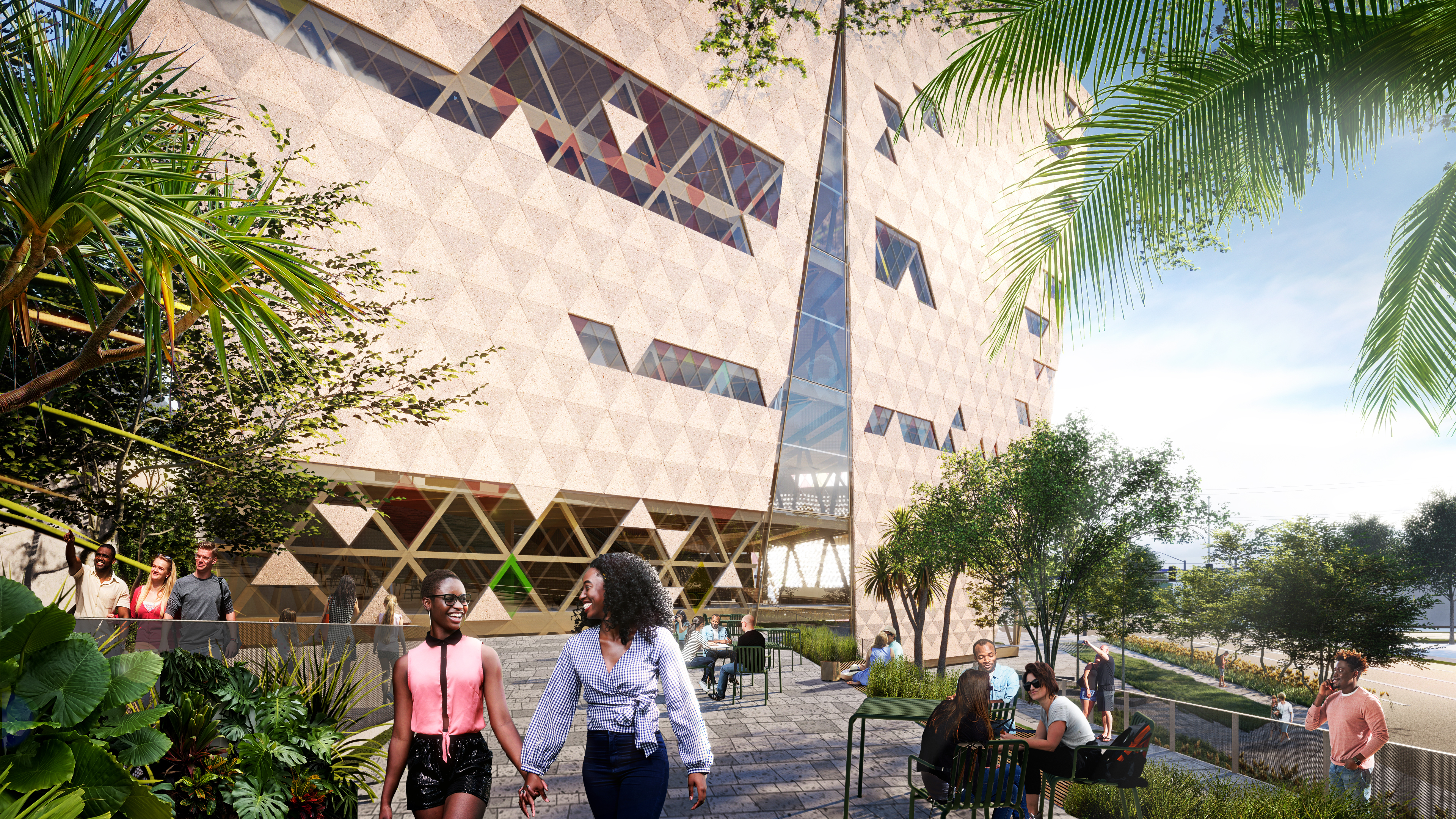
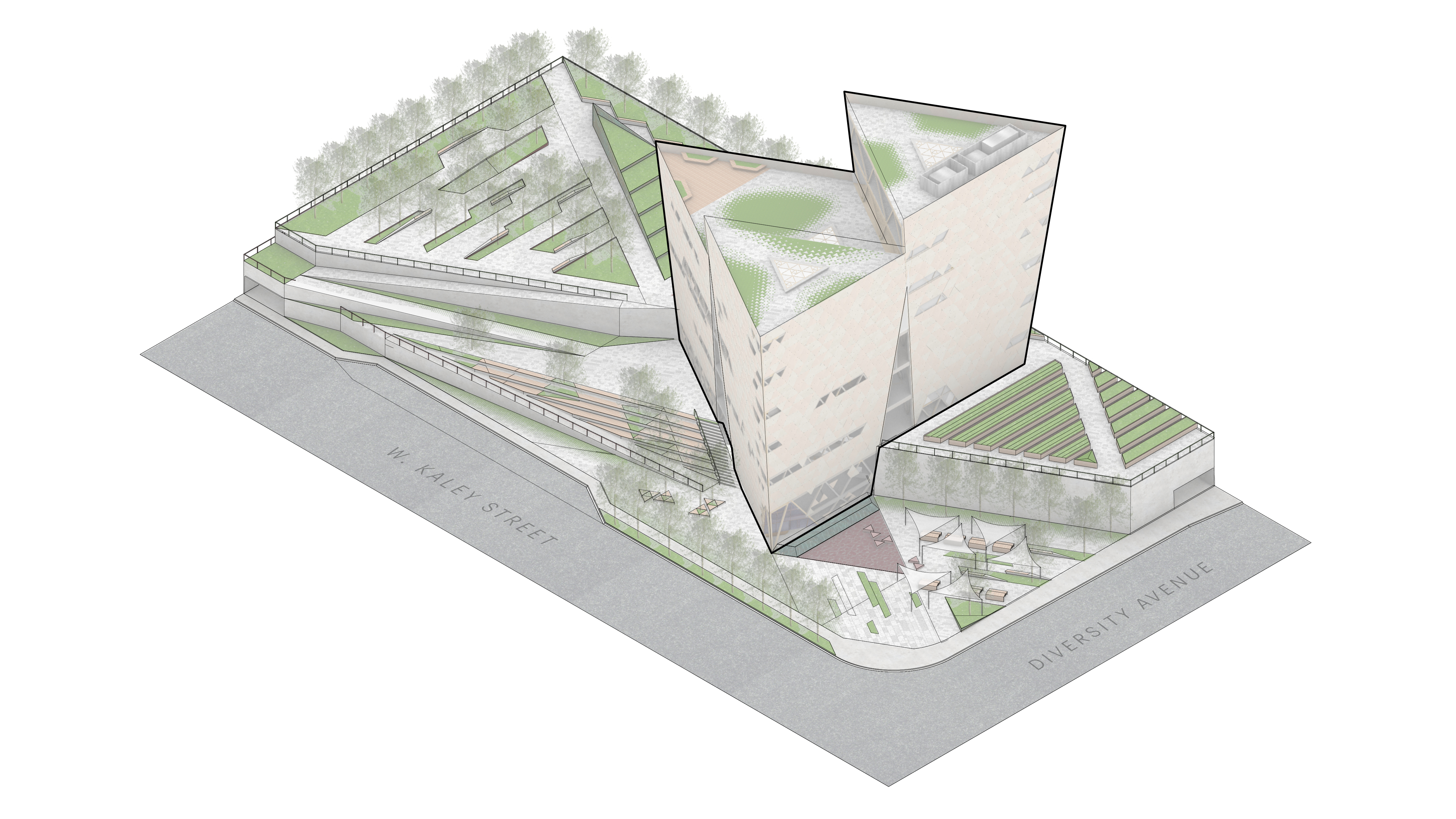
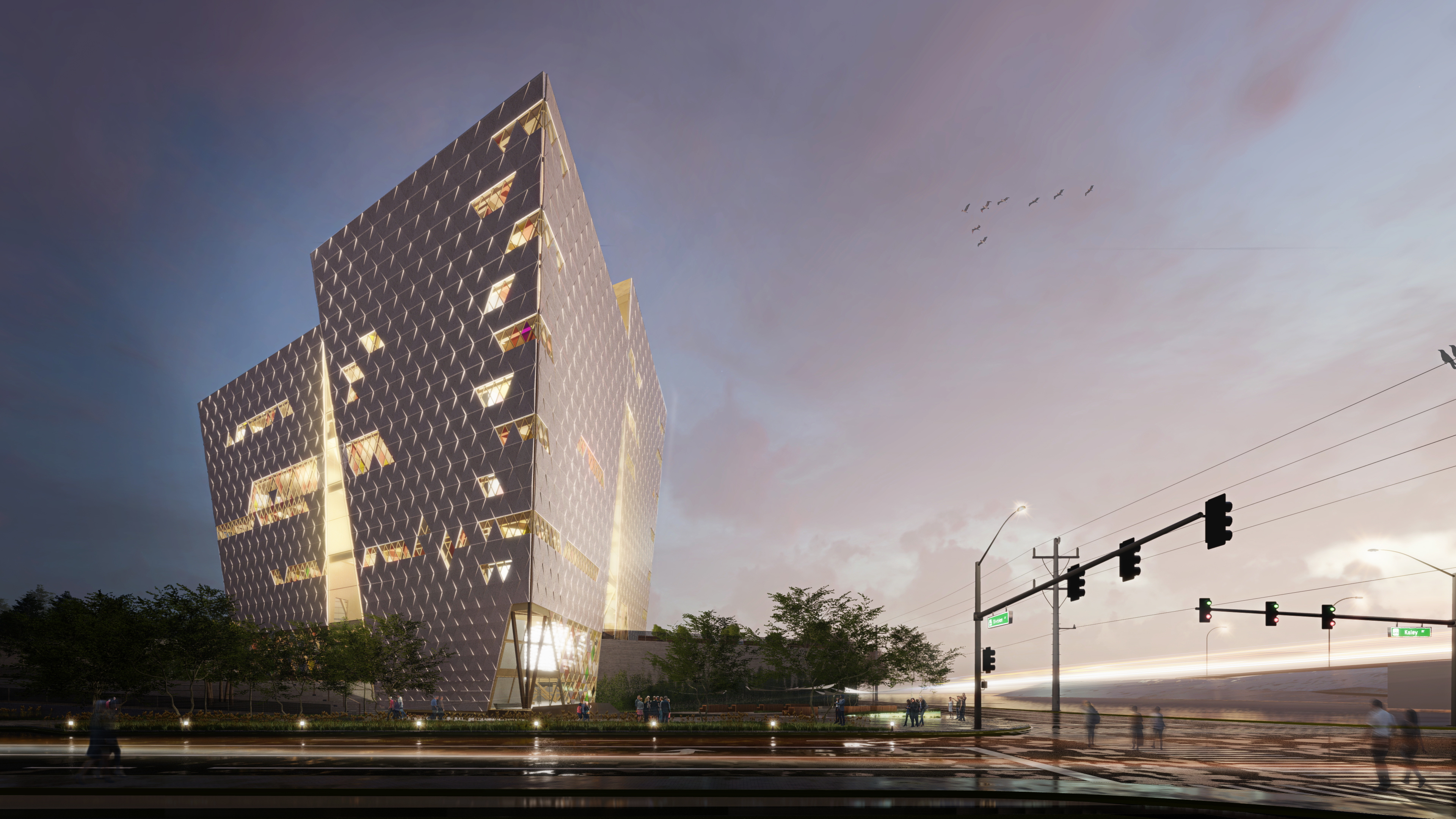
Our design is a pyramidal form, inspired by a prism and the intersectional space it creates, as well as the deep political meaning behind the triangle. The pink triangle was used to brand homosexuals in Nazi Germany, later reclaimed by ACT UP as a symbol of activism.The museum consists of 3 prismatic volumes, inverted, emerging from the earth and converging at the roof deck to direct one’s view to the Pulse memorial in the distance.

Pulse Museum of Equality

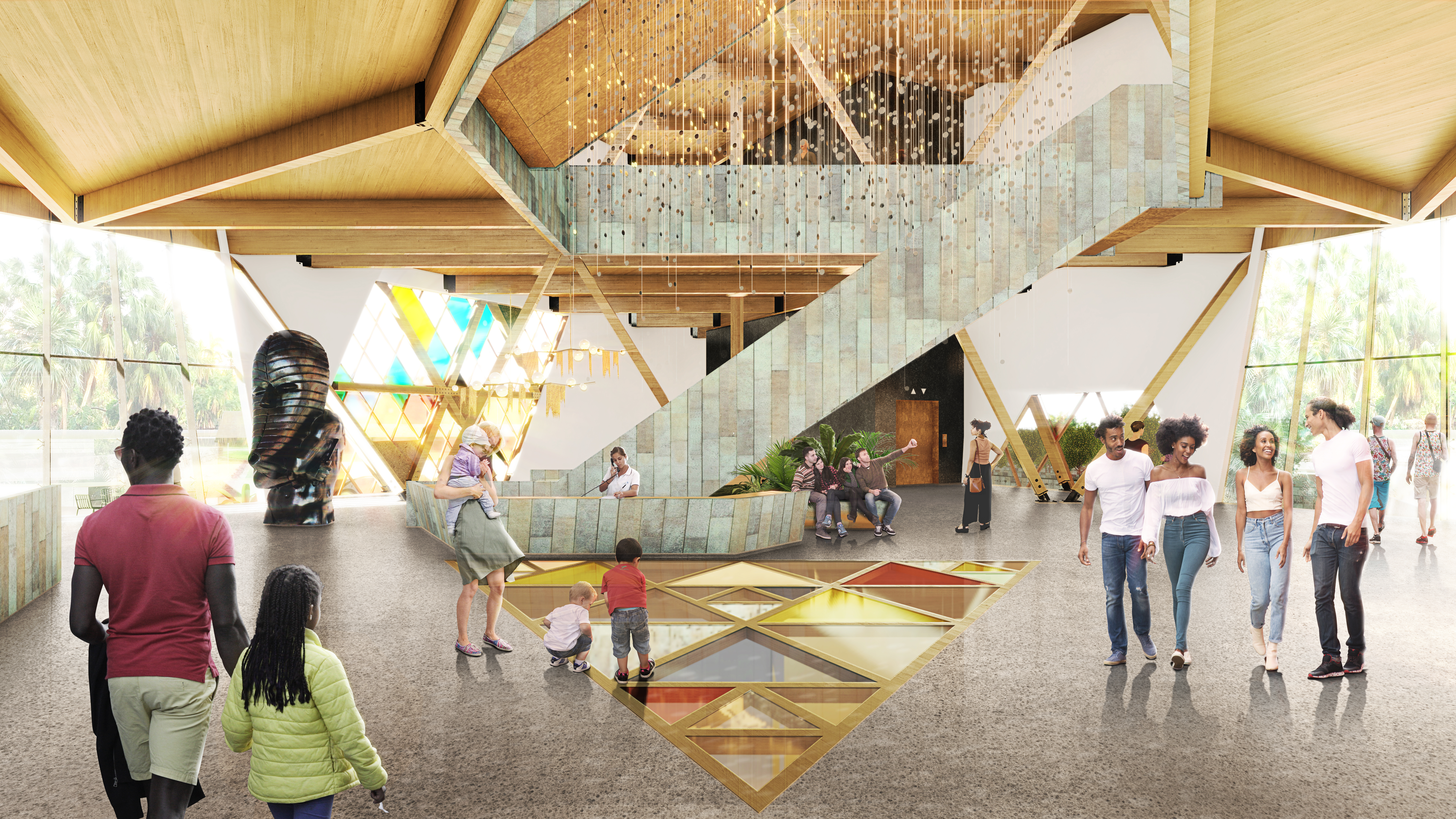
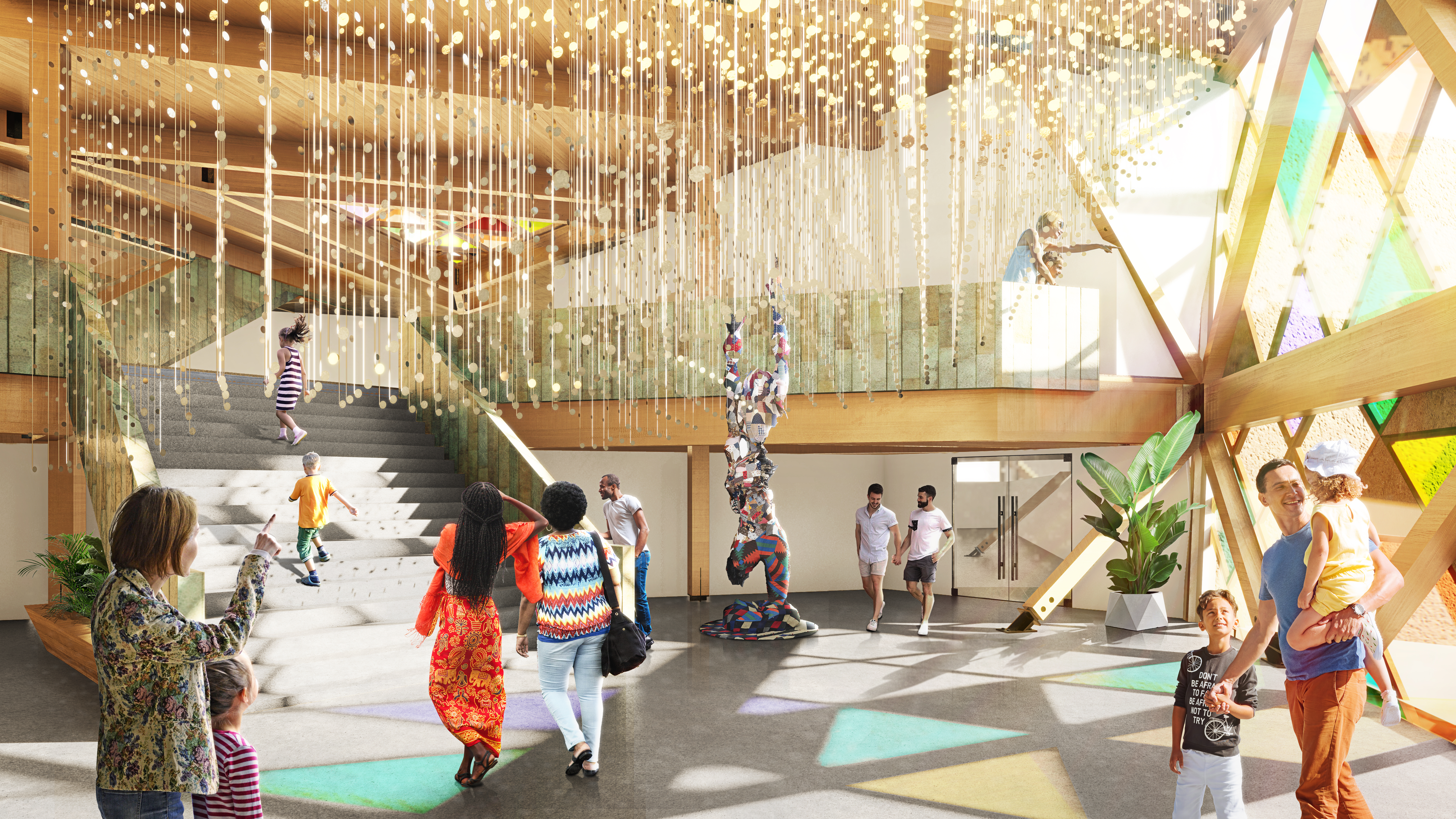
The experience of our museum is to be surrounded by a kaleidoscope of light and shadow as you ascend it. Visitors enter at a grand central atrium, enveloped with light. They are then guided through four floors of galleries - beginning with the world response and ending on the individual scale, connecting history to action.

Pulse Museum of Equality

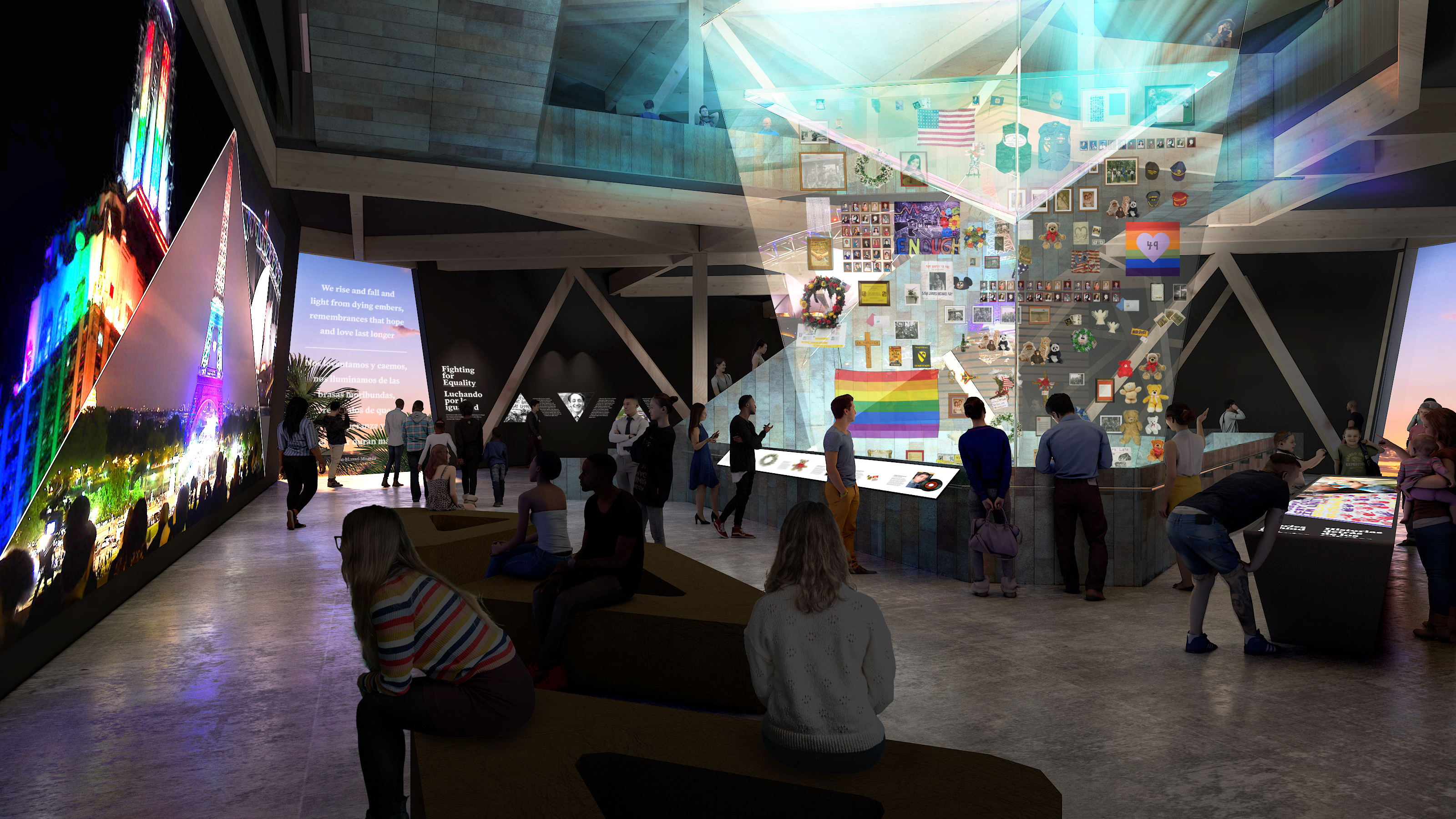
A gallery of trailblazers and events give historical grounding, telling the story of how queer communities found each other and fought for identity, validation, and social justice.

Pulse Museum of Equality

Before Stonewall many of these histories are unrecorded so we would link people to oral histories, diary entries, and three-dimensional interactive discussions with historical figures.

Pulse Museum of Equality

© Ralph Appelbaum Associates

Another series of exhibits would address the epidemic of AIDS, and the struggle for marriage equality. A contemporary gallery focuses on issues of discrimination around the world and shows the ways we can interact with activists on the frontline of the global fight for equality.

Pulse Museum of Equality

As the galleries ascend, the three prisms converge, uniting into a single floor plate where we zoom in from the historical and global context to focus on the event of the Pulse tragedy. A dense array of tributes and objects are displayed in a soaring prismatic case. Visitors can learn more about each object through an illuminated media plinth, listen to family and community stories, and record their own reflections.

Pulse Museum of Equality axon diagram

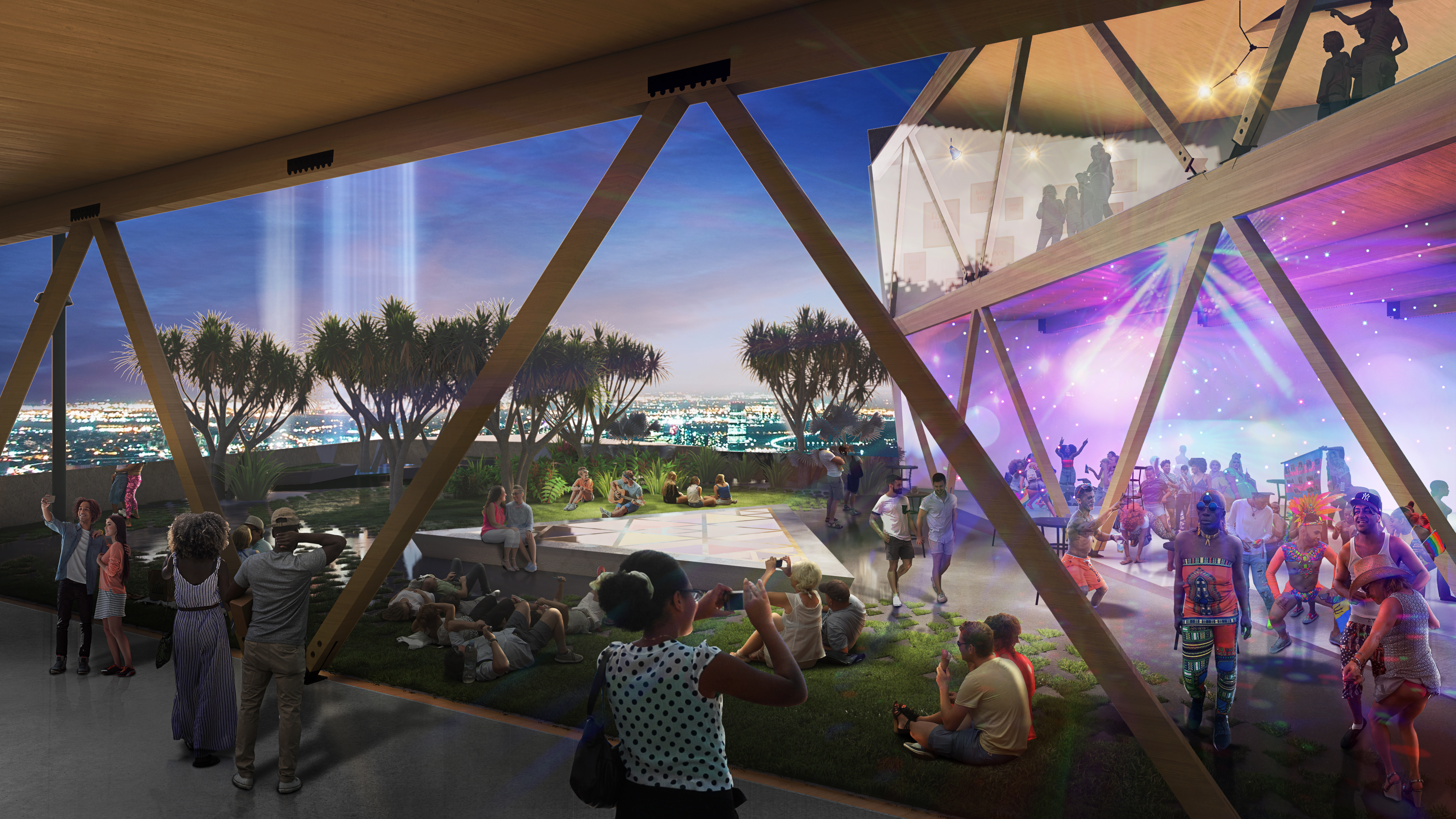
Emerging from the pulse galleries, you ascend to the roof deck level. Here we have a mix of temporary exhibits, covered, open air flexible space for convening, and the observation deck. Unlike traditional museums where you might only visit once, we imagine people will return to this museum frequently for events.

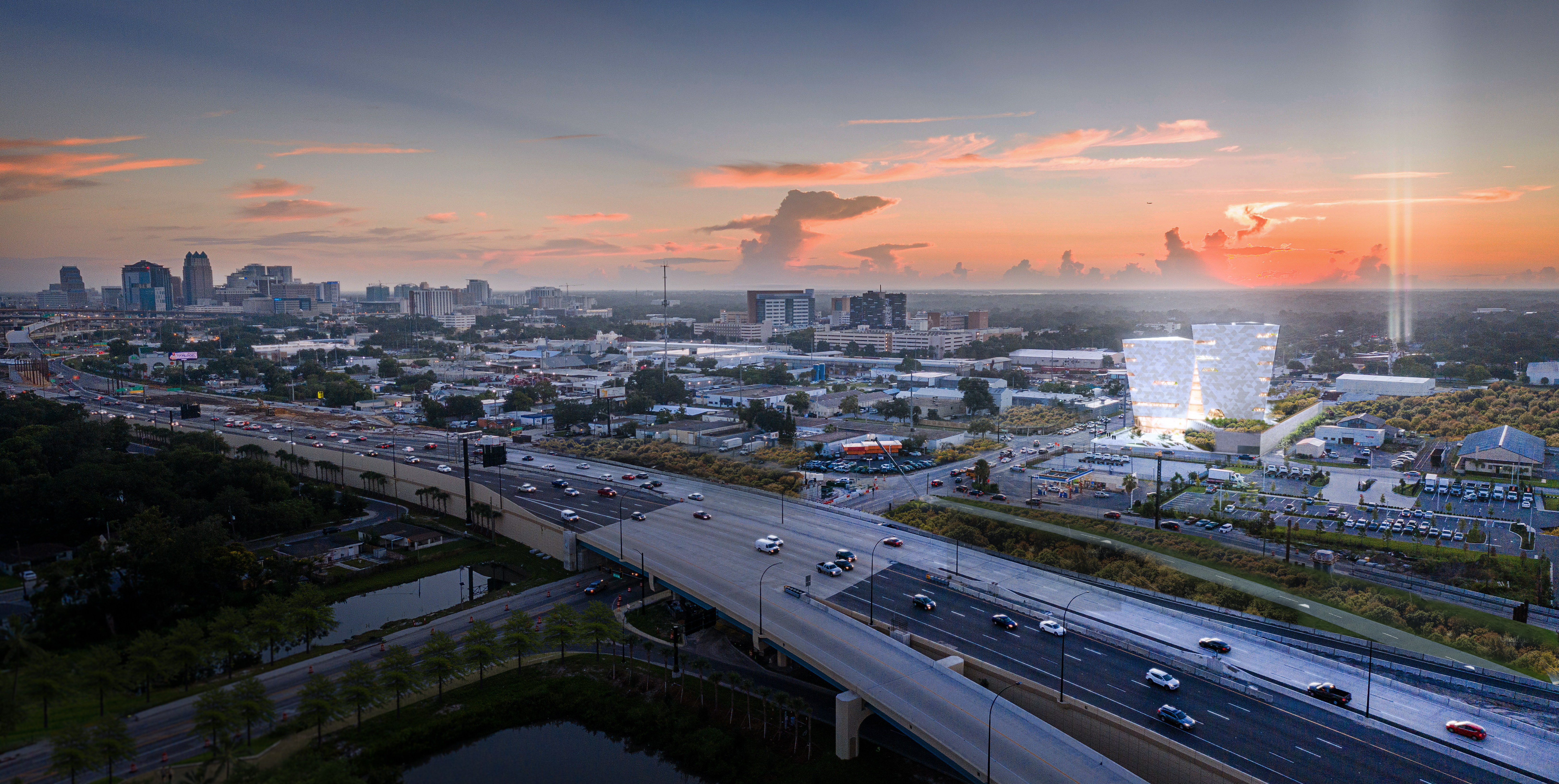
Pulse Museum of Equality aerial

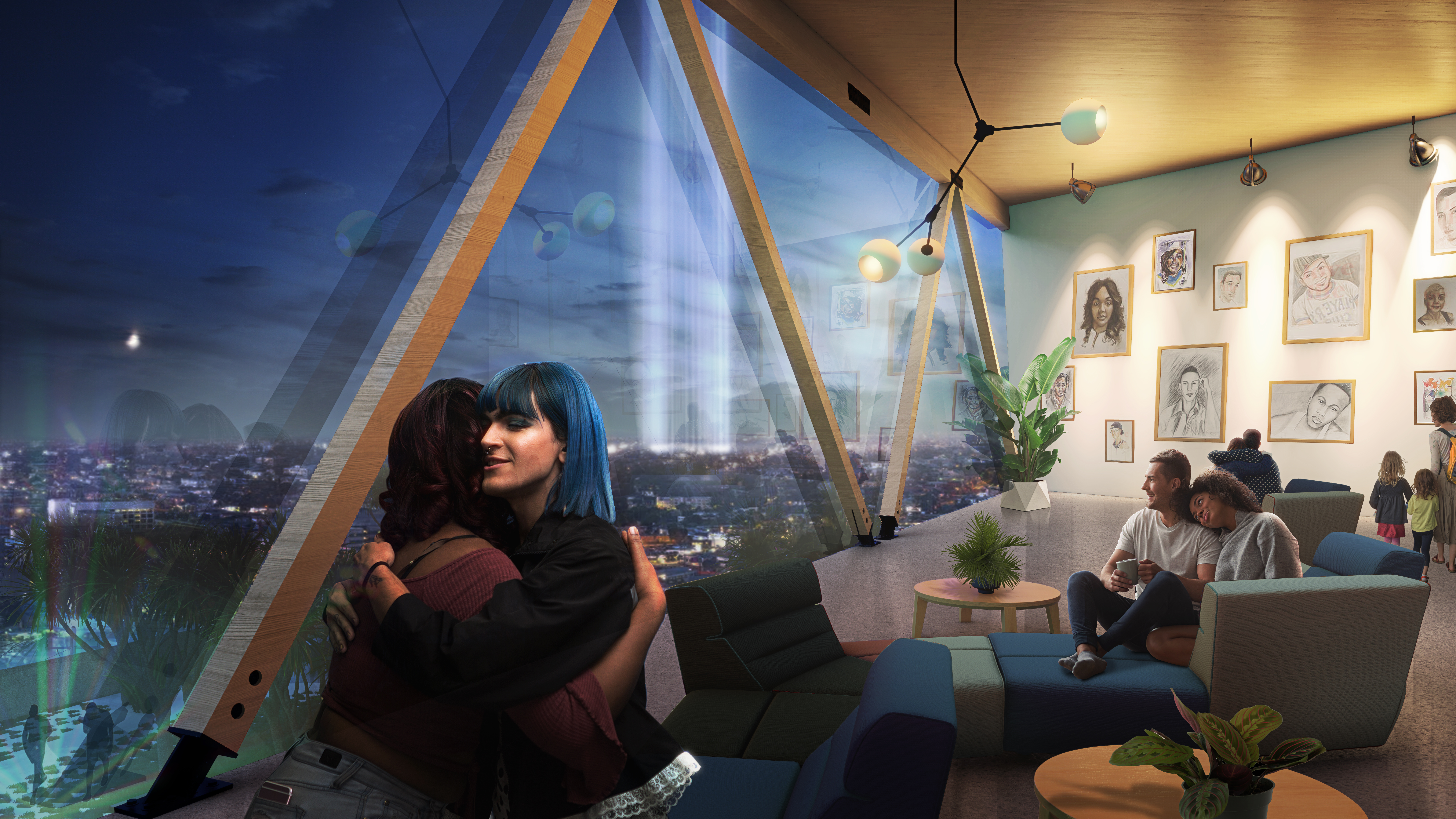
This is the space of the Rinse. As Jenna Wortham described it in the New York Times, where you are “rinsing off the tragedy and drenching ourselves in a new, invigorating sensation or perspective.” A private space for victims’ families sits at the very top of the museum. This space for convalescence and restoration looks out to the memorial in the distance and to the surrounding city.

Pulse Museum of Equality

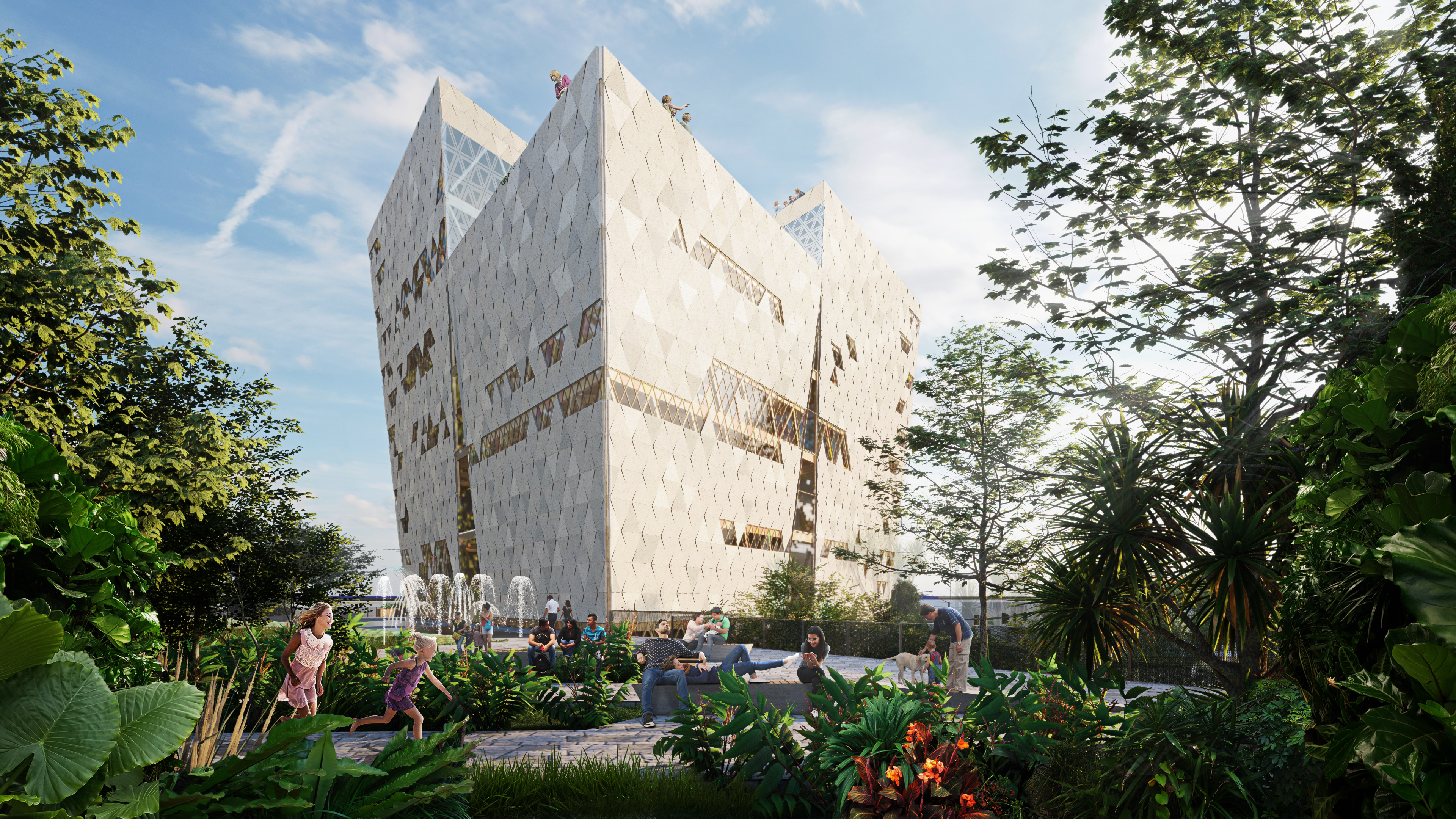
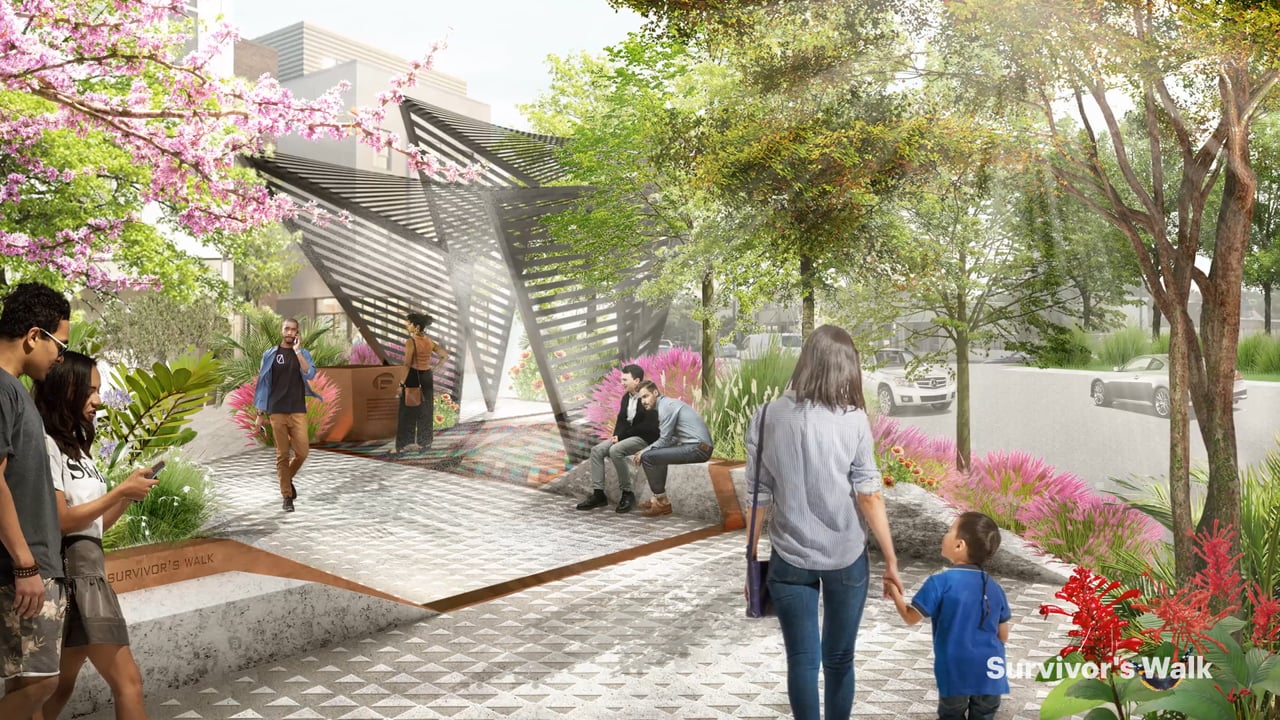
Removed and protected from the street, the memorial is home to a diverse landscape and new public park, which is meant as much for outside visitors as it is for the daily use of the children on the other side of I-4, who can play in the splash pad and attend public performances in the outdoor amphitheater.

The museum has a tessellated limestone facade. The different textures, honed, hammered, and polished, shift and transform in appearance as the sun passes over each day. At times the structure is revealed beneath the facade. We see a mass timber building, made from Southern Yellow Pine harvested from Florida and Georgia.

Pulse Museum of Equality

The wood texture brings an organic feel and warmth to the interiors. The individual boards are compressed and glued, working together to create this triangulated, trussed armature. This exoskeleton suspends column free floor plates, made of cross-laminated timber. A local, Florida company has created the first cross-laminated timber plant on the east coast. Harvested and manufactured with local materials, and labor, it is a model of not only sustainable, but regenerative architecture. With 1/10 the carbon of steel, and 1/7th of concrete; it is as radical in the content it holds as in its construction.

The museum is the catalyst of what will become known as the Pulse district, a place which embodies the ideals and hopes we aspire to. It serves as a beacon of love, inclusion, and human dignity.