
Size

Site: 6 acres
Memorial: 30,139 sq. ft. / 2,800 sq. m.
Support Building: 198 sq. ft. / 18.3 sq. m.

Year

2018

Status

Completed

Client

The Equal Justice Initiative

Justin Brown, AIA, LEED AP

Justin Brown, AIA, LEED AP

Principal — Poughkeepsie

Justin is a co-founder and Principal at MASS focused on expanding architectural work in the U.S. He leads the Hudson Valley Office in Poughkeepsie, NY and is dedicated to the growth of MASS’s Social Justice and Adaptive Re-use portfolios. He was the Project Architect for the Equal Justice Initiative’s National Memorial for Peace and Justice and founder of the Fringe Cities Design Lab, which researches vulnerable American cities and follows community-engaged design practices to unlock upstream capital to transform liabilities into assets.

Prior to MASS, Justin has led award winning projects at Gensler in Washington DC, Perez APC in New Orleans, and Toshiko Mori Architect in New York. He has guest lectured in seminars at Harvard Graduate School of Design, MIT School of Architecture and Planning, University of Toronto, and Dartmouth College. He holds a Master in Architecture from Harvard University and a Bachelor of Arts in Architecture from the University of Pennsylvania.


Photo of Michael Murphy, Co-founder and CEO of MASS Design Group.

Michael Murphy

Founding Principal & CEO — Boston

Michael Murphy, Int FRIBA, is the Founding Principal and Executive Director of MASS Design Group, an architecture and design collective that leverages buildings, as well as the design and construction process, to become catalysts for economic growth, social change, and justice. Since MASS's beginnings, their portfolio of work has expanded to over a dozen countries and span the areas of healthcare, education, housing, urban development. MASS’s work has been published in over 900 publications and awarded globally. Most recently, MASS has been recognized as the winners of the national Arts and Letters Award for 2017 and the 2017 Cooper Hewitt National Design Award. Michael’s 2016 TED talk has reached over a million views, and was awarded the Al Filipov Medal for Peace and Justice in 2017. MASS's project, the National Memorial for Peace and Justice was named the single greatest work of American architecture in the 21st century. Michael has taught at the Harvard Graduate School of Design, University of Michigan, and Columbia University’s Graduate School of Architecture Planning and Preservation. Michael is from Poughkeepsie, NY, and holds a Master of Architecture from Harvard Graduate School of Design and a Bachelor of Arts from the University of Chicago.

Project Team

Justin Brown, Sierra Bainbridge, Alicia Ajayi, Caroline Alsup, Ola Dosekun, Emily Goldenberg, Whitney Hansley, Kordae Henry, Chieh Chih Chiang, Martin Pavlinic, Adam Saltzman

Collaborators

Architecture and Landscape Design: MASS Design Group
Structural Engineer: Nous Engineering
Mechanical, Electrical, and Plumbing (MEP): Mazzetti
Lighting: Lam Partners
Civil Engineer: Pilgreen Engineering
General Contractor: Doster Construction
Code Consultant and Fire Protection: Howe Engineers
Water Feature: Delta Fountains
Specifications: Robert Schwartz and Associates
Plant Material Consultant: Steiner Studio
Graphic Design, Signage, and Wayfinding: Small Stuff
Artist Contributors: Kwame Akoto-Bamfo, Dana King, Hank Willis Thomas

The United States has done very little to recognize the lasting societal damage perpetuated by our long history of slavery. The last century brought decades of racial terror, lynching, and segregation.

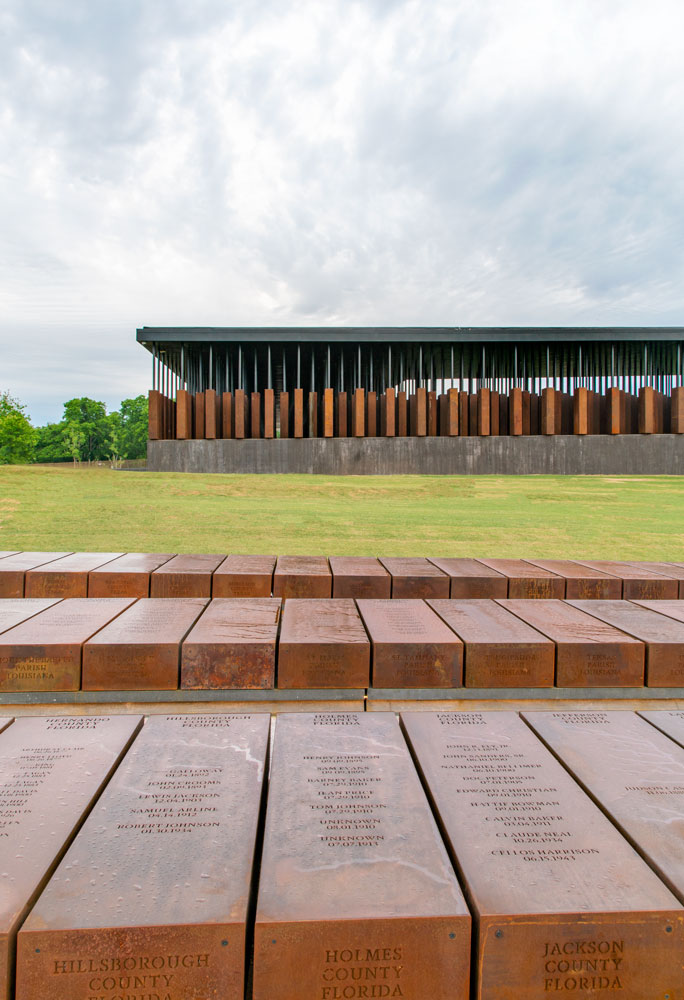
Duplicate Modules around the site

Lynching profoundly impacted race relations in the United States, fueling mass migration out of the South and maintaining a fearful environment where racial subordination and segregation were enforced for decades. The discussion about lynching and its legacy has been sorely inadequate, which has contributed to ongoing struggle, exclusion, and discrimination. The Equal Justice Initiative documented more than 4,000 racial terror lynchings in twelve Southern states between Reconstruction and World War II, in one of the most comprehensive investigations to date. This work recognized the need for a memorial space that embraces this truth and inspires reflection and change.

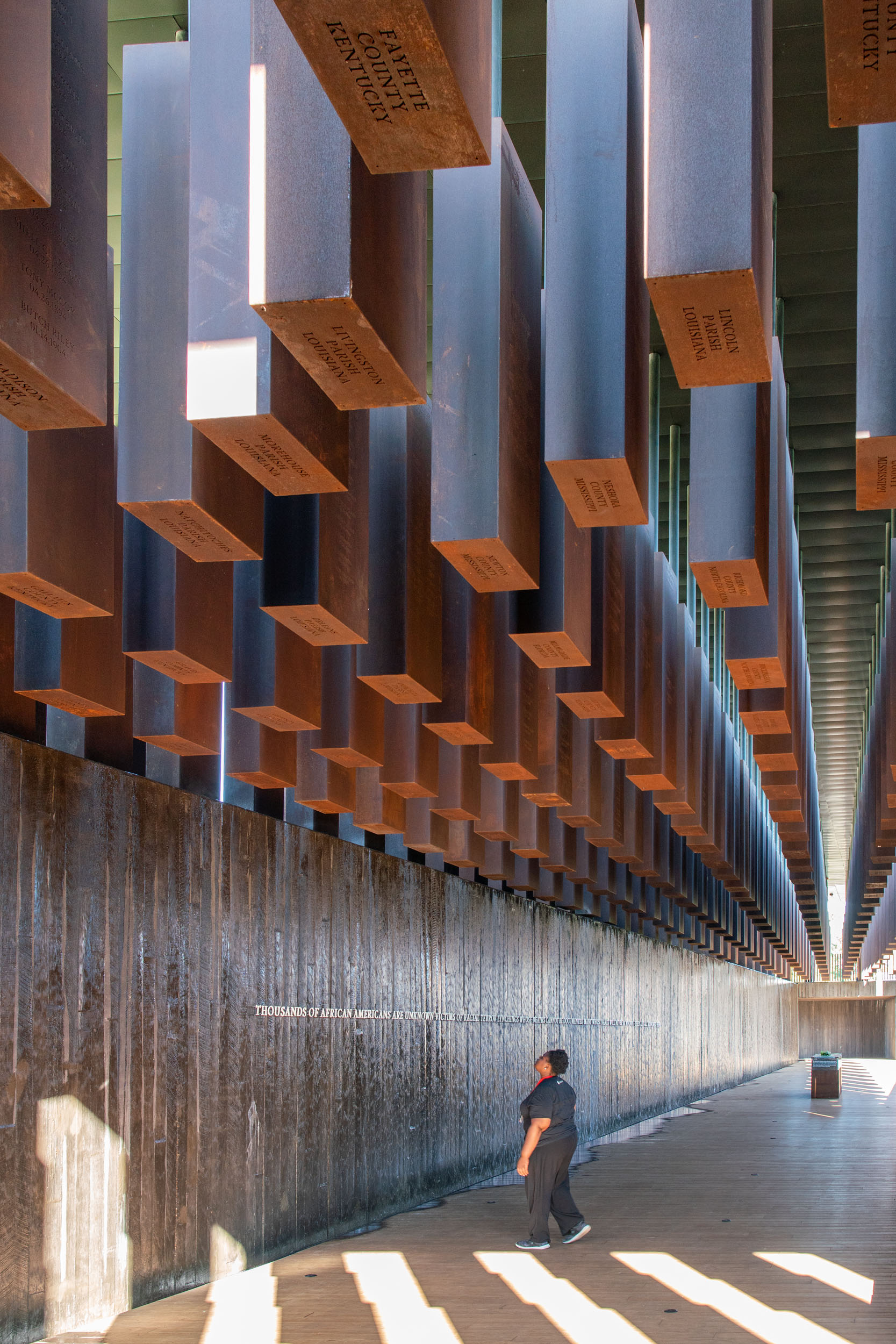
Waterwall inside memorial

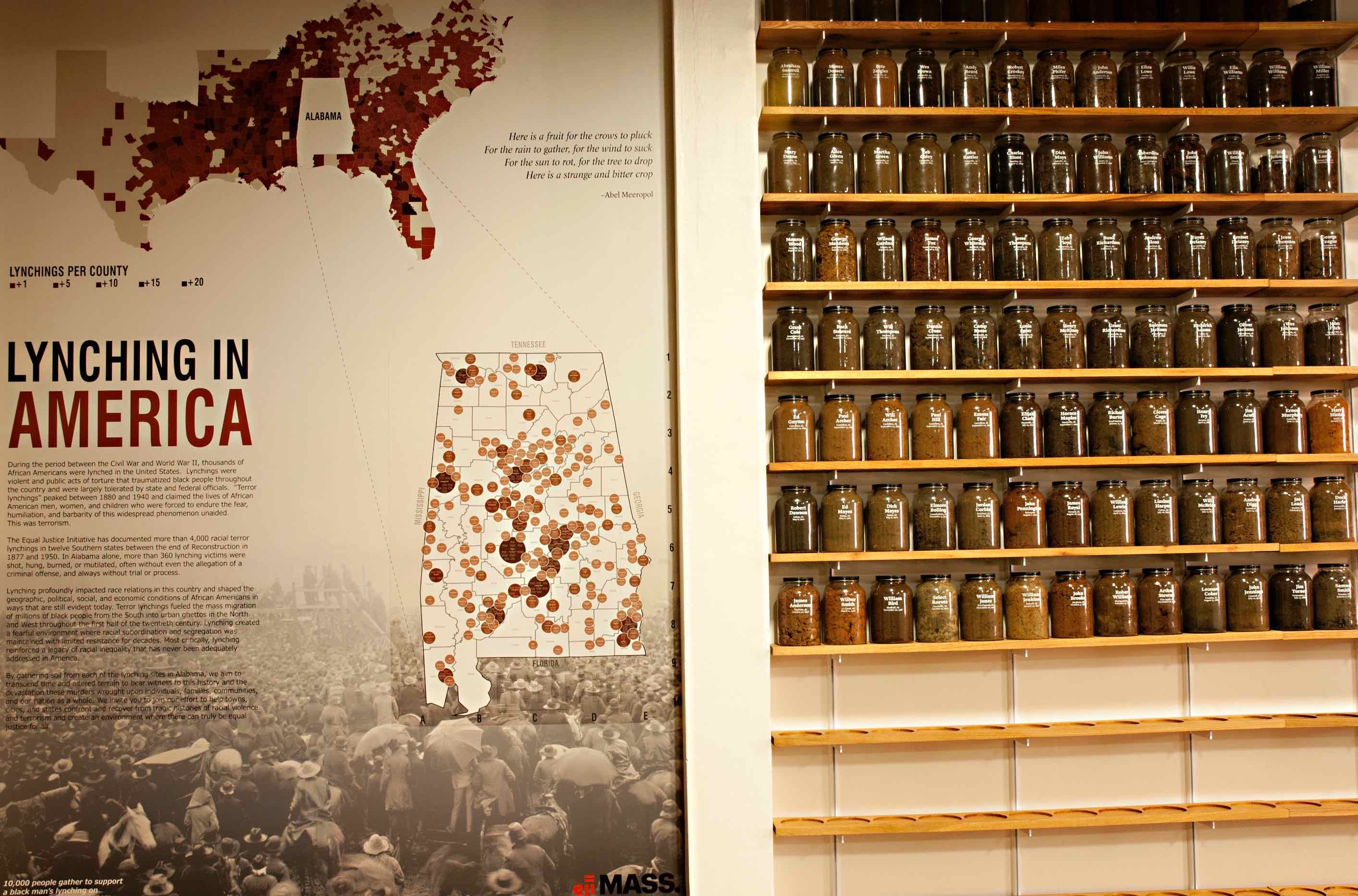
In an effort to connect this research back to the communities impacted most, MASS collaborated with the Equal Justice Initiative in developing a process where soil was collected from the sites where each of these lynchings took place. The community remembrance process allows communities to confront history by becoming active participants in the commemoration of lives unjustly taken. Strongly rooted in place, the soil collection process served as a prelude to the memorial.

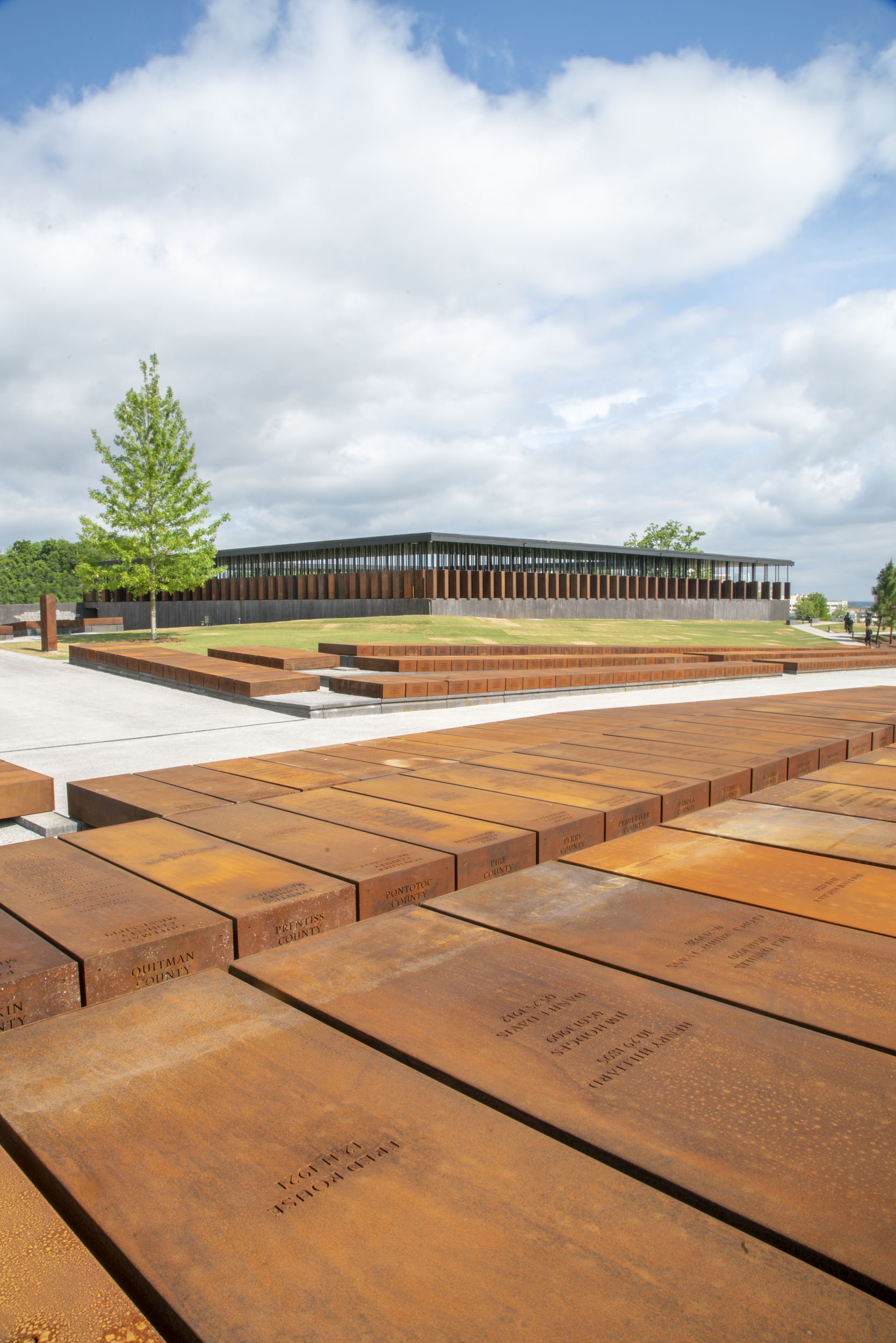
View of memorial and it's duplicate modules
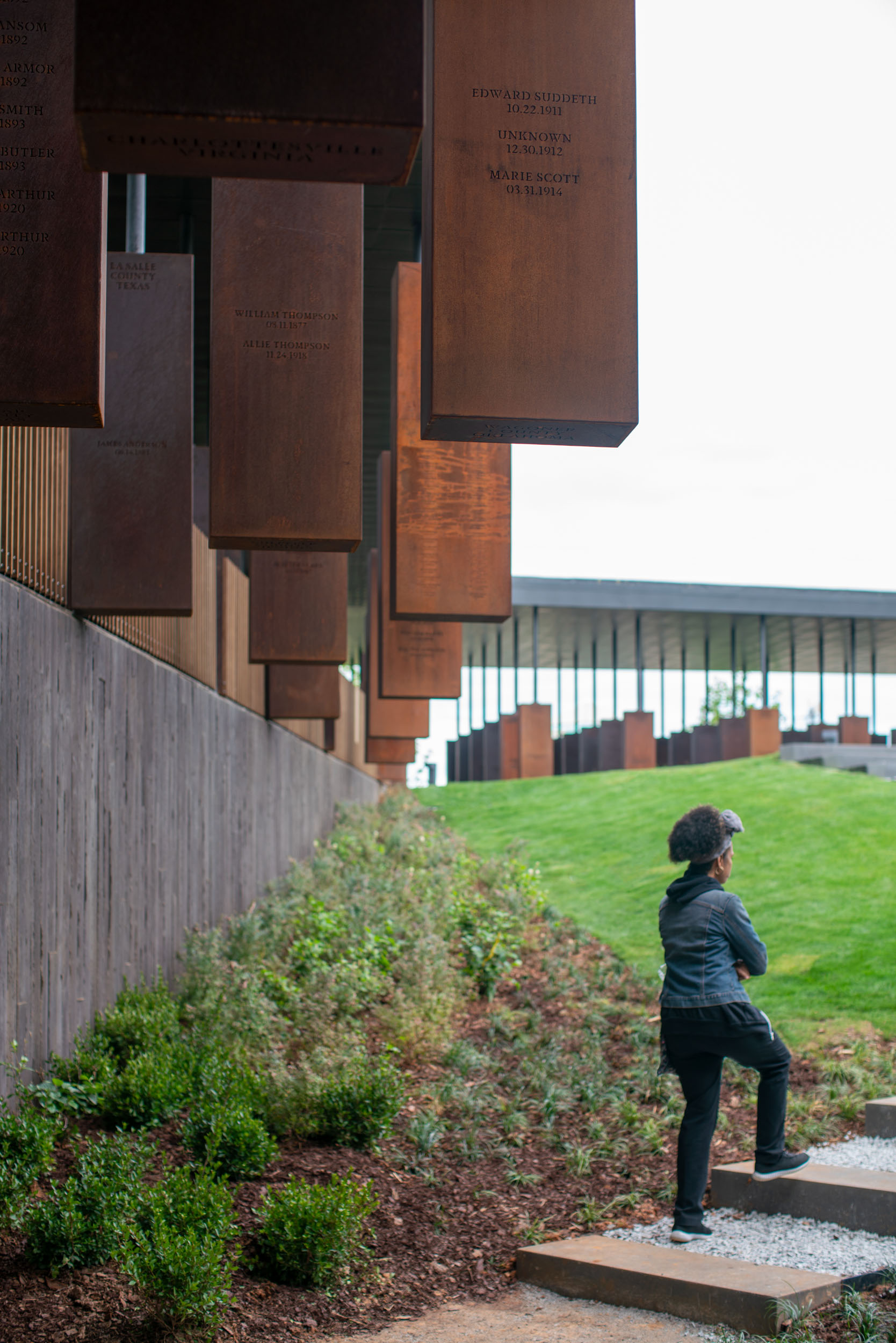
Exterior view of the memorial
Duplicate Modules around the site

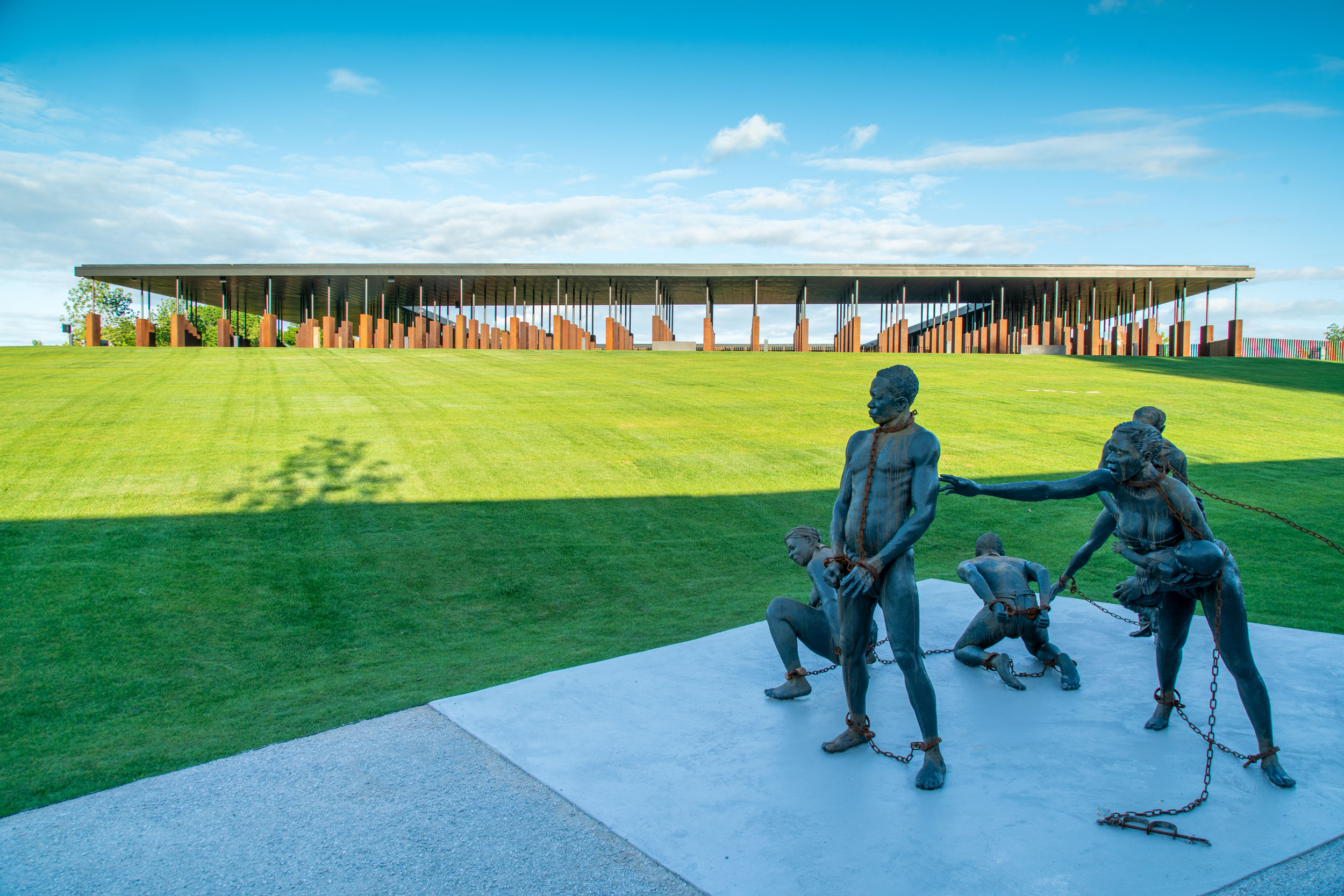
The National Memorial for Peace and Justice is sited on six acres of land in Montgomery, Alabama and is the first national memorial to victims of lynching in the US. In a city where markers commemorating the Confederate South still abound and markers to the Civil Rights Movement and slavery are few, the memorial provides the necessary space for truth-telling, hope, healing, and reconciliation.

Memorial courtyard
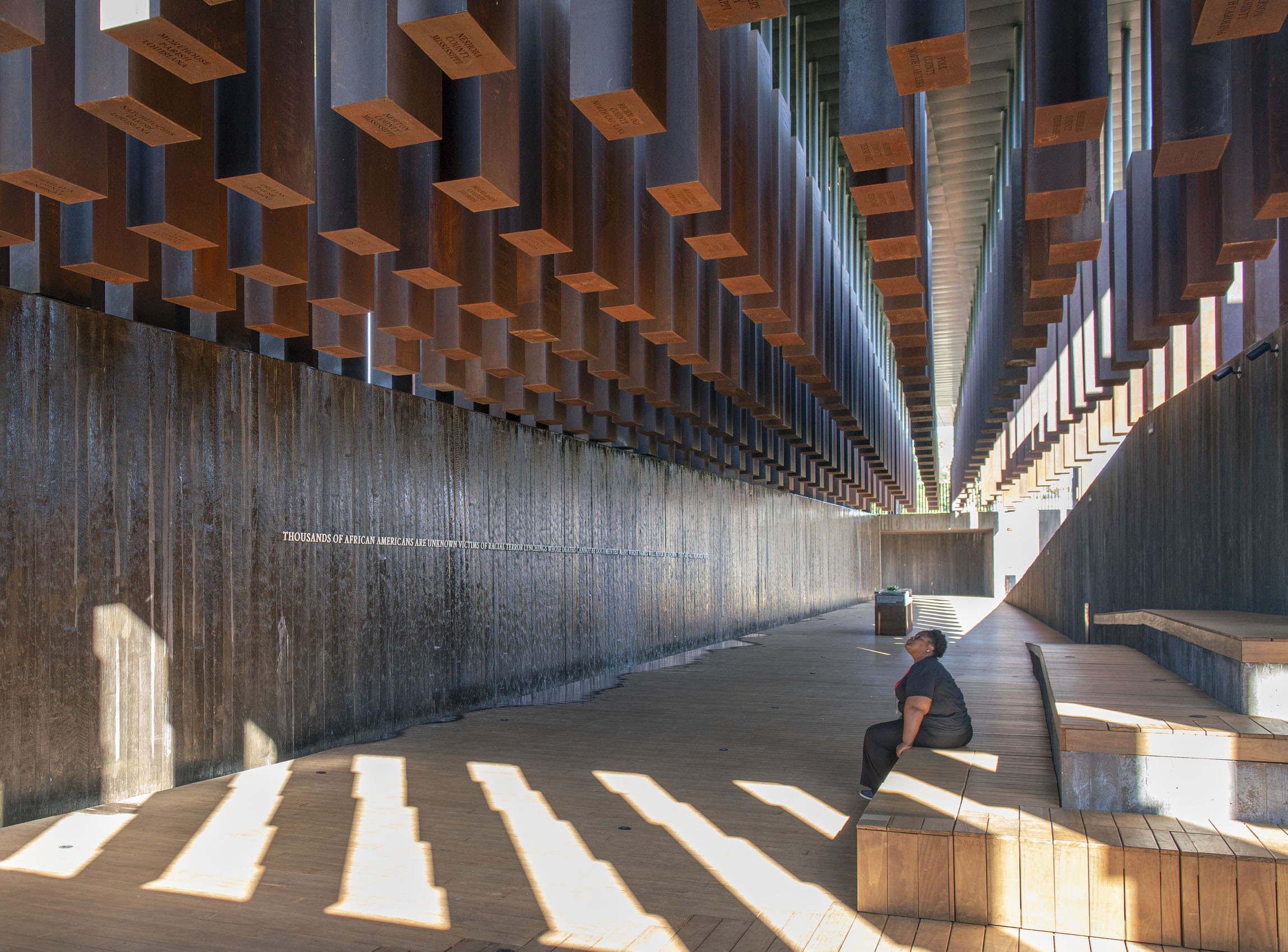
Waterwall inside memorial
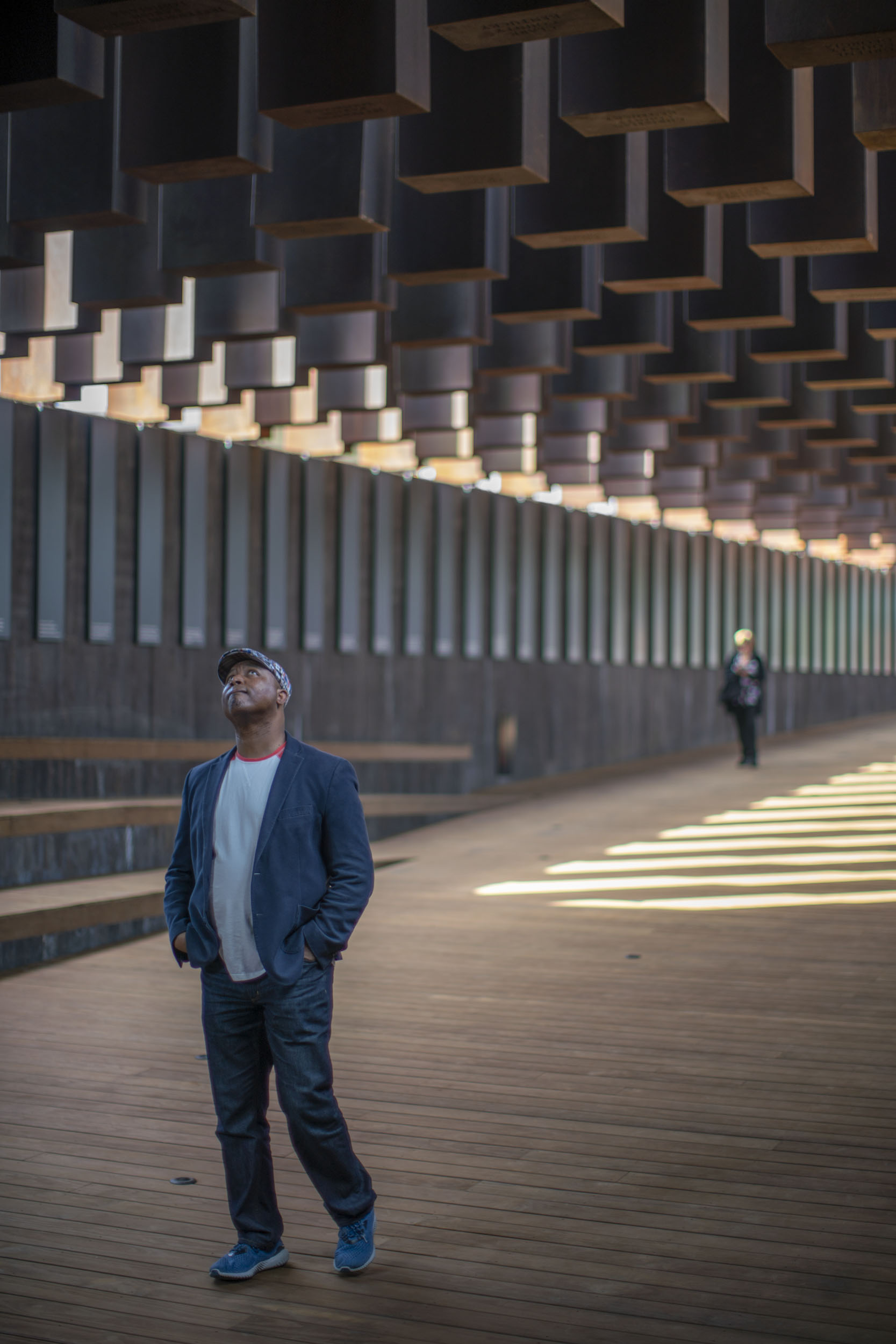
Inside the memorial

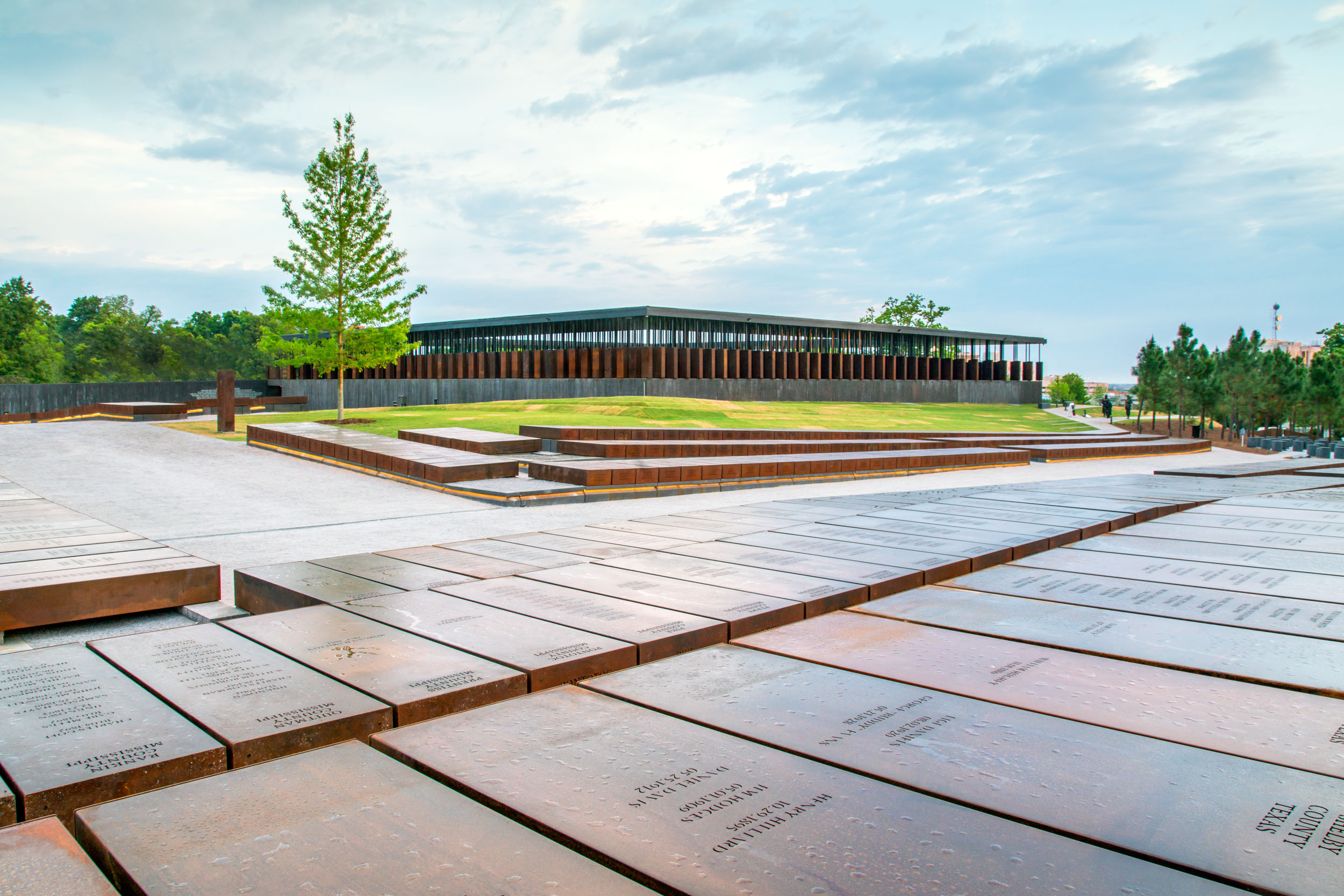
The structure suspends eight hundred Corten steel monuments to represent the counties in the United States where racial terror lynchings took place, each engraved with the names of its victims.

Entry to the Memorial

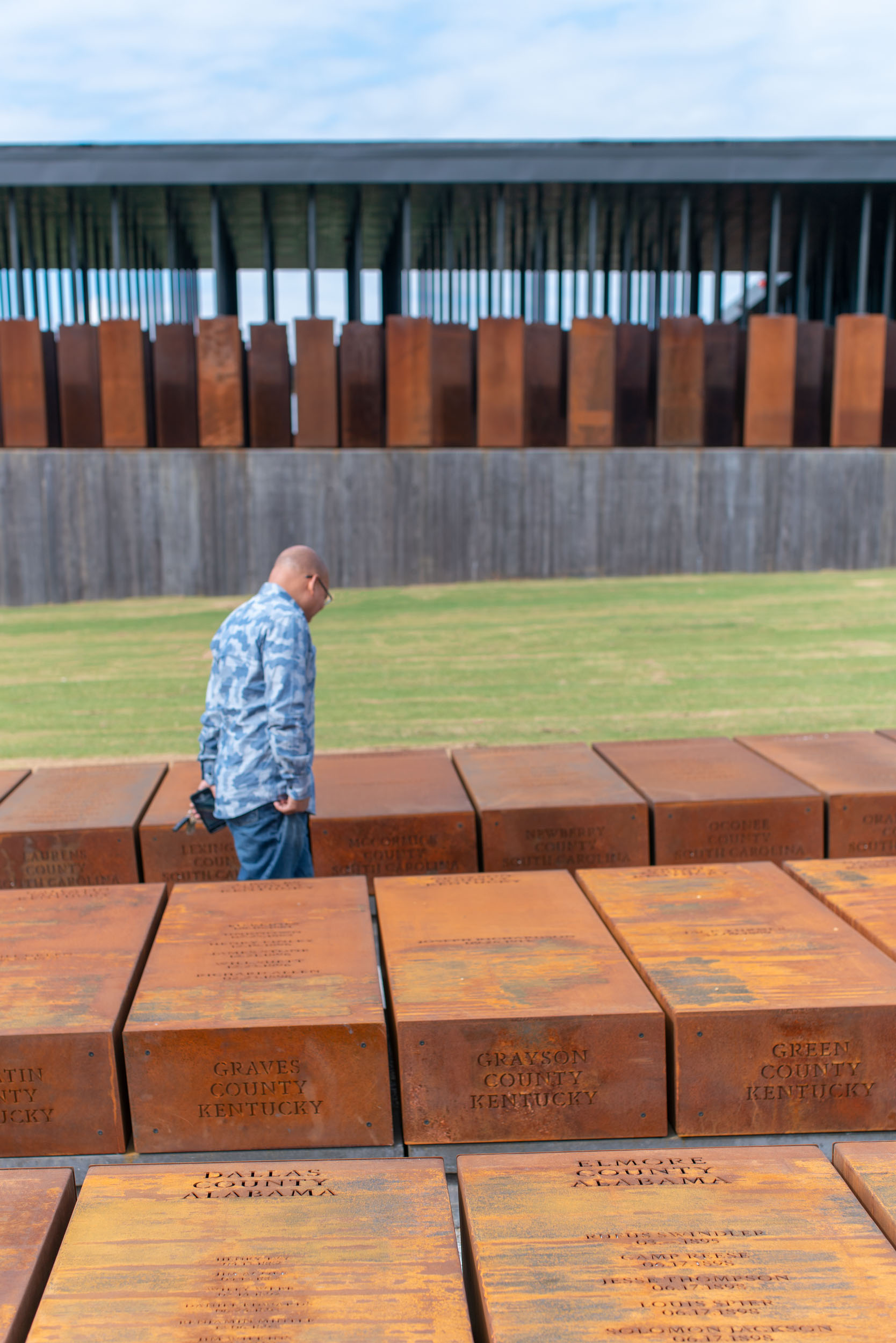
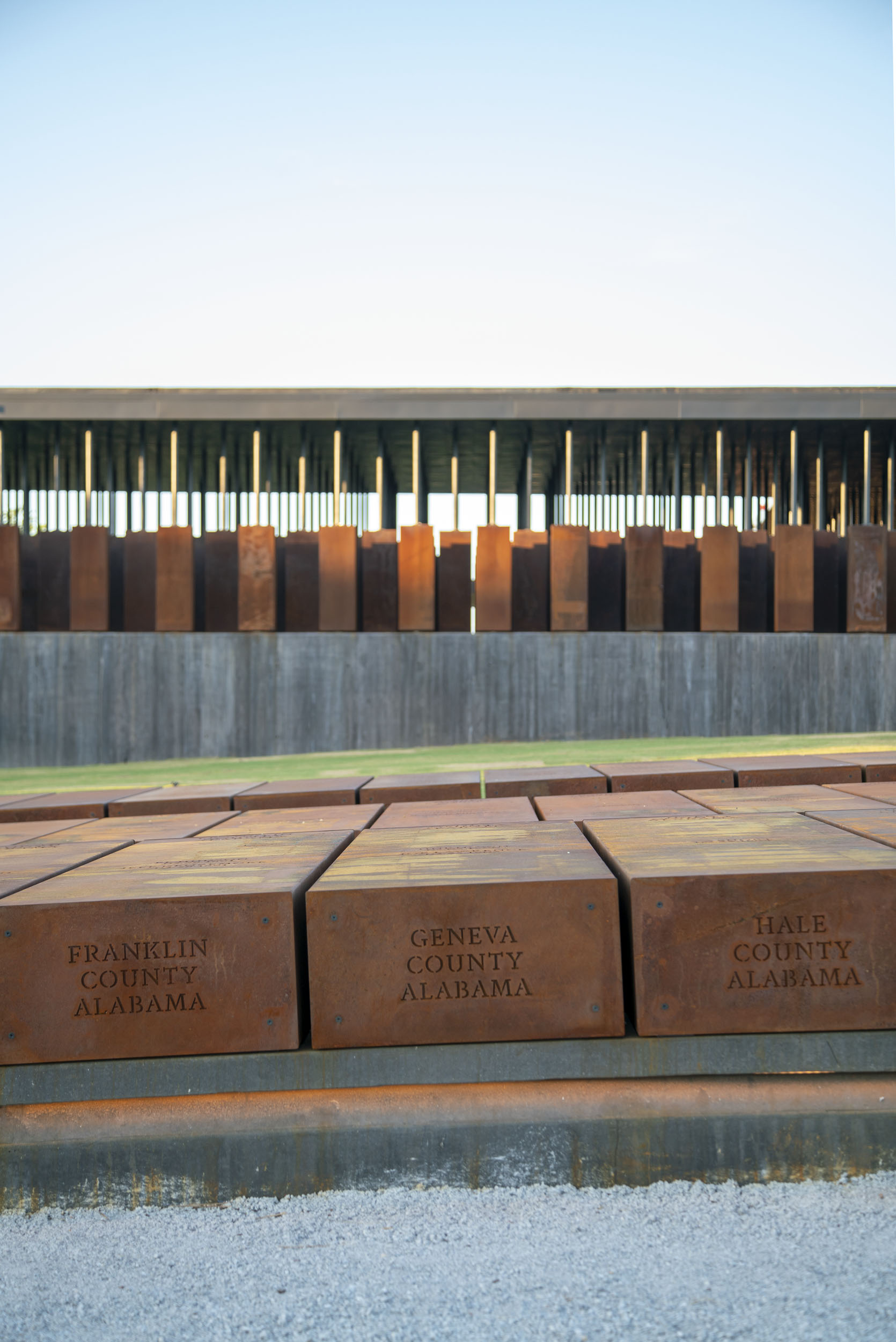
Duplicates of each of the monuments lie in the memory bank outside of the primary structure. The corresponding counties are invited to engage in this process of acknowledgment and reconciliation by claiming their monument and placing it as a marker in their own community.