Size

Site: 1,378 ha. / 3,400 Acres

Year

2021

Status

Completed

Client

Rwanda Institute for Conservation Agriculture

Partners

Howard G. Buffett Foundation, University of Nebraska Lincoln, Government of Rwanda, Remote Group, ARUP

Chris Hardy

Chris Hardy

Design Director — Kigali

Chris joined MASS in January 2018 as a Senior Design Associate based in Kigali. Prior to MASS, he was an Associate, Coordinator of the Fabrication Studio, and a member of the Technical Resources Group at Sasaki in Watertown, MA. Chris has researched and lectured on the emergence of digital fabrication and the integration of modern craft in architecture.

He has undergraduate and graduate degrees in architecture from Roger Williams University in Rhode Island. He previously held an adjunct professorship at the Boston Architectural College where he taught design studios. Chris is currently a member of the Education Advisory Council for CSI’s annual conference.

Anton Larsen

Anton Larsen

Principal — Kigali

Anton Larsen is a Principal in the Kigali office. Anton joined MASS in 2017 and has been instrumental in the design and construction of seminal projects like the Rwanda Institute for Conservation Agriculture (RICA), a 1400 Ha off-grid climate positive agricultural university campus with over 60 buildings, awarded with the 2020 ASLA Award of Excellence for Analysis and Planning, and most recently the Norrsken Kigali House new campus in downtown Kigali, first example in Rwanda of adaptive reuse of a historic site to convert it into Africa’s largest hub for entrepreneurs to help fuel growth and investment in the region.

As a thought leader, Anton’s research has been focused on climate positive design and has been advancing the work of the Performance and Provenance Council, contributing to MASS’s organizational sustainability goals and implementing carbon targets and measurement tools across project teams. His research has also been focused in developing viable opportunities for affordable housing in East Africa, implementing possibilities like prefabricated low-carbon AAC construction (Autoclaved Aerated Concrete) for the Masaka Housing project and the first and largest 3D printed housing development on the continent for 14-Trees in Kenya.

An architect and urban designer, Anton first came to Africa in 2011 with Peter Rich Architects in South Africa, and has led teams on projects ranging from education, civic, workspace, housing, equity, urban design, research and policy in multiple countries across East Africa, Nigeria, South Africa, Spain, and the United States. Anton is a member of the Rwanda Green Building Organization and is an accredited EDGE Expert, IFC green building certification and design tool to certify resource-efficient and Zero Carbon buildings.

Anton has been involved in strategic planning and policy work for the Government of Rwanda, and led the SEA of the National Urbanization Policy to strengthen socio-economic, environmental, and green urbanization aspects of the policy. He was a key contributor to the Kigali Green City Concept developed for the Ministry of Environment and GGGI, a 600 Ha green district development, was the co-author of the Green Gicumbi Low Carbon Climate Resilient Settlements project proposal to the Green Climate Fund for the Ministry of Environment and Rwanda’s Green Fund Fonerwa, as well as a contributor to the Ministry of Trade & Industry Domestic Market Recapturing Strategy, also called the Made-in-Rwanda Strategy.

Anton has a portfolio of over US $130M designed. His projects have spanned across affordable housing, sustainable architecture and urban planning as well as innovative projects such as the Rwanda Cricket Pavilion, a technologically advanced earth vaulted structure built using local materials and local labor, winner of the 2018 IStructE Structural Award for Small Projects of under £1 million.

Anton graduated from the UIC Barcelona School of Architecture. While he was still a student, Anton began his involvement in social architecture and his projects were exhibited twice at the Centre de Cultura Contemporània de Barcelona (CCCB).

Sierra Bainbridge, RLA

Sierra Bainbridge, RLA

Senior Principal & Managing Director — Boston

"I believe that every project is an opportunity to create a movement. To inspire this momentum, we must be one with the community, and together, go beyond the bare minimum."

Sierra began work with MASS in 2008 focusing on landscape architecture and joined full time in 2009 to finalize design and oversee implementation of the Butaro Hospital, MASS’s first project. Currently Sierra directs the ongoing design and implementation of MASS’s planning and architectural projects and is currently overseeing The Kayanja Center, an academic facility supporting rural health care delivery and research in Uganda, a number of African Conservation Schools in DRC, Tanzania, Zambia, and Rwanda, and the Butaro Hospital Expansion Plan, among others. Those completed include Butaro Hospital, the Umubano Primary School, the Butaro Doctors’ Housing, and the Butaro Ambulatory Cancer Center.

Prior to joining MASS, Sierra worked for four years at James Corner Field Operations, primarily in design and oversight of implementation of Section 1 of the New York City High Line. Sierra has taught graduate level studios at various universities and from 2010-2012, Sierra served as Head of the Architecture Department at the Kigali Institute of Science and Technology (KIST) in Rwanda. At KIST, Sierra was instrumental in shaping the current curriculum. She is invited to speak regularly, including the keynote address at the Healthcare Design Conference, serving as a Sasaki Distinguished Visiting Critic at the Boston Architectural College, and lecturing at the Carter ‘Lectures In African Studies’ series, the University of Pennsylvania, Harvard University, University of Toronto, and the American Institute of Architects, among others. Select features of Sierra’s work with MASS Design Group include A+U Magazine, Lotus, Mark Magazine, and Detail.

Sierra received her Bachelors of Arts in Art and Architectural History from Smith College and her Masters of Landscape Architecture and Masters of Architecture from the University of Pennsylvania.

Rosie Goldrick

Rosie Goldrick, CEng MICE, CIER

Principal & Engineering Director, Structural Engineer — Kigali

"Engineers have the theoretical and practical skills to generate technology equality, which is essential to conquering poverty."

As MASS’s Engineering Director, Rosie Goldrick leads a diverse team of international and multidisciplinary engineers in the design and implementation of innovative projects throughout East Africa. She has led structural design and construction supervision on a range of projects in Rwanda including the Rwanda Institute for Conservation Agriculture (RICA), Norrsken Kigali Hub, Ruhehe Primary School and One Acre Fund Headquarters in Kenya. She has expertise in seismic design and the use of non-conventional materials. Her role on RICA involved structural design and construction supervision of 56 buildings using earth and timber, interpreting local and international building codes to design structures that are seismically appropriate for the region. Subsequently she is contributing to the development of standards for adobe block construction.

Prior to joining MASS, Rosie worked for five years at Atkins designing infrastructure, including working in India as a design coordinator on the Doha Metro. Rosie has a first class Masters of Civil Engineering and Architecture from the University of Southampton. She is a Chartered Member of the Institution of Civil Engineers, a Corporate Member of the Institute of Engineers Rwanda, and sits on the Rwanda Standards Board Technical Committee for Civil Engineering and Building Materials.

Alan Ricks, AIA, Int FRIBA

Alan Ricks, AIA, Int FRIBA

Founding Principal & Chief Design Officer

Alan is a Founding Principal and the Chief Design Officer of MASS Design Group. He leads strategy and design of the 100-person firm, which has projects in over a dozen countries that range from design to research to policy—a portfolio that continues to expand the role of design in advancing a more just world.

In 2017 Alan and MASS were awarded the National Design Award for Architecture from the Cooper Hewitt, Smithsonian Design Museum. First launched at the White House in 2000 as an official project of the White House Millennium Council, the annual Awards program celebrates design as a vital humanistic tool in shaping the world, and seeks to increase national awareness of the impact of design through education initiatives.

In 2018 he and MASS received the Arts and Letters Award for Architecture from the American Academy of Arts and Letters. Each year the Academy honors over 70 composers, artists, architects, and writers with awards and prizes. Recipients must be nominated by an Academy member and this year the jury included Annabelle Seldorf, James Polshek, Tod Williams, Billie Tsien, Steven Holl, Kenneth Frampton, and Thom Mayne.

Alan is a member of The Forum of Young Global Leaders with the World Economic Forum, a community of over 800 men and women selected under the age of 40, who operate as a force for good to overcome barriers that elsewhere stand in the way of progress. The community is made up of leaders from all walks of life, from every region of the world, and from every stakeholder group in society.

Currently, he is the William B. and Charlotte Shepherd Davenport Visiting Professor at the Yale School of Architecture and has previously taught at the Harvard Graduate School of Design. He regularly speaks, writes, and creates films focused on the role of architecture in catalyzing social change. Chris Anderson, chief curator of TED, described his TED talk as “a different language about what architecture can aspire to be.”

He has a Bachelor of Arts from Colorado College and a Master of Architecture from the Harvard Graduate School of Design.

Project Team

Shakira Nyiratuza, William Arnold, Christian Uwinkindi, Harriet Kirk, Jonathan Blaseg, Greg Dahlke, Erinn McGurn, Jean Paul Sebuhayi, Chris Hardy, Theophile Ndoreyaho, James Kitchin, Nelson Habintwari, Aimable Mukire, Obed Sekamana, Sherryen Mutoka, Jenny Kay, Claire O'Reilly, Gilbert Ngenzi, Opoko Okechi, Therese Graf, Jessi Flynn, Taylor Sinclair

Project Team (cont.)

Adam Saltzman, Andre Ntivuguruzwa, Nadine Ishimwe, Noella Nibakuze, Jean Paul Uzabakiriho, Martine Dushime, Tilly Lenartowicz, Zani Gickuki, Jacques Maniraruta, Asyncrite Nyiganyiki, Darryl Tanner, Anton Larsen, Lamy Subira, Taylor Klinkel, Giovanni Bartolotti, Catherine Lie, TJ Burghart, Josh Greene, Christelle Muhimpundu, Pim van Baarsen, Carissa Tan Tije, Paulien Nabben, Lotte de Raadt, Miguel Signes, Niels Datema, Cameron Bailey

Collaborators

Civil Engineering: Arup, Transolar
SMEP: MASS Design Group
Contractor: MASS.Build, Remote Group, Costwise
Quantity Surveying: MEW Consultants LTD, Arabella
Graphics (presentations): PEBL Design

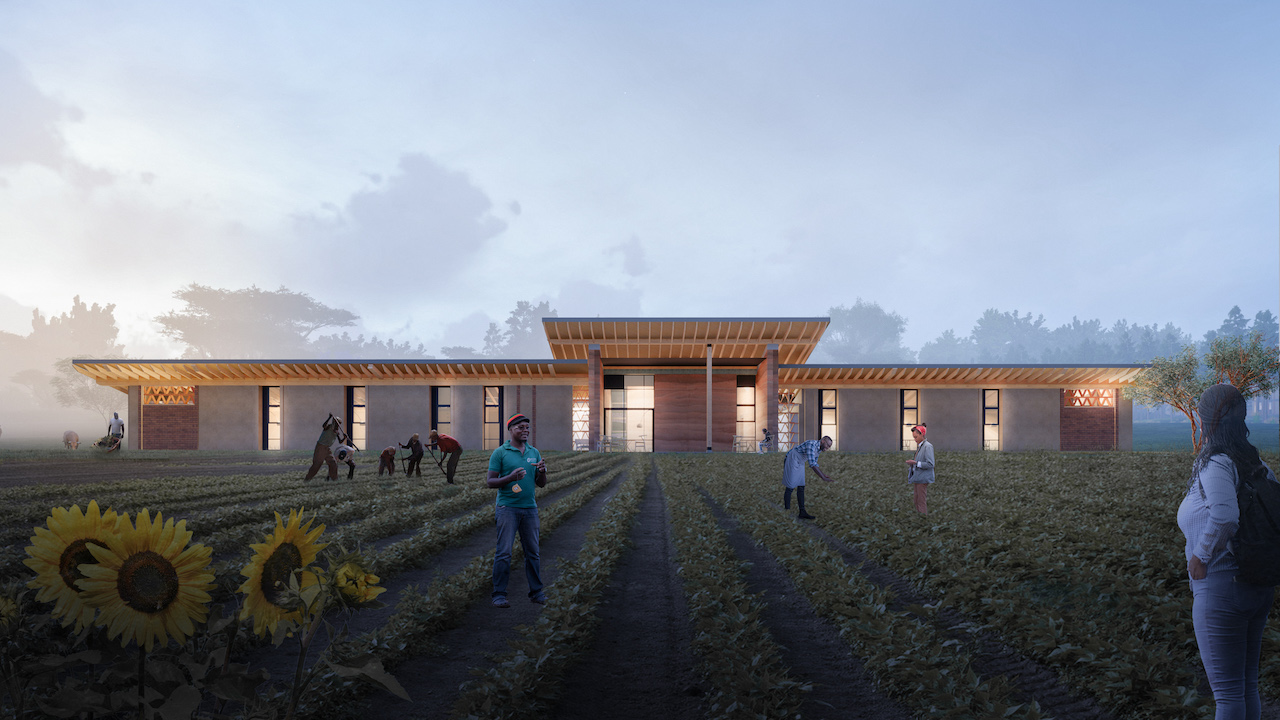
MASS Design Group is partnering with the Rwanda Institute for Conservation Agriculture (RICA) to design and build their new campus in Bugesera, Rwanda.

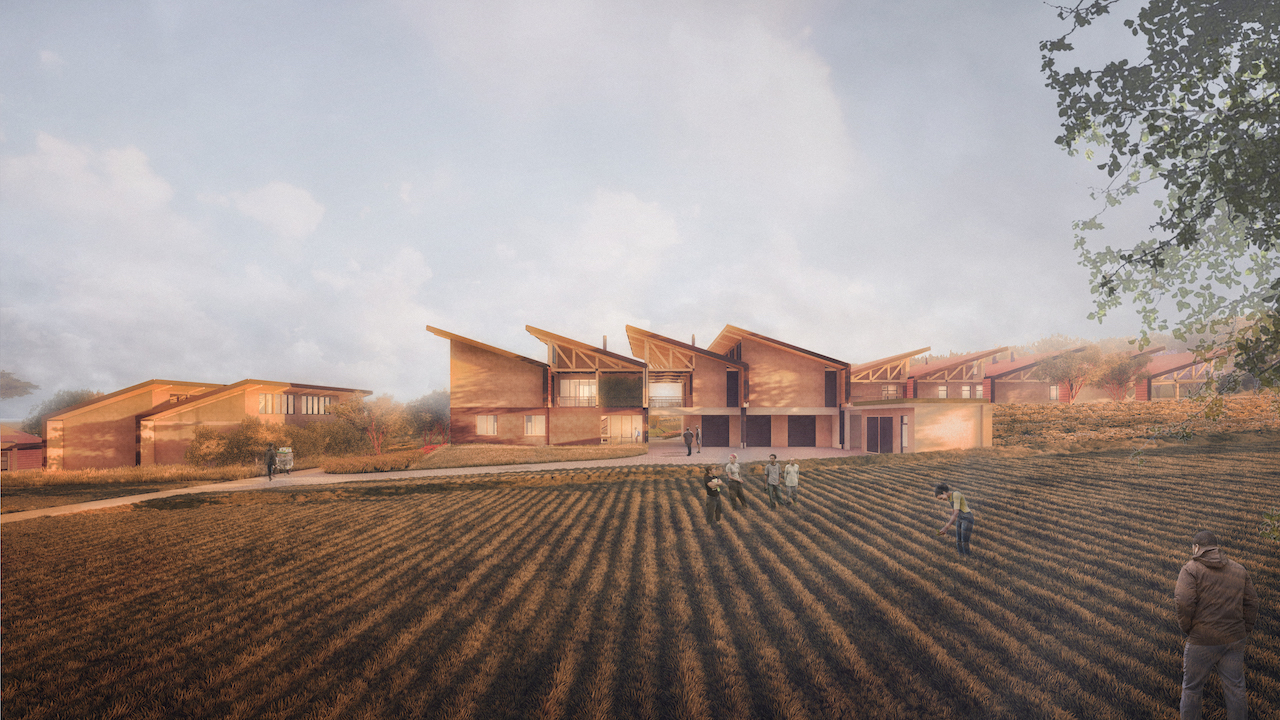
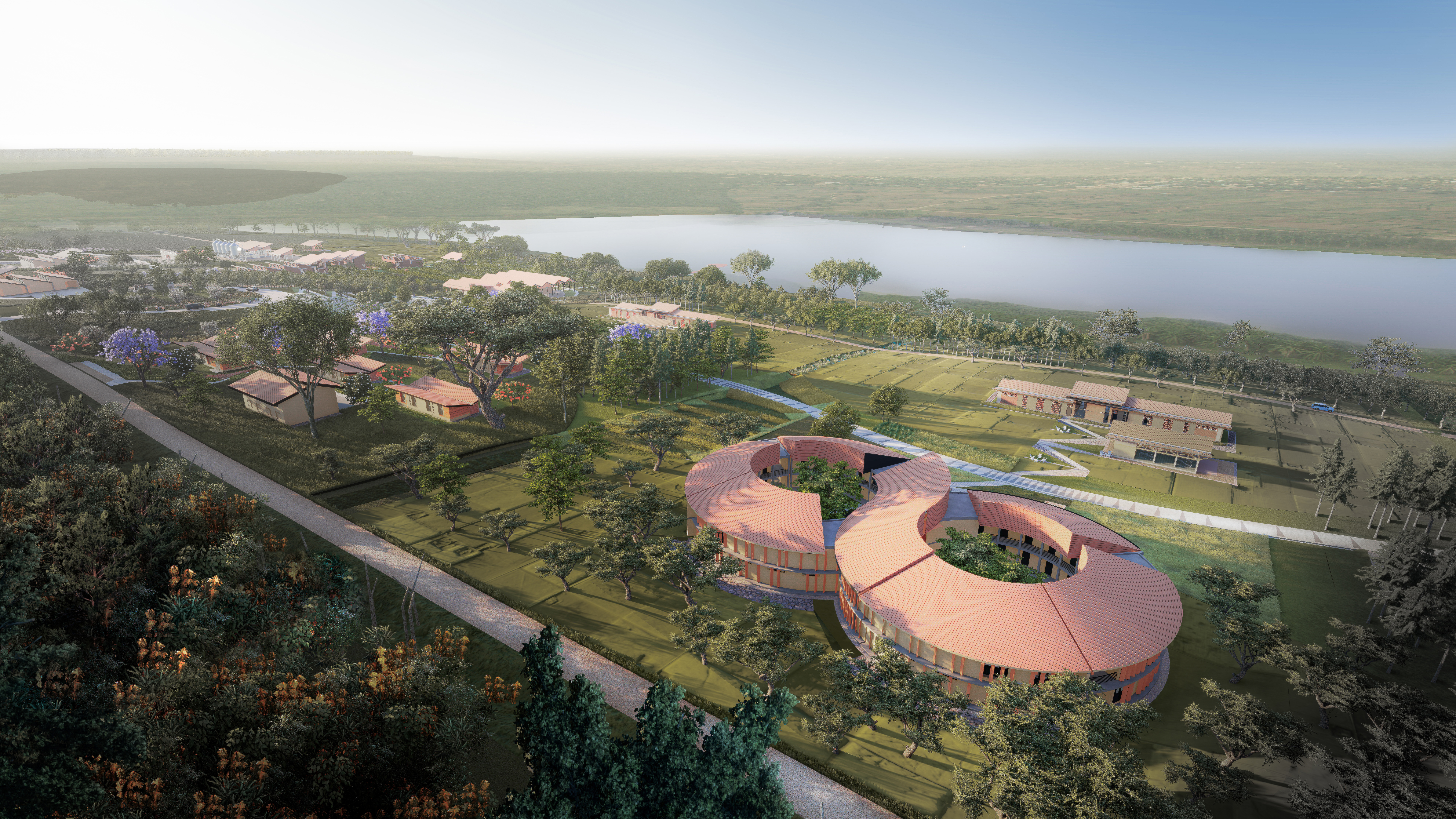
View of RICA second and third year housing

Rwanda Institute for Conservation Agriculture

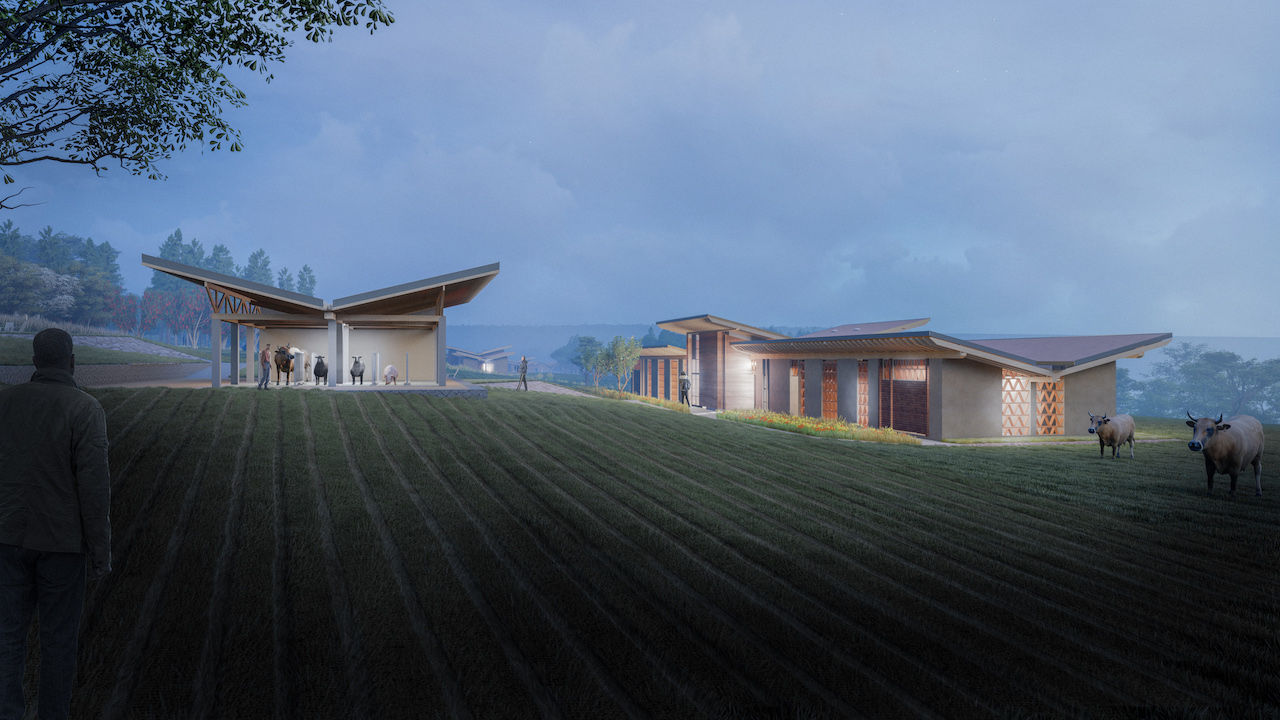
RICA First year farms

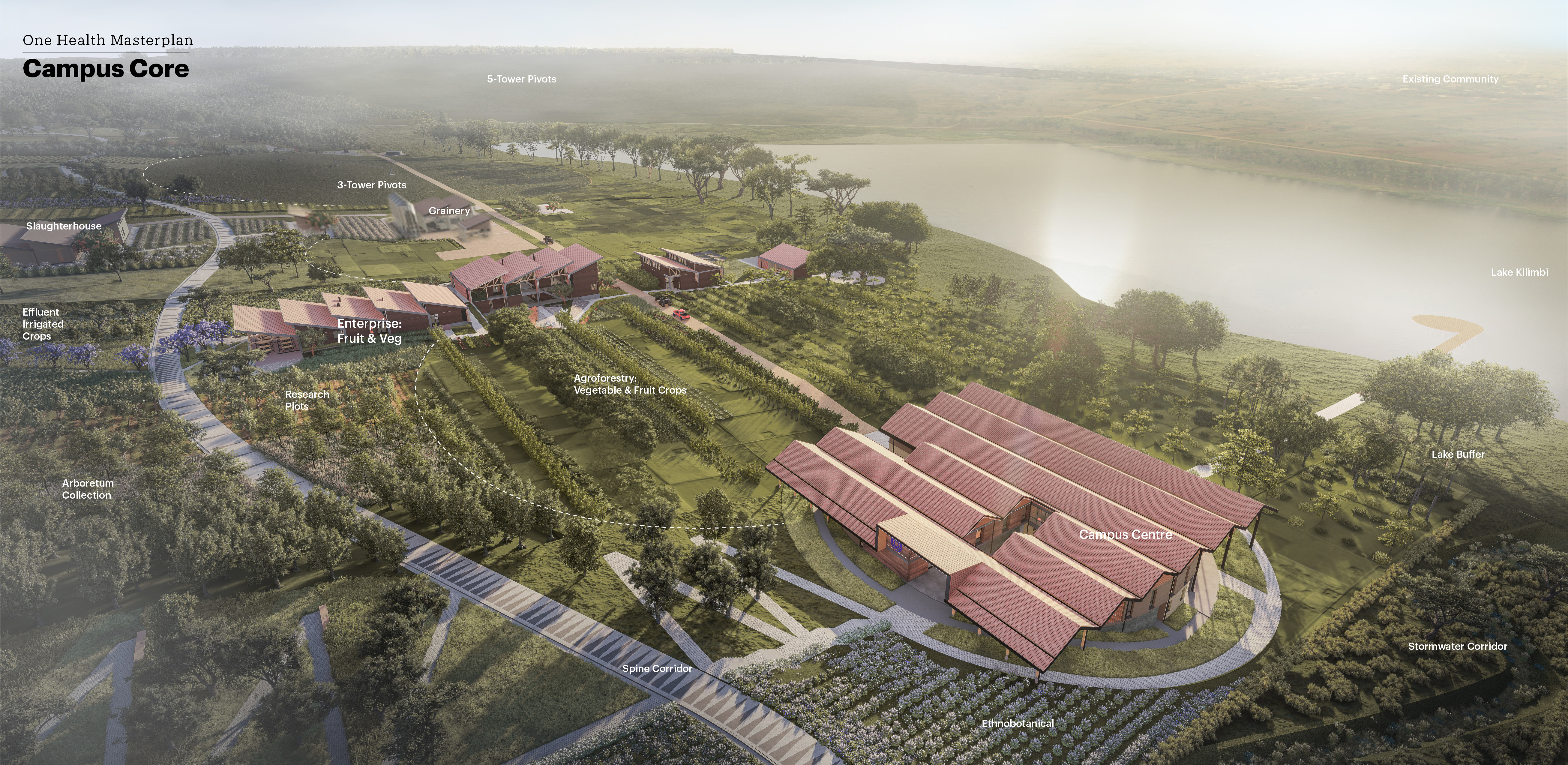
MASS led the master planning, architecture, landscape, engineering, and construction for the new campus. The project was conceived and funded by the Howard G. Buffett Foundation and supported by the Government of Rwanda.

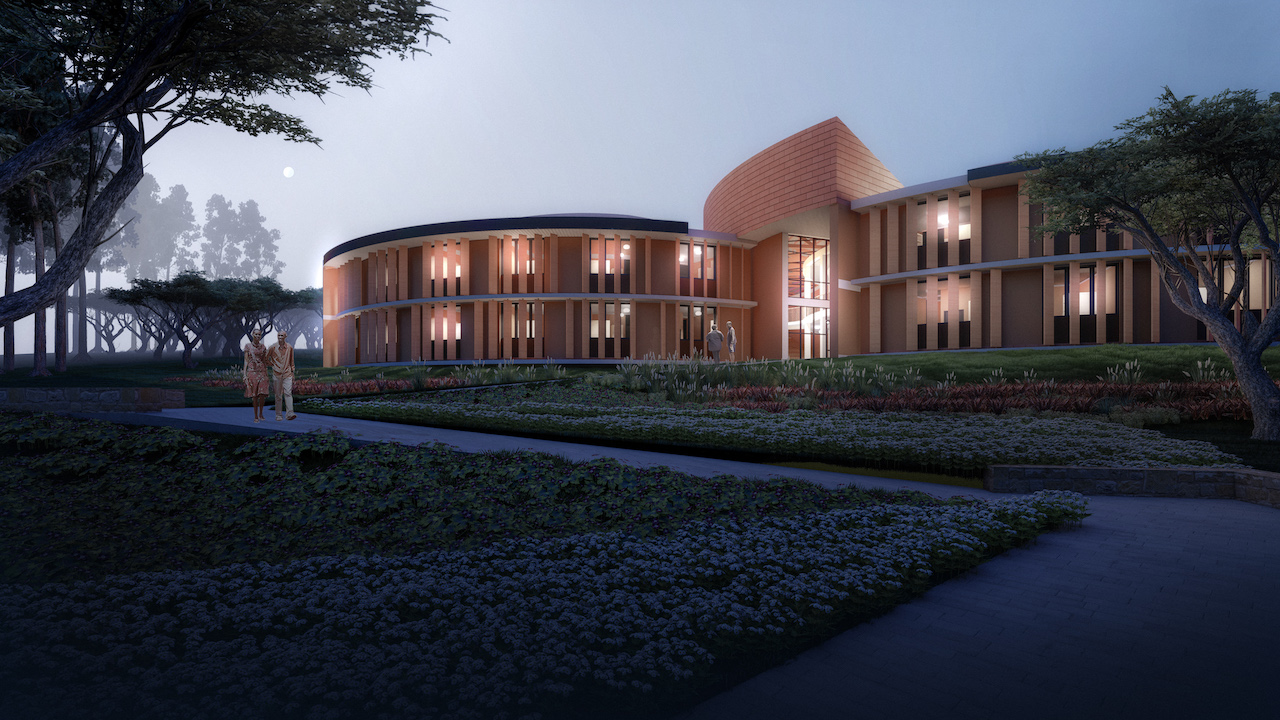
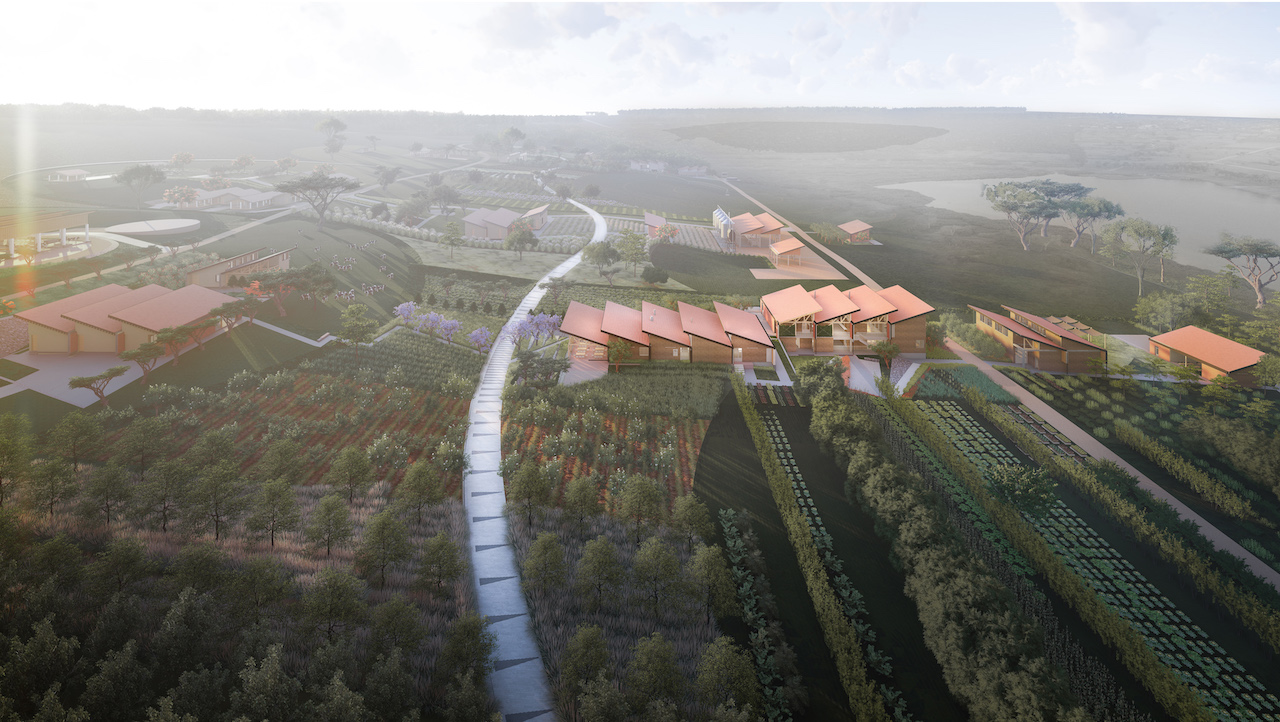
The campus design includes landscape, housing, academic space, barn storage, and processing space for the institute. Each academic building across the campus is dedicated to one of the six different agricultural enterprises, both plant- and animal-based, that students will study and engage with throughout their three years at the institute. More mechanized practices are situated on the West end of the campus, and smallholder first-year student farms are placed on the East end. The campus uses pivot irrigation and will be energy independent, with its own solar farm and water treatment plant.

Aerial rendering of RICA campus

Rwanda Institute for Conservation Agriculture

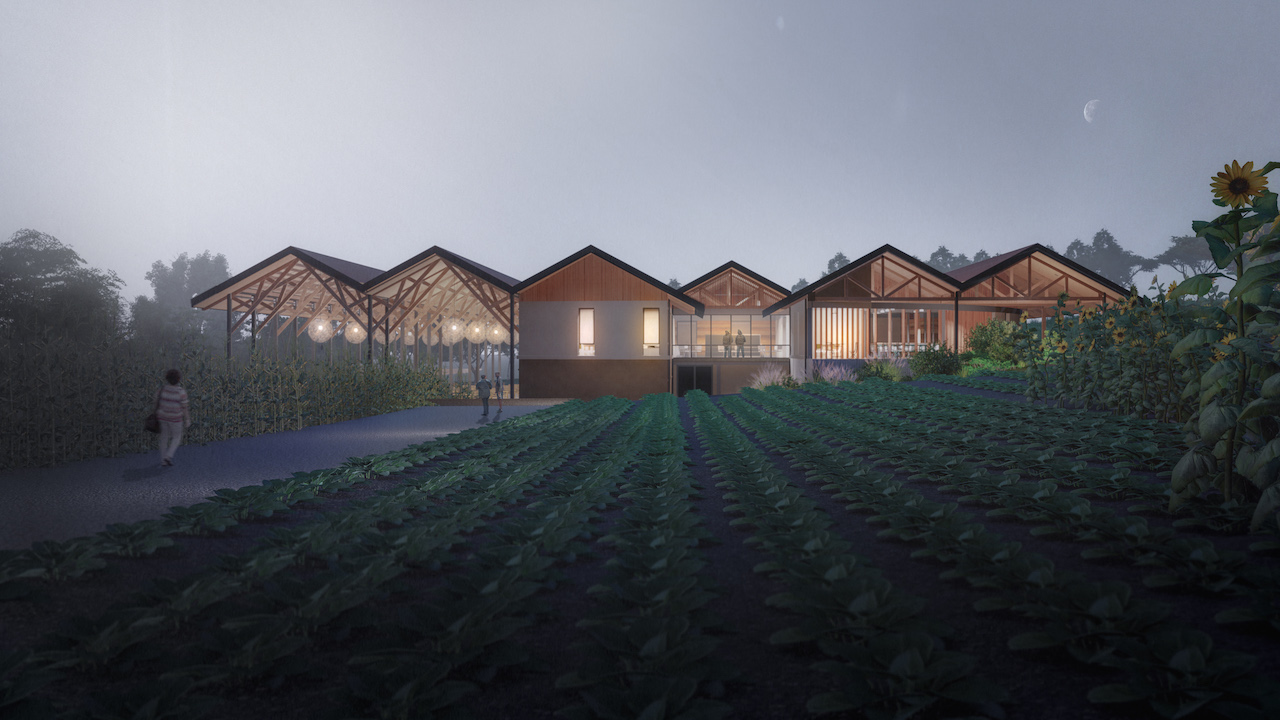
RICA vegetable farms
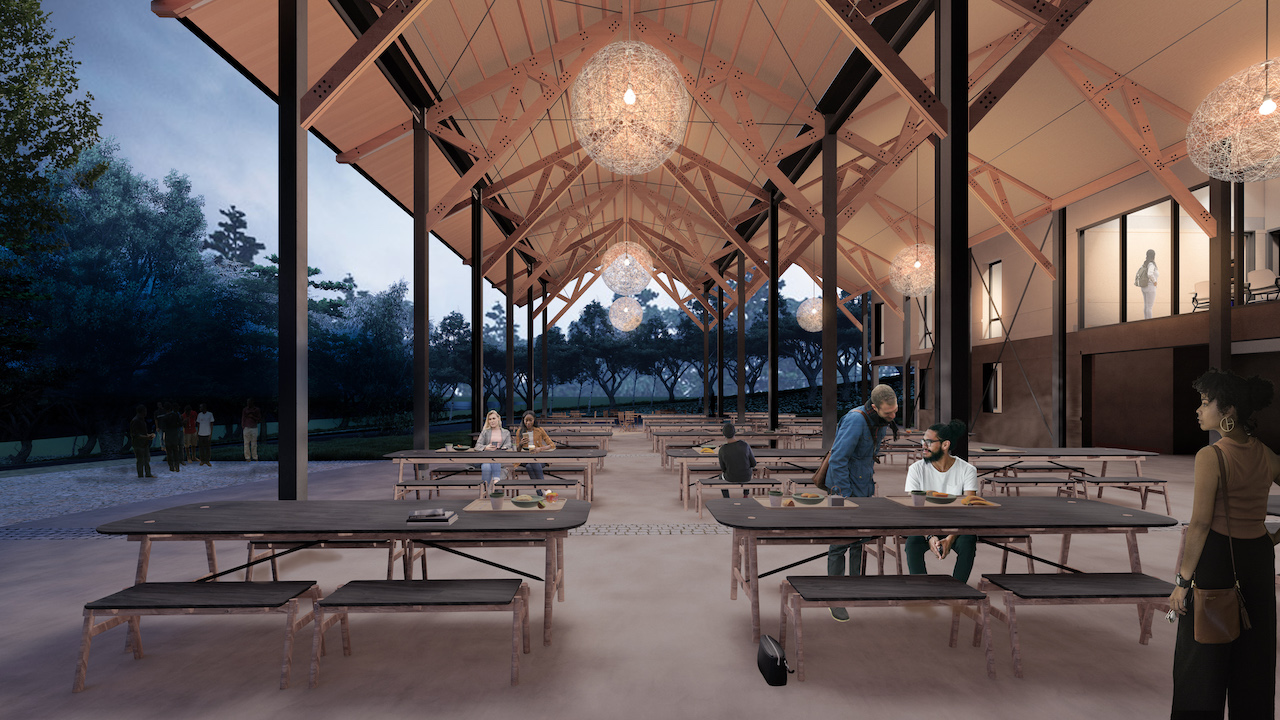
RICA dining hall

The curriculum and campus design at RICA are informed by Conservation Agriculture and One Health Principles, both of which emphasize the interlinking of ecological, animal, and human health. The campus and curriculum seek to reinforce these principles by taking an interdisciplinary, experiential approach to learning, with a campus that promotes biodiversity, ecological conservation, and community participation. RICA will soon be a world leader in experiential education, research, and conservation agriculture.

96%

of materials sourced within Rwanda

RICA campus center

Rwanda Institute for Conservation Agriculture

RICA first year farms
RICA ASLA submission page, showing an aerial of the campus

RICA was the recipient of the ASLA's 2020 Professional Awards, in the Analysis and Planning category. Click here to view our submission.

The project also utilizes the services of MASS.Build and MASS.Made.