

Size

Site: 6.5 acres
Phase 1 Build: 102,250 sq. ft. / 9,500 sq. m.
Phase 1 Units: 208
Phase 2 Unbuilt: 53,820 sq. ft. / 5,000 sq. m.
Phase 2 Units: 92

Year

In Progress

Client

Government of Rwanda

John Maher

John Maher

Design Director — Chicago, IL

John joined MASS in early 2014 and spent two and a half years working in MASS' Kigali office before moving back to Boston, and is now based in Chicago. John has led design teams on two hospital projects currently under construction in Rwanda, Munini and Nyarugenge District Hospitals, and most recently New Redemption Hospital in Caldwell, Liberia. He is currently working on the design of a behavioral health furniture line and construction oversight for New Redemption Hospital. He's worked on projects in East Africa, West Africa, South Asia, and North America. Prior to joining MASS, John was awarded two Public Service Center Fellowships from MIT for water, sanitation, and hygiene projects in Tamale, Ghana. As a Visiting Professor at Washington University in St. Louis in the spring of 2020 John led a studio focusing on the social determinants of health and design interventions in North St. Louis. He is currently pursuing an MBA at University of Chicago’s Booth School of Business as a Neubauer Civic Scholar. John received his Master of Architecture from Massachusetts Institute of Technology and his Bachelor of Arts in Architecture from Washington University in St. Louis.


Christian Benimana

Christian Benimana, RA

Senior Principal & Managing Director — Kigali

Christian Benimana joined MASS Design Group as a Global Health Corps Design Fellow in 2010. Today, Christian works as one of the firm's Senior Principals and Managing Directors, and is Director of the African Design Centre, a field-based apprenticeship that is set to empower leaders who will design a more equitable, just, and sustainable world. At MASS, he has been involved with design/build projects, development initiatives, operational and administration leadership. Christian has been listed among 10 architects and designers that are championing Afrofuturism and 2017 Quartz Africa Innovators. He has authored articles and book chapters including Re-Thinking the Future of African Cities in The African Perspective Magazine and Creating Design Leaders: The African Design Centre in Public Interest Design Education Guidebook.

Christian has taught at the Architecture School of the former Kigali Institute of Science and Technology (KIST) and his goal is to develop the next generation of African designers with socially-focused design principles. Before joining MASS, he worked with LongiLat Architecture and Research in Shanghai assisting with the Porsche Center in Shanghai and the Netherlands Pavilion in the 2010 International Expo. Christian holds a Bachelor of Science in Architecture from the School of Architecture and Urban Planning (CAUP) of Tongji University in Shanghai, China (2008), and has served as the Secretary General of the East Africa Institute of Architects.

Project Team

Christian Benimana, Kelly Doran, Alan Ricks, Sierra Bainbridge, John Maher, Lysette Niragira, Marcela Laverde, Annie Peyton, Theophile Uwezu, Jim Peraino, Kyle Barker, Matt Swaidan, Garrett Gantner, Martin Pavlinic, Jessi Flynn, Adam Saltzman, Jean Damascene Sekamana, Anibal Niyitanga, Obed Sekamana, Amilie Ntugulirwa

Collaborators

MEP: Mazzetti
Civil: Sherwood Design Engineers, previously Fall Creek Engineering
Structural Engineering: NOUS Engineering
Quantity Surveyor (Design): Bruce Nizeye
Quantity Surveyor (Construction): Emmanuel Mumu Wamalwa

Beginning in 2012, MASS worked with the Rwandan Ministry of Health to develop a set of hospital design standards to improve health outcomes that could be adapted to the specific needs of each District’s context, demographics, and programmatic requirements. Soon after, MASS designed the Munini District Hospital, a 300-bed facility in Rwanda’s Nyaruguru District, to pilot these design standards in one of Rwanda’s most remote districts. The hospital is currently under construction, and is scheduled to open in late 2020.

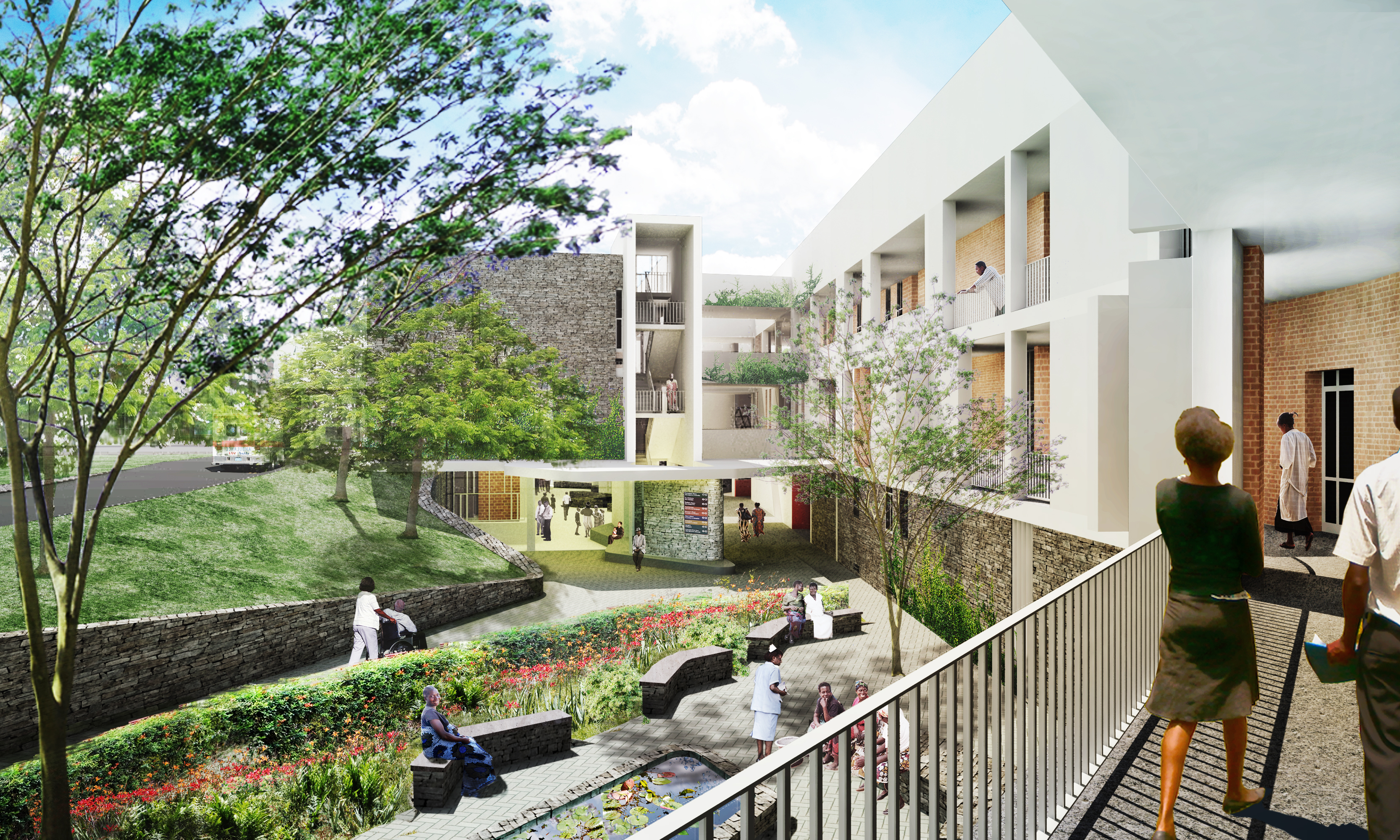
Rendering of the Munini District Hospital, view from upper level hallway to courtyard below

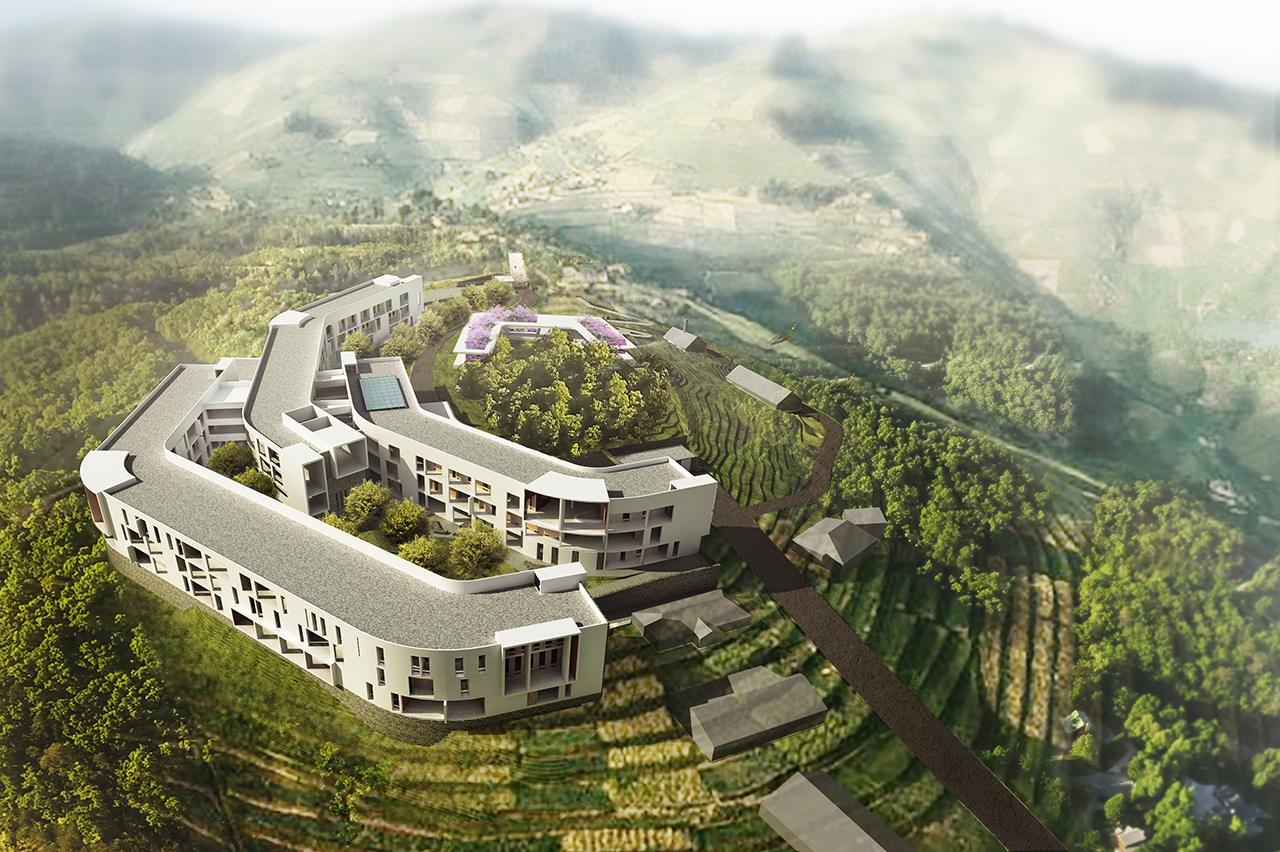
To adapt the plan to a relatively condensed site, the facility’s three building bars are bent in accordance with the natural contours of the site and are strategically opened up to allow prevailing winds to pass through the buildings. These bars are connected by bridges, and define a central courtyard and garden space providing areas for rest and visitation for both the patients and their families.

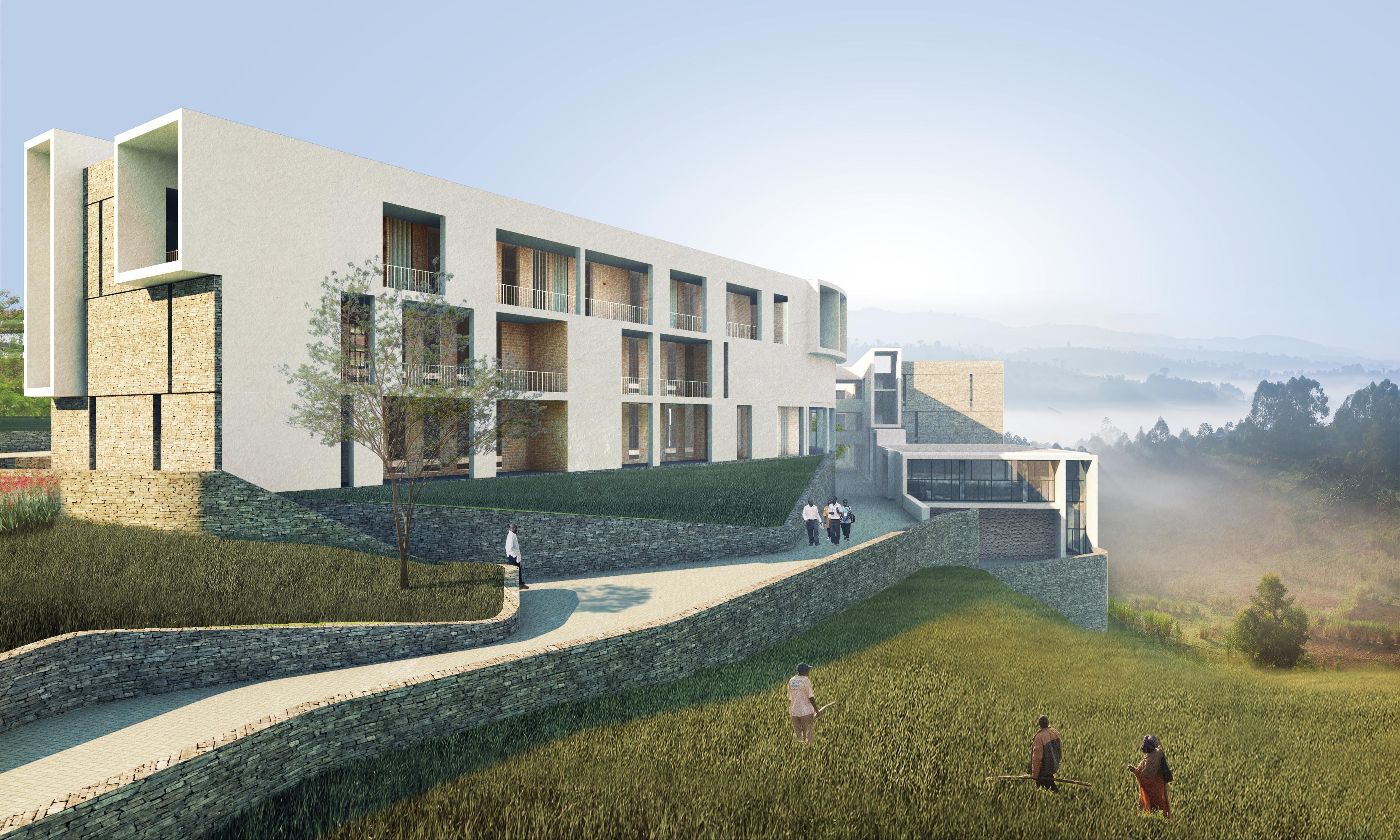
Rendering of Munini District Hospital, View of hilly landscape and exterior of the building

The facility reduces the spread of disease through natural ventilation systems, isolated services, and improved access to hand-washing stations. Patient, staff, and visitor flow are optimized to minimize overlap with at-risk patients. The hospital also uses exterior corridors, further limiting the risk of airborne transmission. The building’s largest program – private rooms and open wards – are each set back from the building’s face to provide dedicated balconies, shading, and outdoor space throughout the facility.

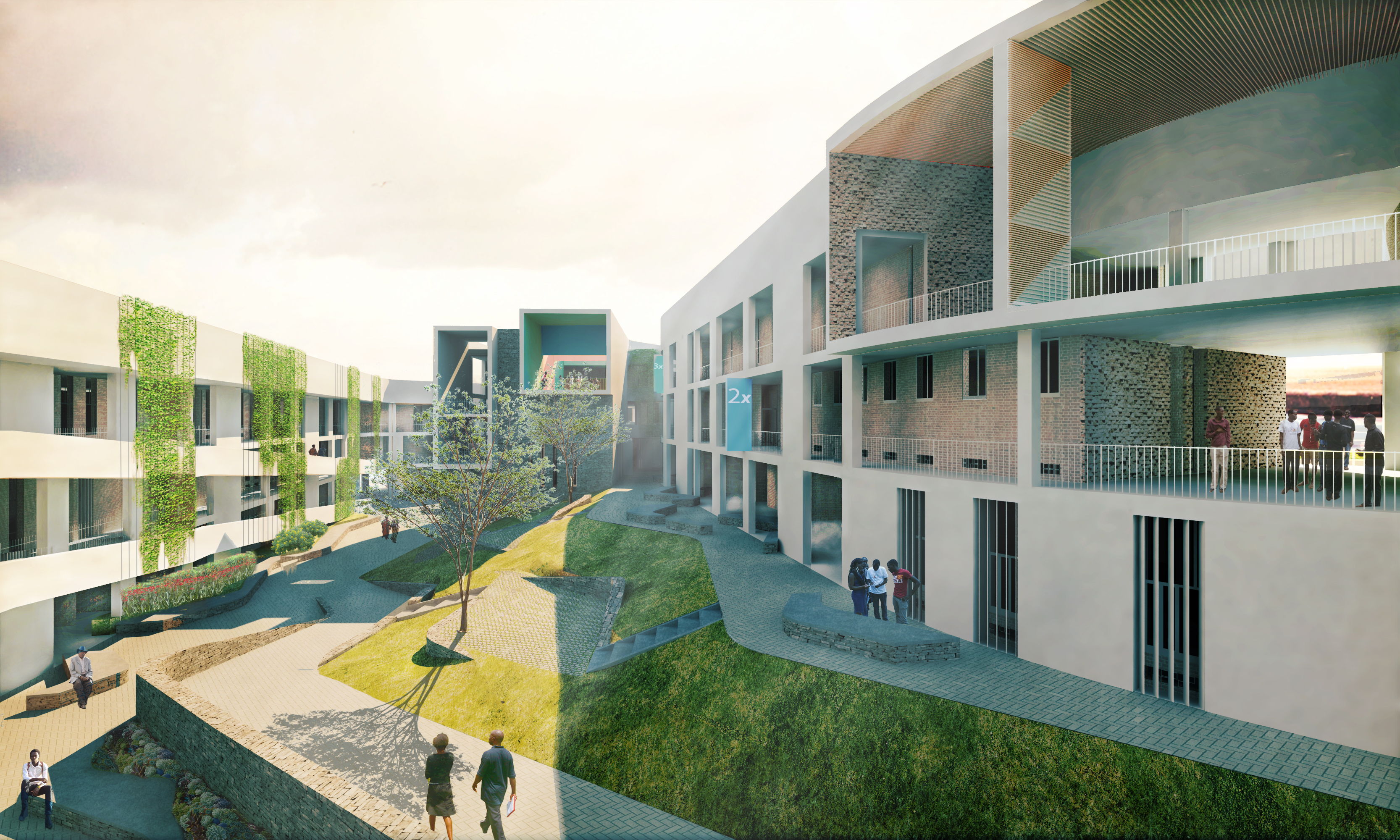
Rendering of the Munini District Hospital, Courtyard in between patient care wards

The primary entrance to the hospital is a landscaped path that provides multiple places for open air seating to combat infection, and green-spaces to provide a tranquil, healing environment. Emergency services are vertically separated from reception to allow for ease of flows across the emergency room, operations suite, intensive care unit, imaging, and post-op areas – each connected by a bridge that links the three bars of the buildings at the core of its operations.