

Size

Build: 10,764 sq. ft. / 1,000 sq. m.

Year

2015

Status

Completed

Client

Rwanda Ministry of Education, District of Musanze, M2 Foundation

Partners

District of Musanze M2 Foundation Nous Engineering

Patricia Gruits, RA, LEED AP

Patricia Gruits, RA, LEED AP

Senior Principal & Managing Director — Boston

"I believe that the built environment impacts our lives and we can design the process to create positive social change."

Patricia Gruits is a Senior Principal with MASS Design Group leading both design and research projects in health, education, and equity. Since joining MASS in 2013, she has led the design of the Maternity Waiting Village in Malawi with the Malawi Ministry of Health, the African Leadership University, a series of primary schools in East Africa with the African Wildlife Foundation and the MSquared Foundation, and the development the Ellen DeGeneres Campus of the Dian Fossey Gorilla Fund.

Currently, Patricia leads design and research initiatives at MASS with a focus on planning, design, and evaluation. Her work is aimed at engaging and empowering stakeholders in the design process; supporting and substantiating the impact of design on health, social, and environmental outcomes; and translating research into design strategies and decision-making. She has coordinated the creation of the Purpose Built series— a set of tools for creating impact-driven design— and has implemented this approach in the design of affordable housing, healthcare, and urban design projects around the globe. Patricia has also managed a range of design projects aimed at proving the impact of the built environment on individual and community health in the United States, including a collaboration with the mayor’s working group to address issues of homelessness, addiction and recovery in Boston and partnered with community development corporations to create affordable and supportive housing.

Patricia collaborated with the Joint Center of Housing Studies at Harvard to create guidelines for Safe Interaction in Senior Affordable Housing in response to COVID-19, and has lectured at the Harvard School of Public Health as a part of the USAID sponsored Airborne Infection Control course. She has taught design studios focusing on social impact at the Boston Architectural College and RISD. Her work has been published in journals of architecture and health and was recently awarded the “Top 40 under 40” for Sustainable Design by Impact Design Hub.
Project Team

Christian Benimana, Patricia Gruits, Andrew Brose, Annie Peyton, Alan Ricks, Theophile Uwayezu, Kayihura Nyundo, Christian Uwinkindi, Sierra Bainbridge, Martin Pavlinic

Collaborators

Landscape Design: MASS Design Group
Structural Engineer: Nous Engineering
Geotechnical Engineer: Kigali Institute of Science & Technology Soil Mechanics & Geotechnical Engineering Lab
General Contractor: Daniel Ahintuje
Furniture Fabricator: Economat Musanze

In 2012, Markus Gemuend and Monique Bobadilla founded the M2 Foundation Foundation with the mission to sustainably impact children and their communities through education. Recognizing the considerable gaps in academic infrastructure that the Ministry of Education identified, their first project was to support the curriculum, teachers, and infrastructure of Mubuga Primary School in the Musanze District.

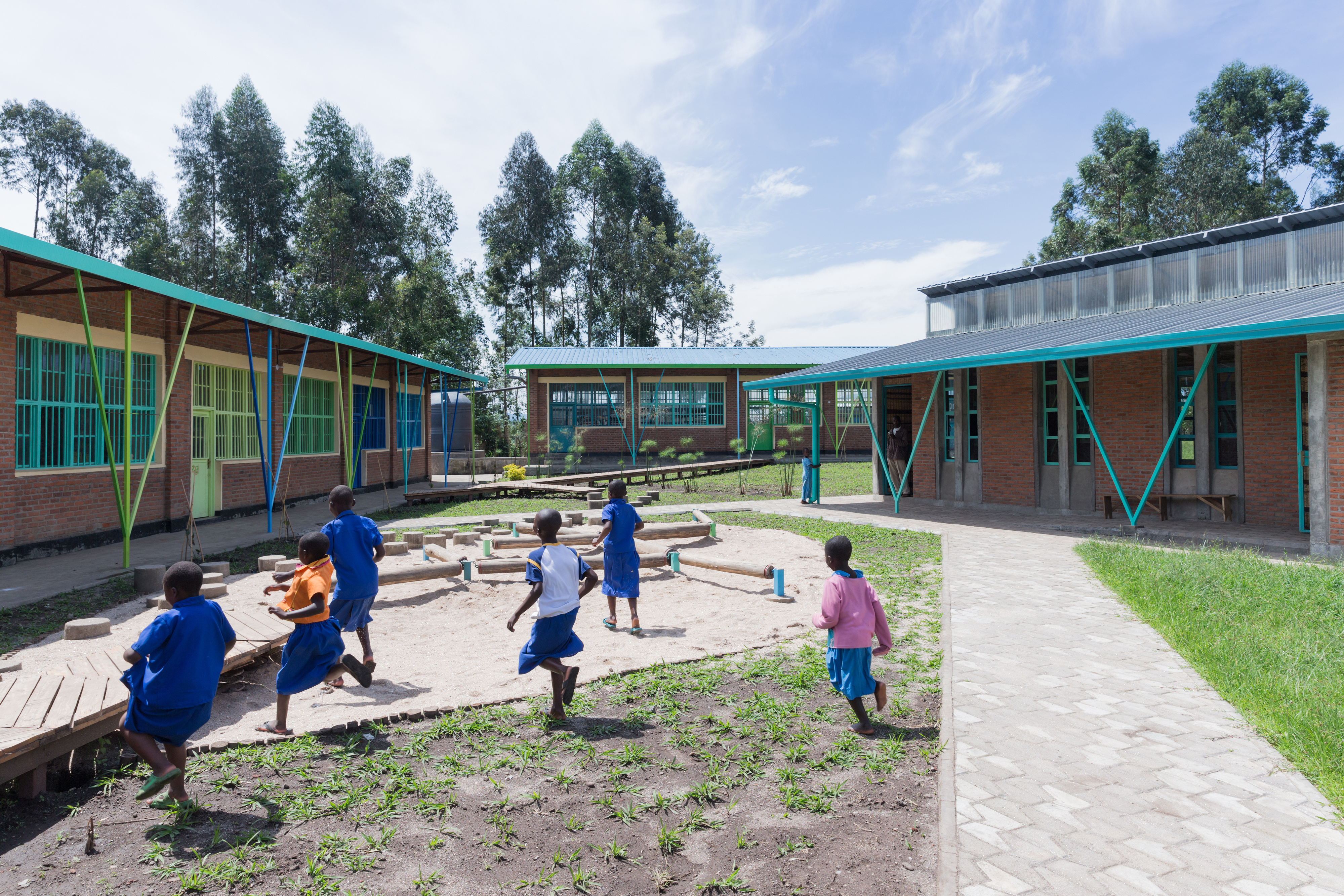
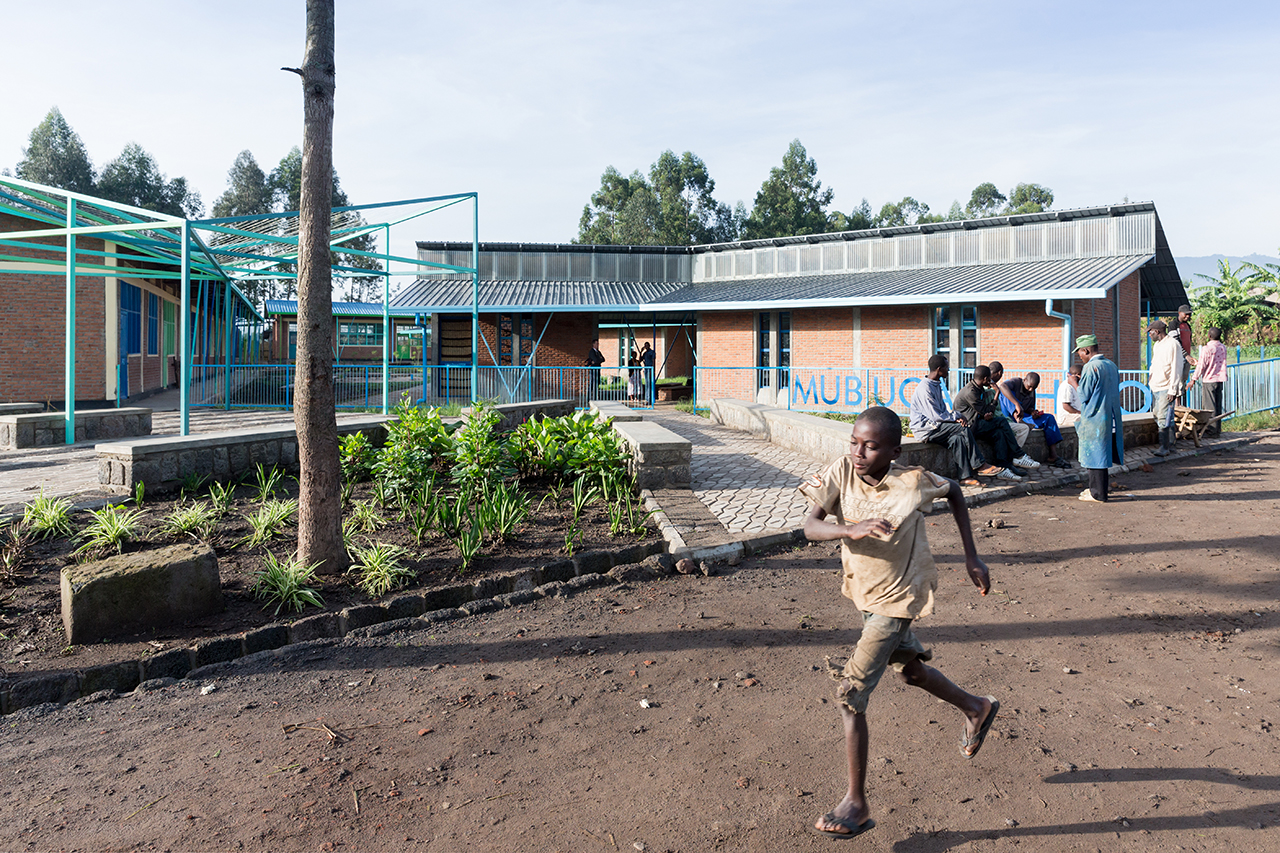
Photo of Mubuga Primary School, children gather in the inner yard

The new design sought to address challenges facing many schools in the district, such as overcrowding, poor daylighting, poor acoustics, and access to washrooms, while remaining within the Ministry’s financial and material constraints. The new campus consists of five educational buildings housing thirteen classrooms, a resource room for teachers, an administrative office, library, community pavilion, and bathrooms.

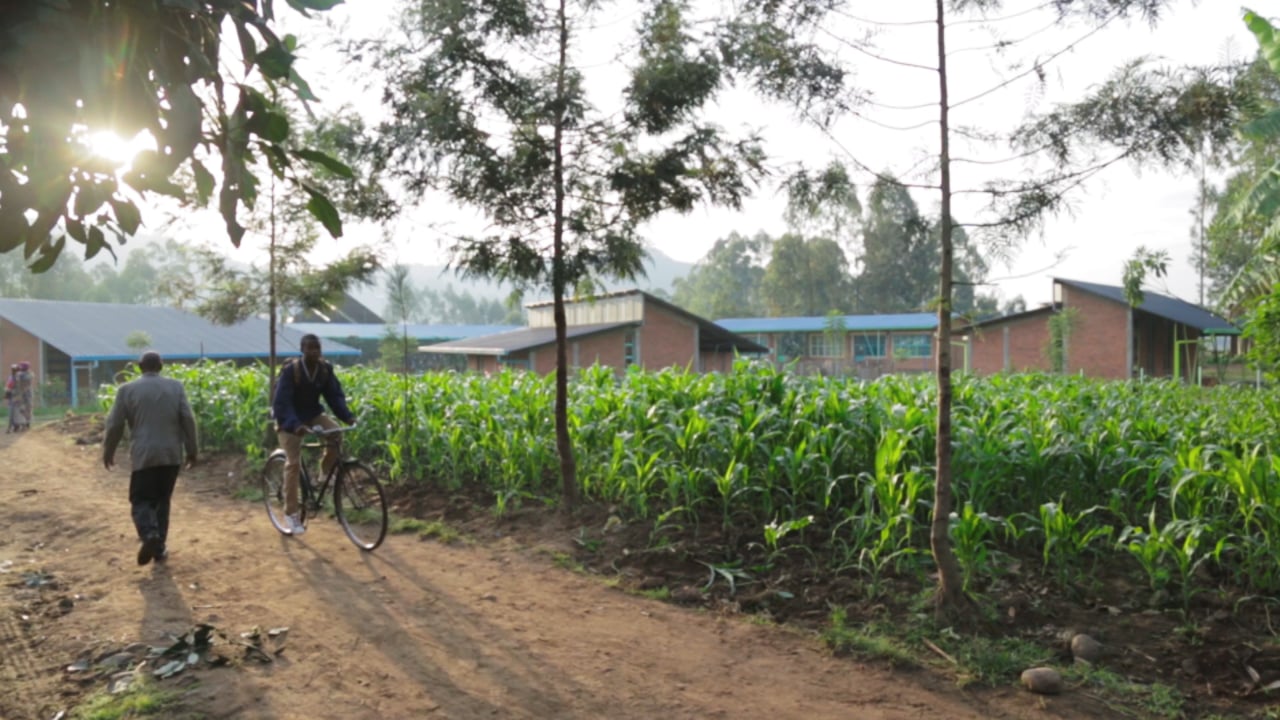
Photo of Mubuga Primary School, Photo by Iwan Baan, the exterior of the Mubuga Primary School

© Iwan Baan

The new classroom blocks are oriented to take advantage of solar angle and prevailing winds, with outdoor classrooms connected by a central pathway that links each of the classroom blocks. These new classrooms are larger than the existing classrooms and utilize clerestory windows and roof overhangs for light and shade, with narrow vertical windows on the long side of the rooms to support cross ventilation. Locally sourced reeds in the ceilings and doors improve sound insulation.

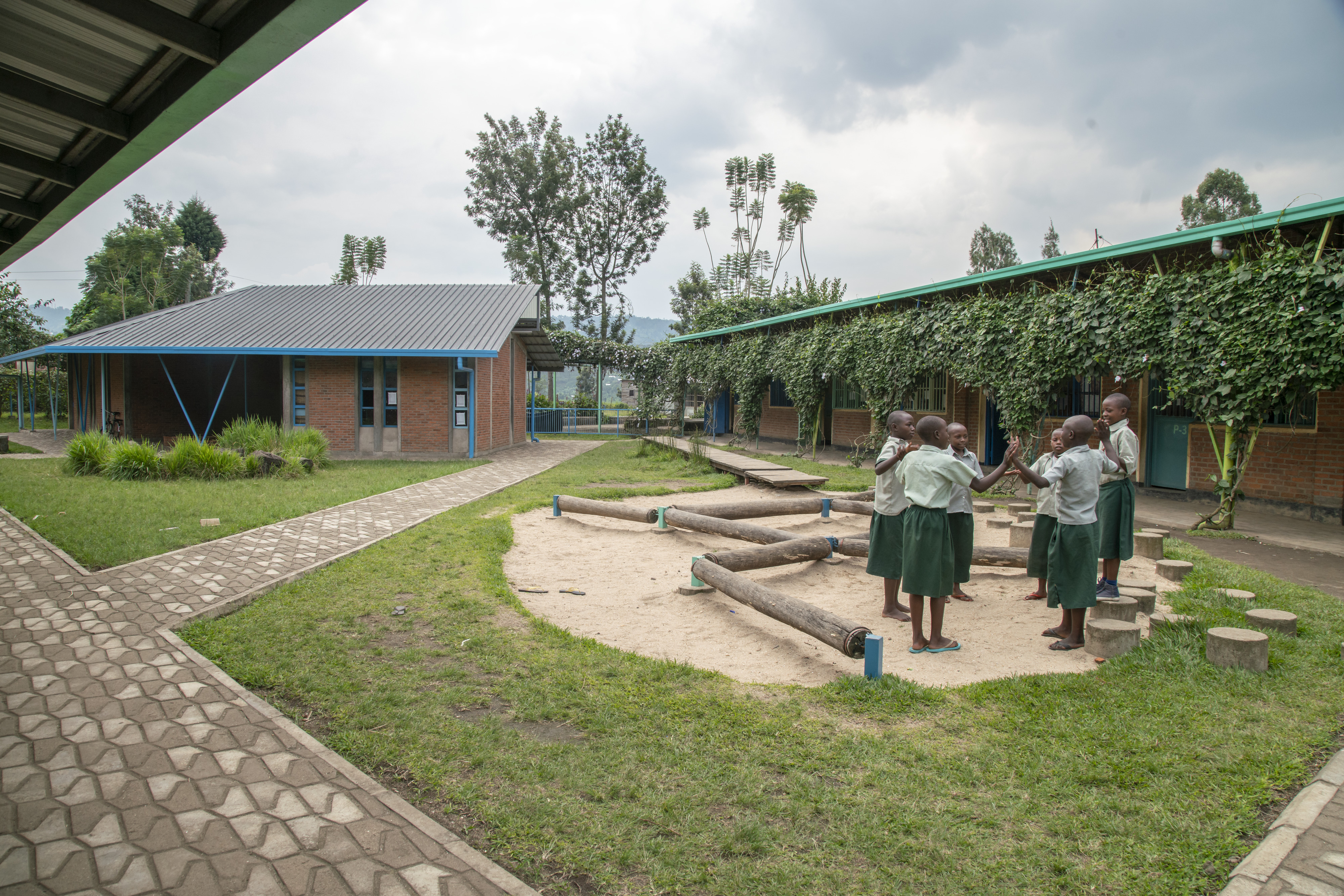
Photo of Mubuga Primary School, Photo by Iwan Baan, children playing in the inner yard of the school

Mubuga Primary School. © Iwan Baan

Outside, the landscape and playscapes create diverse places for learning and discovery. All play equipment was made from locally sourced and readily available materials such as eucalyptus wood and car springs. These play spaces are intentionally designed for different age groups and genders.

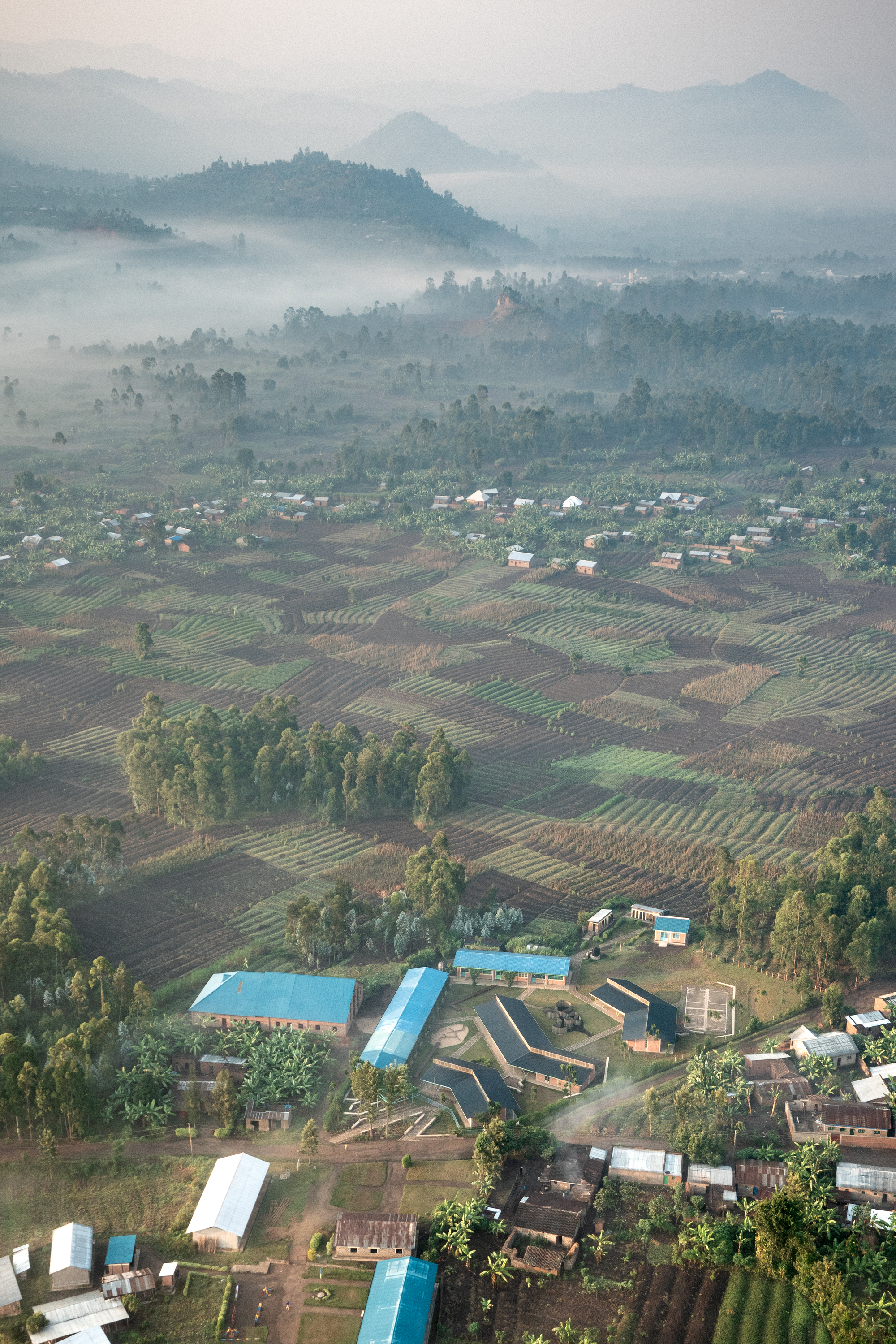
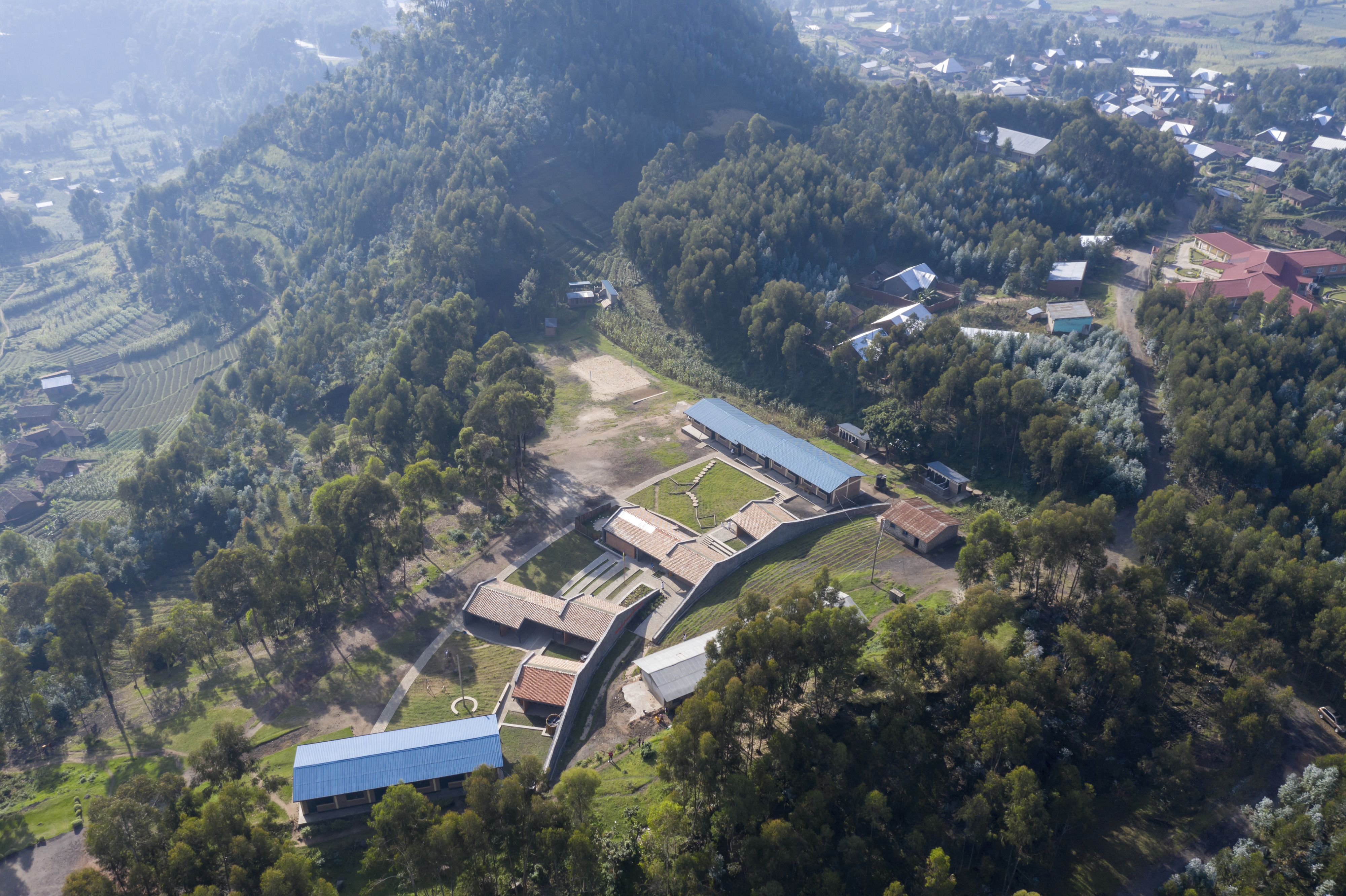
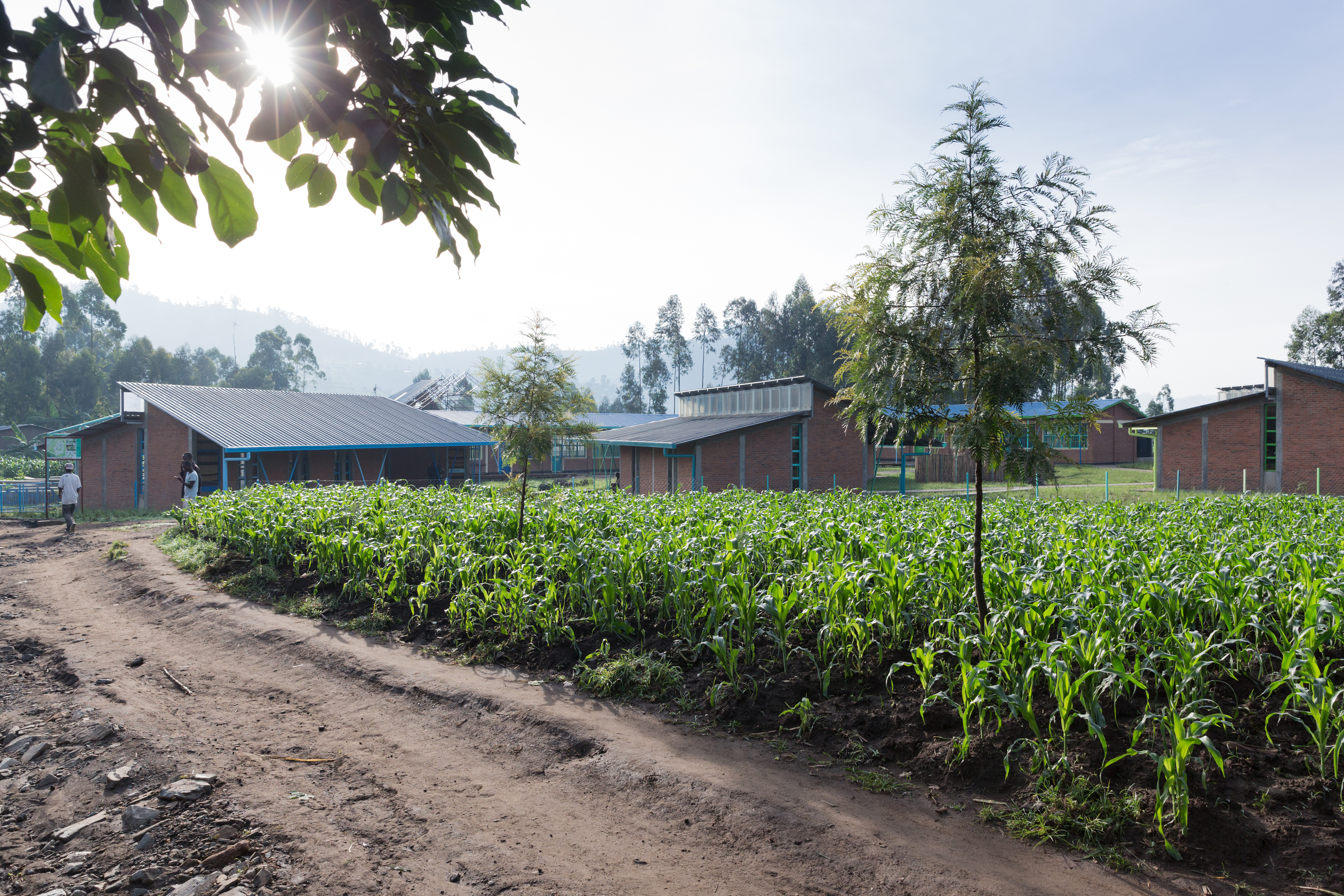
Photo of Mubuga Primary School, and aerial view of the school and surrounding area

The campus design also includes separate, private, and hygienic bathroom and washroom spaces for girls to mitigate challenges around menstruation. To control for surface water that runs through the valley, the landscape includes sunken swales and planted areas with local, water-loving flowers.

Today the school serves 876 children per year from primary to grade six. Students and faculty report that the new facilities are improving the quality of education, and ministry officials celebrate the school as a model for the country.

Following the redesign of Mubuga, MASS worked with the Ministry of Education in Musanze and identified Ruhehe Primary School as the next school in need of investment. The ministry wanted to use this as an opportunity to apply the new model for education design created through the design of Mubuga, and partnered again with M2 Foundation and MASS to redesign Ruhehe.