
Year

2019

Status

Completed

Client

University of Michigan A. Alfred Taubman College of Architecture and Urban Planning

Services

Research, Education

Jeff Mansfield

Jeffrey Mansfield

Principal — Boston

"As designers, we must embrace our role as protagonists in the built environment."

Jeffrey Yasuo Mansfield leads MASS’s Deaf Space and Disability Justice Lab, uplifting the lived experience of Deaf and Disabled communities to bring equity and dignity on a number of education and cultural projects. His current research explores the formation of Deaf and Disability spaces as expressions of cultural resistance in the nineteenth and twentieth centuries, for which he is a Graham Foundation grantee. Jeffrey has been deaf since birth.

Jeffrey is also a recipient of the Ford and Andrew W. Mellon Foundation’s Disability Futures fellowship and is a John W. Kluge Fellow at the Library of Congress. He has taught design studios at the University of Michigan and Harvard Graduate School of Design.

His work has been published in the Cooper Hewitt Design Journal, AD, Tacet and presented at MoMA PS1, Bergen Assembly, Sao Paulo Biennale, and the Sharjah Biennial. He is co-author of the book, The Architecture of Health, published by Cooper Hewitt, Smithsonian Design Museum. Jeffrey holds a Master of Architecture at the Harvard Graduate School of Design and an AB in Architecture from Princeton University.


Photo of Michael Murphy, Co-founder and CEO of MASS Design Group.

Michael Murphy

Founding Principal & CEO — Boston

Michael Murphy, Int FRIBA, is the Founding Principal and Executive Director of MASS Design Group, an architecture and design collective that leverages buildings, as well as the design and construction process, to become catalysts for economic growth, social change, and justice. Since MASS's beginnings, their portfolio of work has expanded to over a dozen countries and span the areas of healthcare, education, housing, urban development. MASS’s work has been published in over 900 publications and awarded globally. Most recently, MASS has been recognized as the winners of the national Arts and Letters Award for 2017 and the 2017 Cooper Hewitt National Design Award. Michael’s 2016 TED talk has reached over a million views, and was awarded the Al Filipov Medal for Peace and Justice in 2017. MASS's project, the National Memorial for Peace and Justice was named the single greatest work of American architecture in the 21st century. Michael has taught at the Harvard Graduate School of Design, University of Michigan, and Columbia University’s Graduate School of Architecture Planning and Preservation. Michael is from Poughkeepsie, NY, and holds a Master of Architecture from Harvard Graduate School of Design and a Bachelor of Arts from the University of Chicago.

Design Team

Jeff Mansfield, Michael Murphy, Lesedi Graveline, Jhanea Amazi, Regina Yang

Michigan Studio Course on Restorative Justice

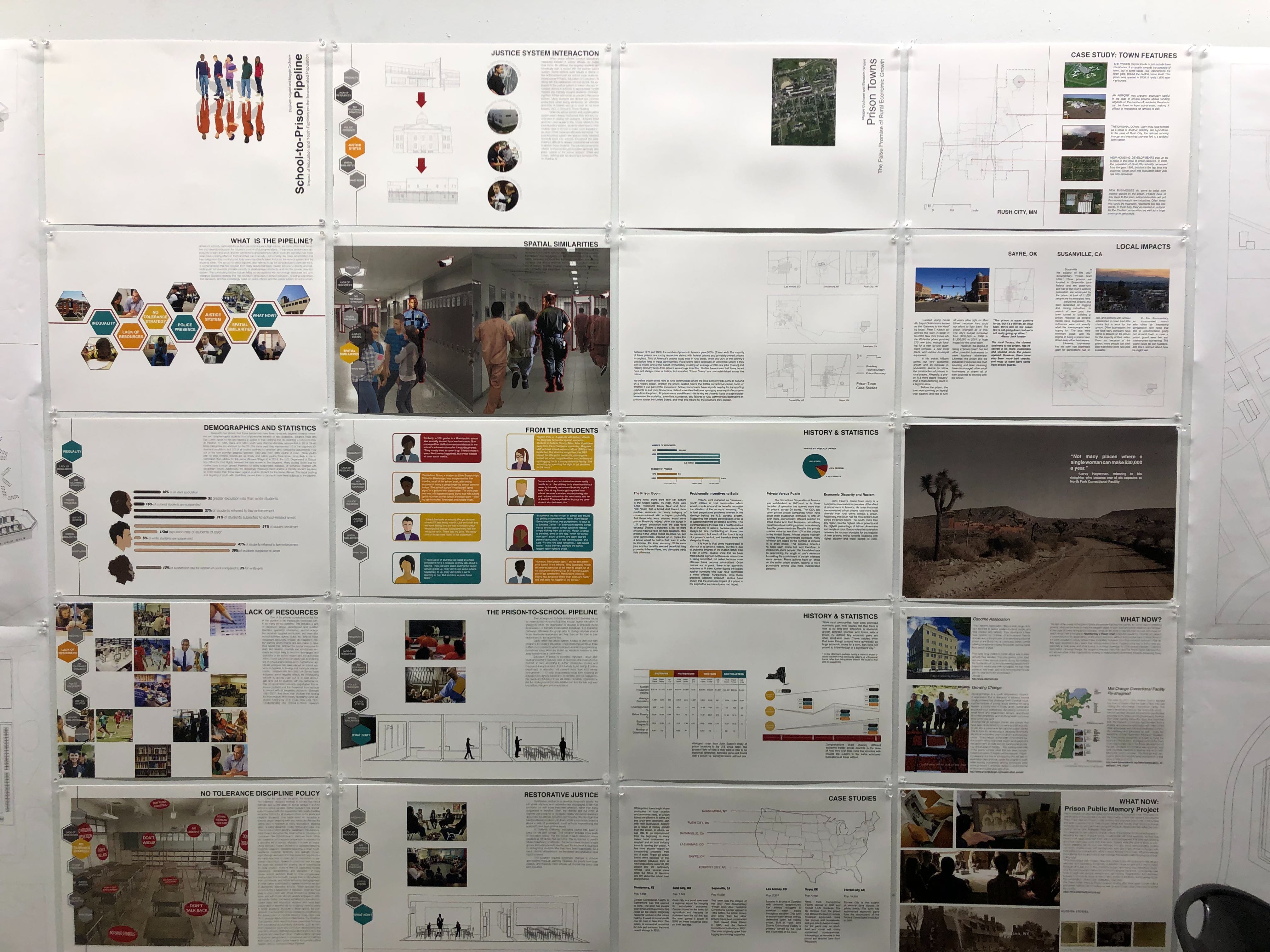
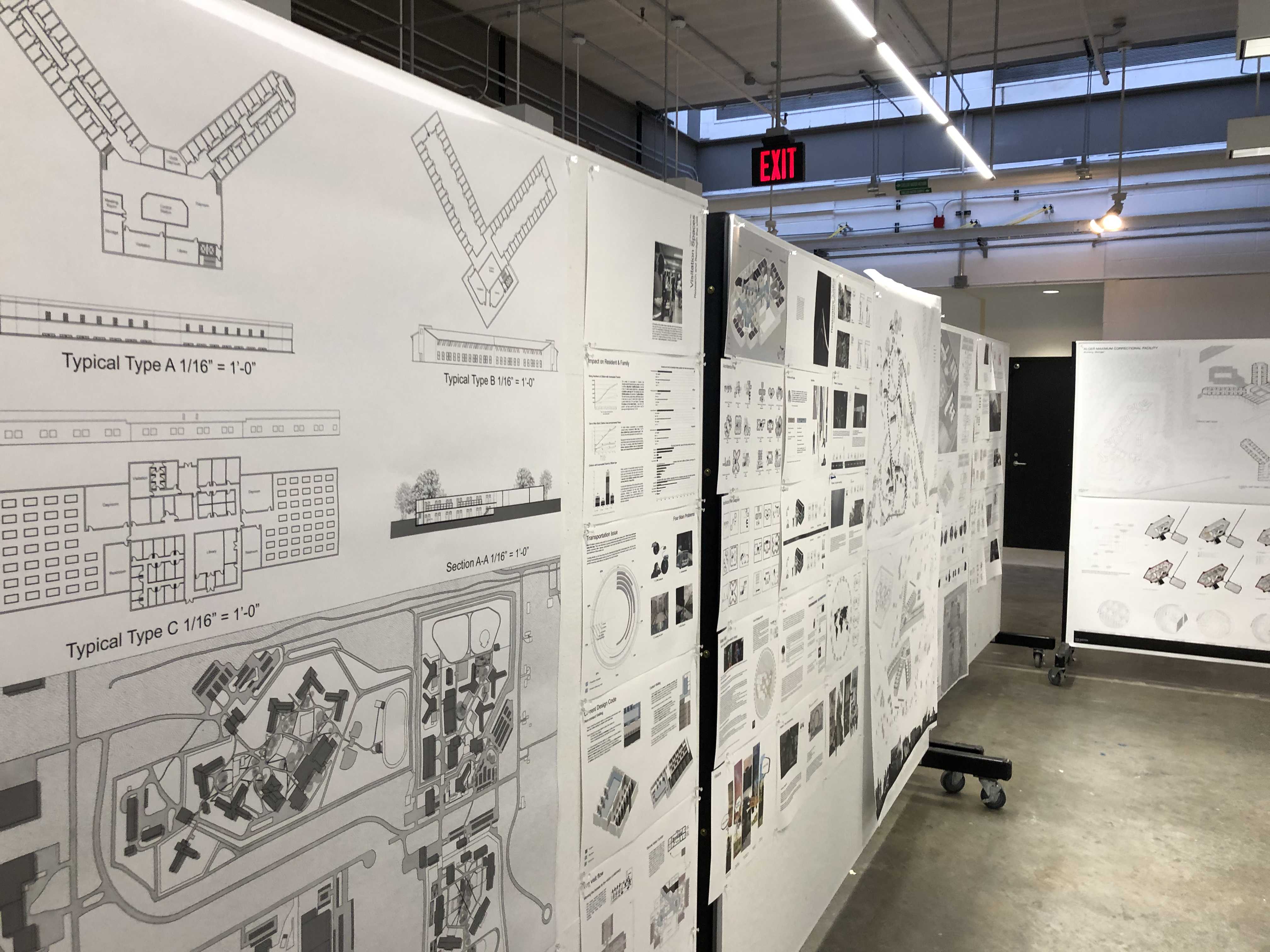
In the United States, there are 2.3 million people incarcerated today and over 1,800 federal and state correctional facilities, forming a vast punitive network that is unparalleled anywhere else in the world. The architecture of prisons is not intended for reform or behavioral change: it is built to warehouse as many people as possible. This is anti-design. A system gone awry. Where no building could keep up with the rate of change these spaces have experienced.

Michigan Studio Course on Restorative Justice

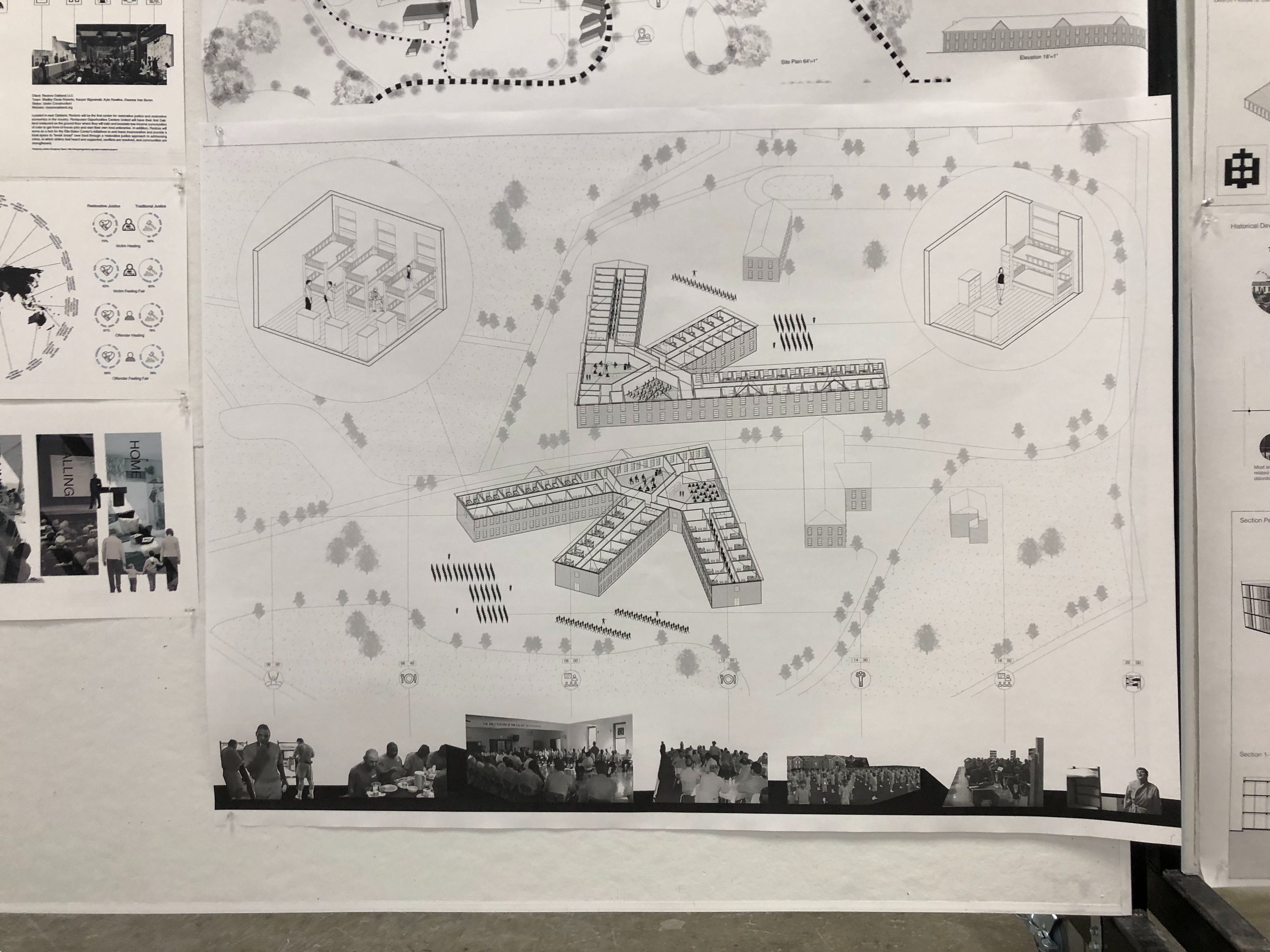
What would it mean, in America, to have spaces that represent our goals for pursuing justice? Places designed for recuperation, for restoration, for re-entry, and for reflection? What would an ideal work environment be for officers? And how would a space of healing look instead of a space of violence? If a reimagined facility is understood as a place of healing, could a prison itself be a catalyst in radical de-carceration? Could it lead to a healthier society for all of us?

Michigan Studio Course on Restorative Justice

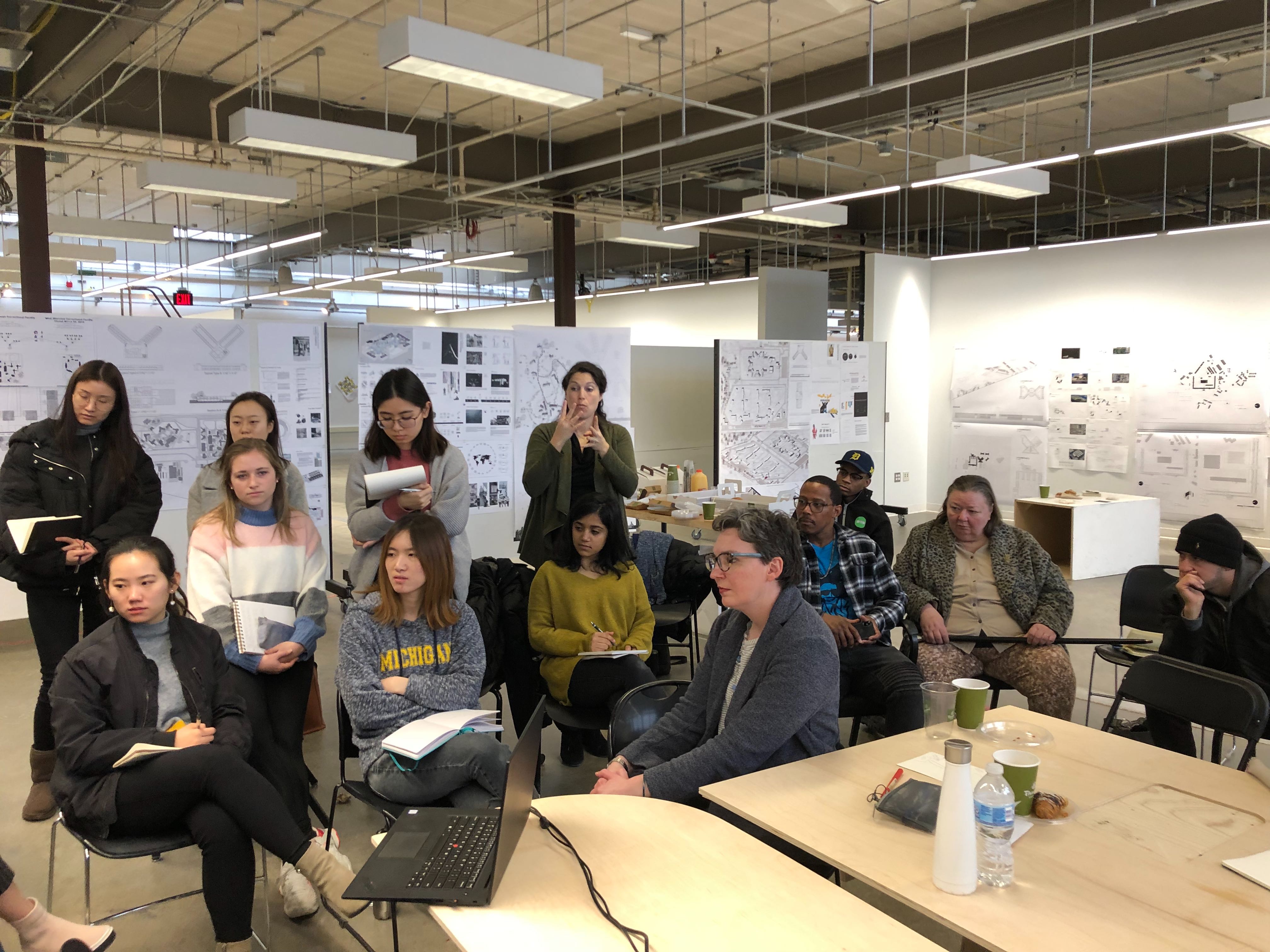
MASS led a “Reimagining Incarceration” studio in Spring 2019. Taking the Queensboro Correctional Facility in Long Island City as a point of entry, this studio introduced how architects can co-design reimagined prison facilities with incarcerated residents. Students led workshops with residents to co-design the spaces they inhabited, supporting individual agency and bolstering collaborative skill sets.