

Size

Site: 5 ha. / 12.3 ac.
Build: 26,750 sq. m. / 287,935 sq. ft.
Units: 281

Year

2019

Status

Completed

Client

Remote Group

Anton Larsen

Anton Larsen

Principal — Kigali

Anton Larsen is a Principal in the Kigali office. Anton joined MASS in 2017 and has been instrumental in the design and construction of seminal projects like the Rwanda Institute for Conservation Agriculture (RICA), a 1400 Ha off-grid climate positive agricultural university campus with over 60 buildings, awarded with the 2020 ASLA Award of Excellence for Analysis and Planning, and most recently the Norrsken Kigali House new campus in downtown Kigali, first example in Rwanda of adaptive reuse of a historic site to convert it into Africa’s largest hub for entrepreneurs to help fuel growth and investment in the region.

As a thought leader, Anton’s research has been focused on climate positive design and has been advancing the work of the Performance and Provenance Council, contributing to MASS’s organizational sustainability goals and implementing carbon targets and measurement tools across project teams. His research has also been focused in developing viable opportunities for affordable housing in East Africa, implementing possibilities like prefabricated low-carbon AAC construction (Autoclaved Aerated Concrete) for the Masaka Housing project and the first and largest 3D printed housing development on the continent for 14-Trees in Kenya.

An architect and urban designer, Anton first came to Africa in 2011 with Peter Rich Architects in South Africa, and has led teams on projects ranging from education, civic, workspace, housing, equity, urban design, research and policy in multiple countries across East Africa, Nigeria, South Africa, Spain, and the United States. Anton is a member of the Rwanda Green Building Organization and is an accredited EDGE Expert, IFC green building certification and design tool to certify resource-efficient and Zero Carbon buildings.

Anton has been involved in strategic planning and policy work for the Government of Rwanda, and led the SEA of the National Urbanization Policy to strengthen socio-economic, environmental, and green urbanization aspects of the policy. He was a key contributor to the Kigali Green City Concept developed for the Ministry of Environment and GGGI, a 600 Ha green district development, was the co-author of the Green Gicumbi Low Carbon Climate Resilient Settlements project proposal to the Green Climate Fund for the Ministry of Environment and Rwanda’s Green Fund Fonerwa, as well as a contributor to the Ministry of Trade & Industry Domestic Market Recapturing Strategy, also called the Made-in-Rwanda Strategy.

Anton has a portfolio of over US $130M designed. His projects have spanned across affordable housing, sustainable architecture and urban planning as well as innovative projects such as the Rwanda Cricket Pavilion, a technologically advanced earth vaulted structure built using local materials and local labor, winner of the 2018 IStructE Structural Award for Small Projects of under £1 million.

Anton graduated from the UIC Barcelona School of Architecture. While he was still a student, Anton began his involvement in social architecture and his projects were exhibited twice at the Centre de Cultura Contemporània de Barcelona (CCCB).


Sierra Bainbridge, RLA

Sierra Bainbridge, RLA

Senior Principal & Managing Director — Boston

"I believe that every project is an opportunity to create a movement. To inspire this momentum, we must be one with the community, and together, go beyond the bare minimum."

Sierra began work with MASS in 2008 focusing on landscape architecture and joined full time in 2009 to finalize design and oversee implementation of the Butaro Hospital, MASS’s first project. Currently Sierra directs the ongoing design and implementation of MASS’s planning and architectural projects and is currently overseeing The Kayanja Center, an academic facility supporting rural health care delivery and research in Uganda, a number of African Conservation Schools in DRC, Tanzania, Zambia, and Rwanda, and the Butaro Hospital Expansion Plan, among others. Those completed include Butaro Hospital, the Umubano Primary School, the Butaro Doctors’ Housing, and the Butaro Ambulatory Cancer Center.

Prior to joining MASS, Sierra worked for four years at James Corner Field Operations, primarily in design and oversight of implementation of Section 1 of the New York City High Line. Sierra has taught graduate level studios at various universities and from 2010-2012, Sierra served as Head of the Architecture Department at the Kigali Institute of Science and Technology (KIST) in Rwanda. At KIST, Sierra was instrumental in shaping the current curriculum. She is invited to speak regularly, including the keynote address at the Healthcare Design Conference, serving as a Sasaki Distinguished Visiting Critic at the Boston Architectural College, and lecturing at the Carter ‘Lectures In African Studies’ series, the University of Pennsylvania, Harvard University, University of Toronto, and the American Institute of Architects, among others. Select features of Sierra’s work with MASS Design Group include A+U Magazine, Lotus, Mark Magazine, and Detail.

Sierra received her Bachelors of Arts in Art and Architectural History from Smith College and her Masters of Landscape Architecture and Masters of Architecture from the University of Pennsylvania.

Project Team

Anton Larsen, Kelly Doran, Sierra Bainbridge, Aziz Farid Shyaka, Alex Dallas, Youssouf Renzaho, Anibal Niyitanga, Nelson Habintwari, Noella Nibakuze, Jean Paul Sebuhayi Uwase, Alberto Cumerlato

Collaborators

Structural Engineering: Peree Bouwadvies B.V.
Civil Engineering: Water Consulting East Africa
MEP Engineering: GEM Consulting

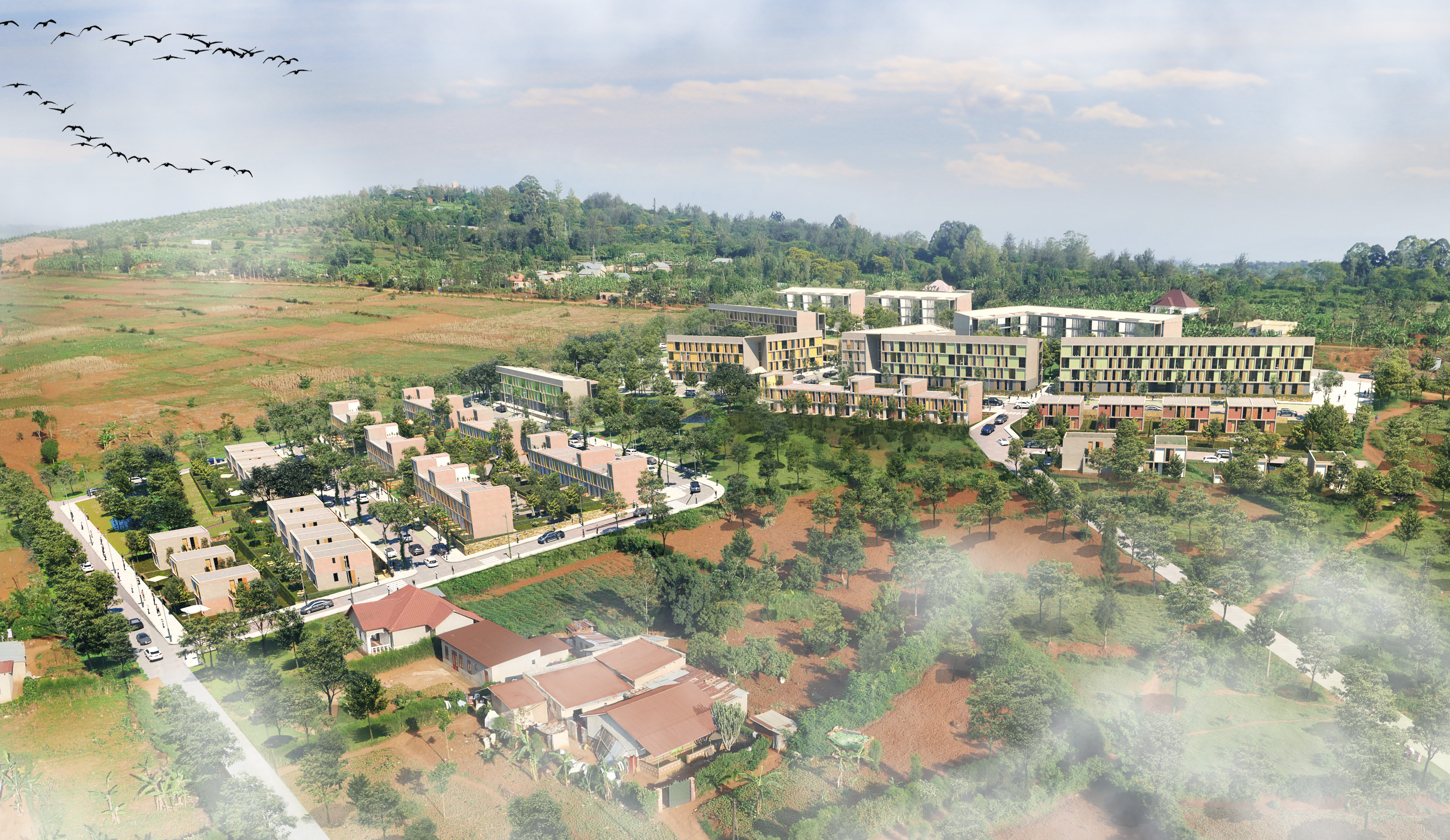
Masaka Affordable Housing provides a new eco-conscious model for affordable housing design in Rwanda, addressing the growing need to house Rwanda’s expanding urban population.

A aerial render of the Masaka Affordable Housing

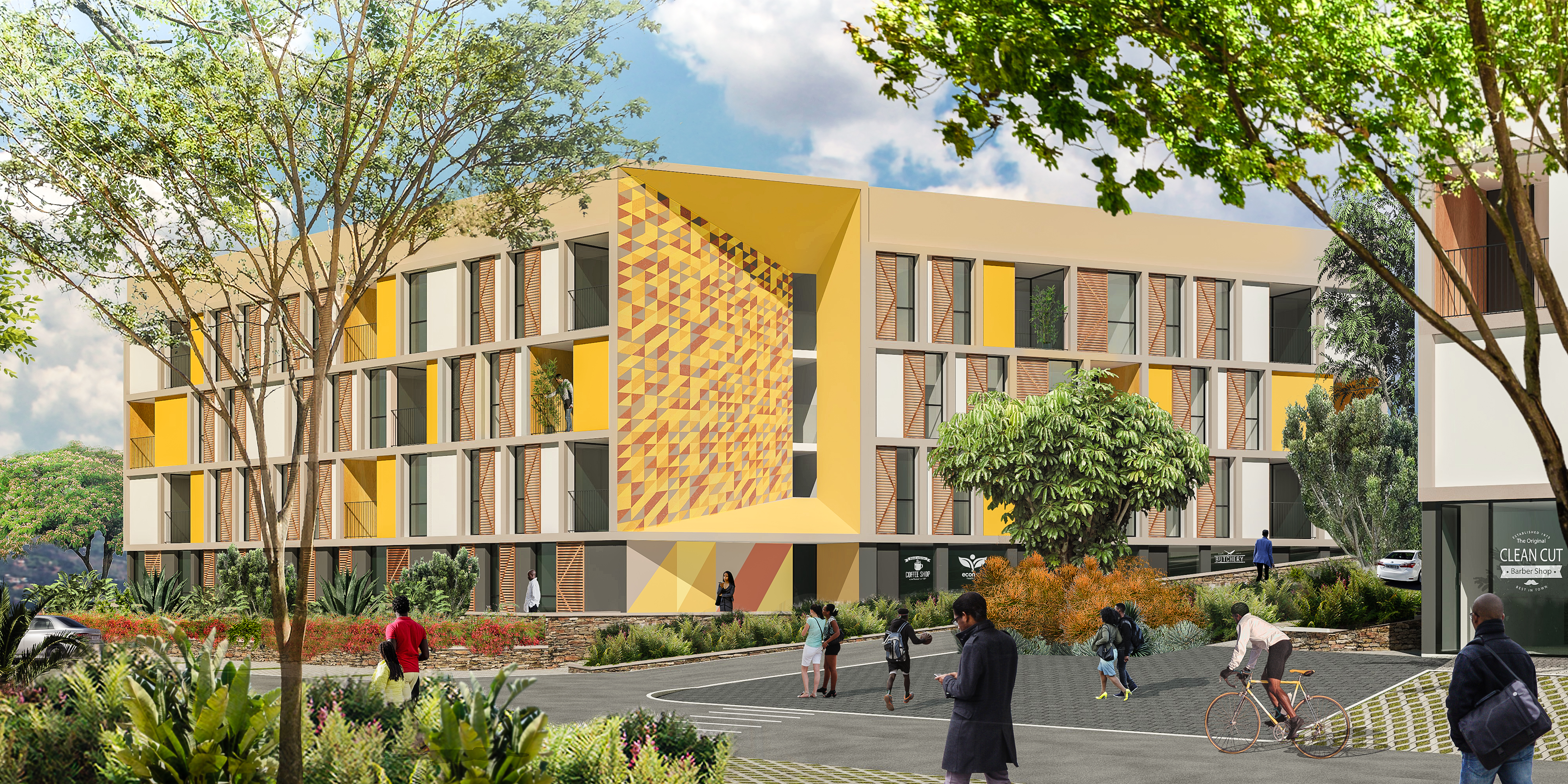
Counteracting trends of overcrowding, informality, and sprawl, Masaka responds to the spatial needs of Rwandan urban dwellers by increasing density in a culturally responsive and climate-adapted manner, using low-cost and locally-fabricated building technologies.

57%

It is estimated that the project will produce 57% less embodied carbon than the national average.

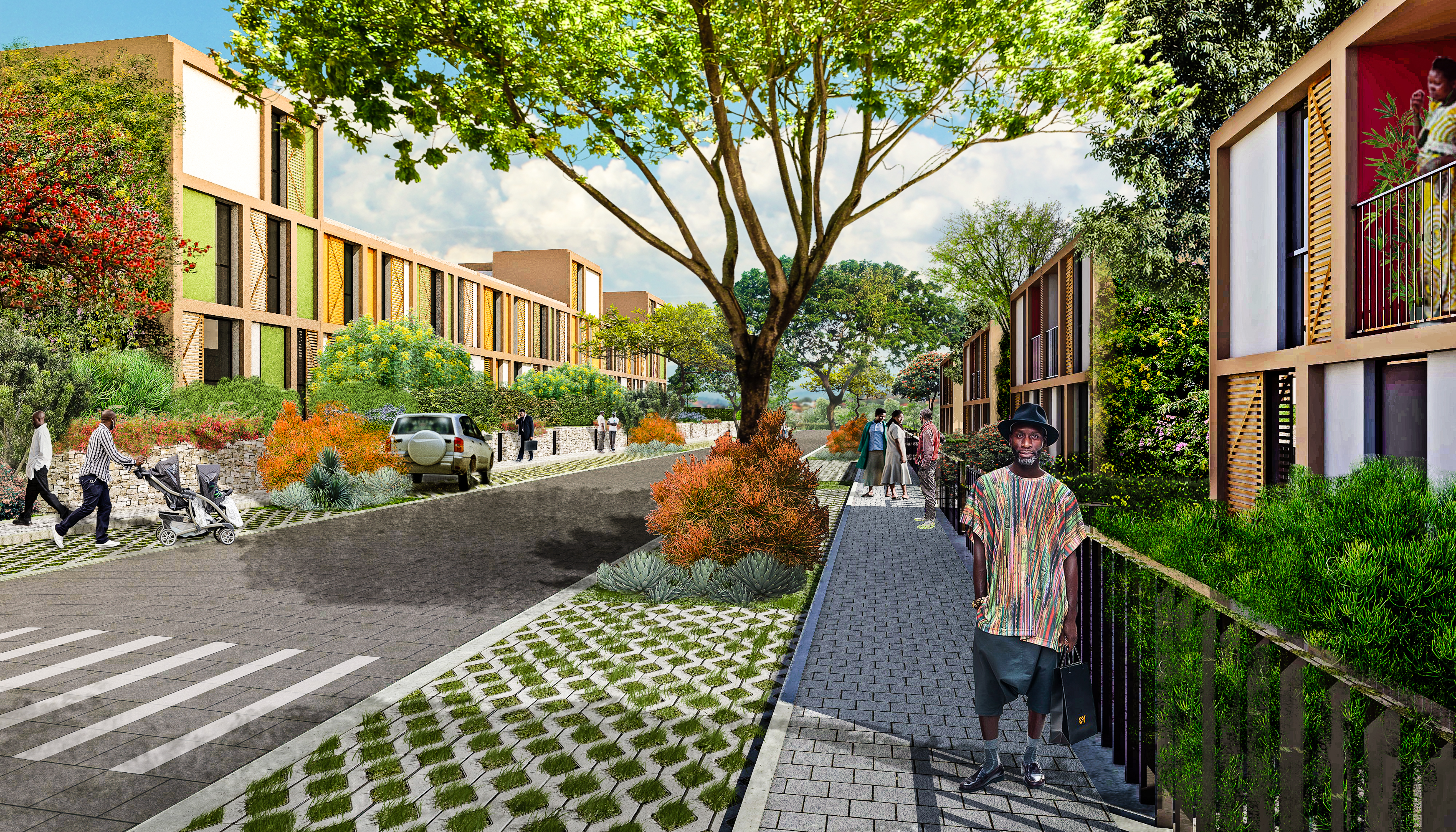
A render of the Masaka Affordable Housing from the street

The neighborhood development integrates green spaces and infrastructure, providing public pedestrian corridors, public transit extensions, and permeable paving to increase climate resilience.

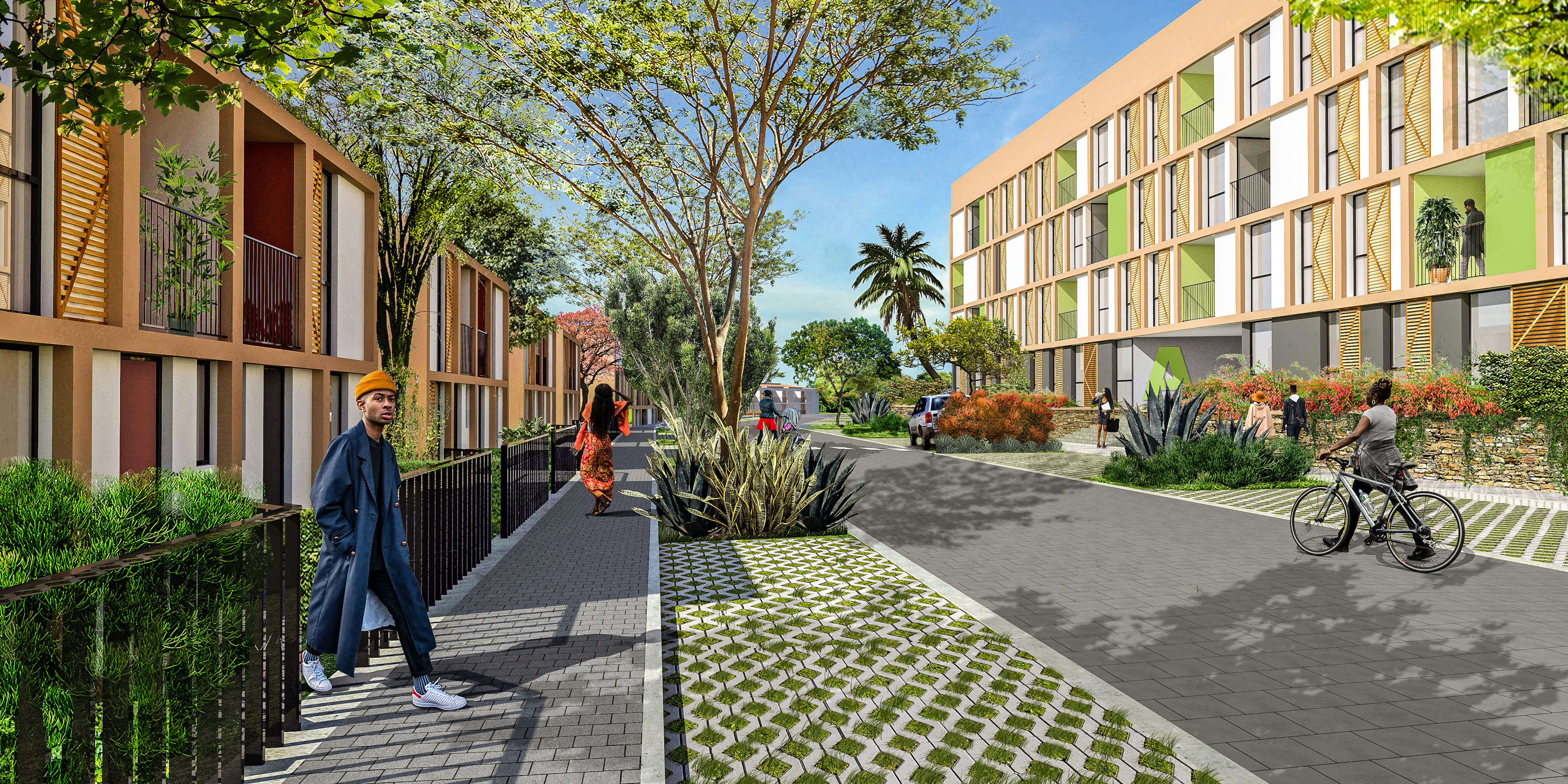
A render of the Masaka Affordable Housing from the street

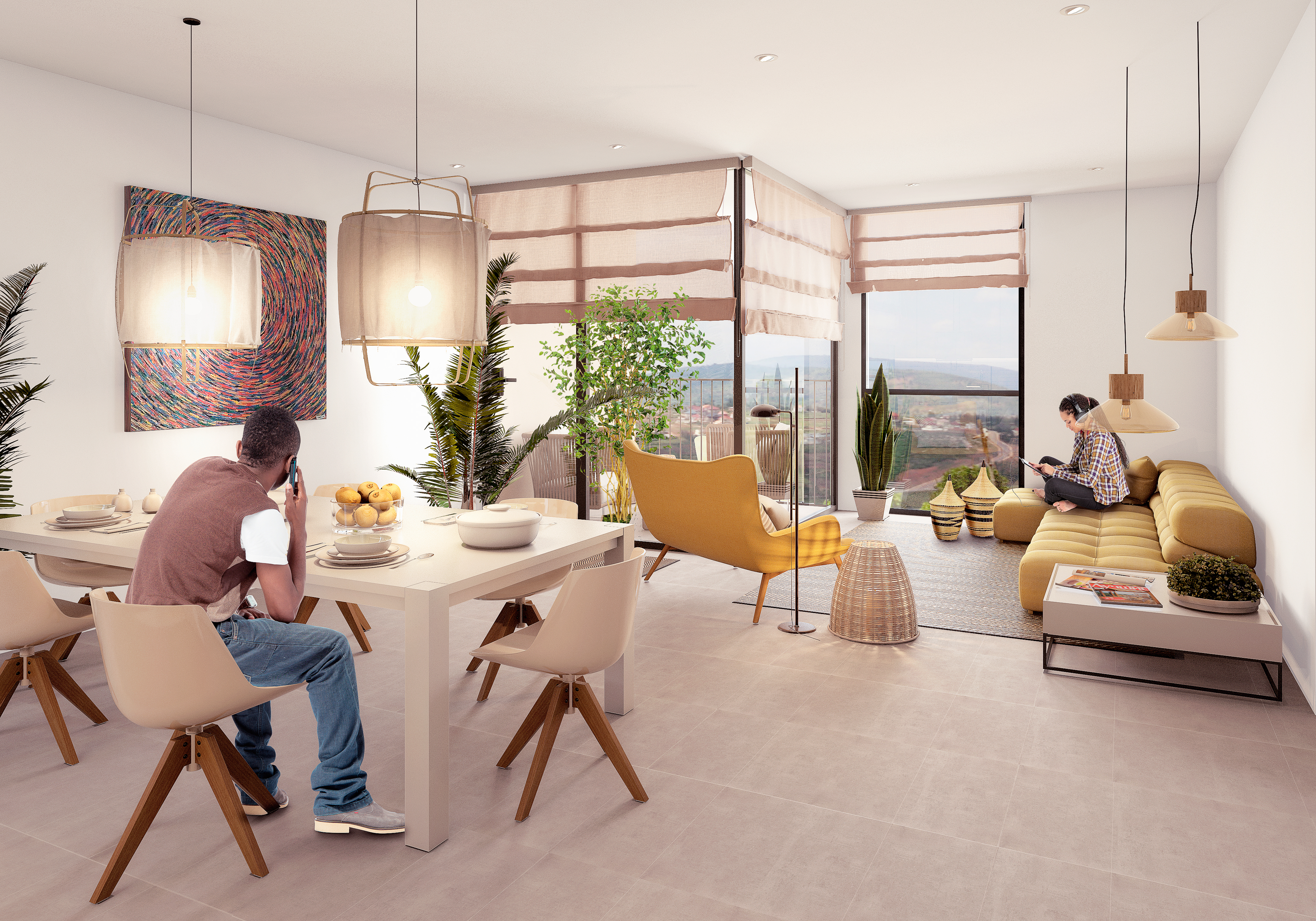
A mix of housing typologies to accommodate various family sizes ensures that dwellings are both affordable and culturally sensitive.

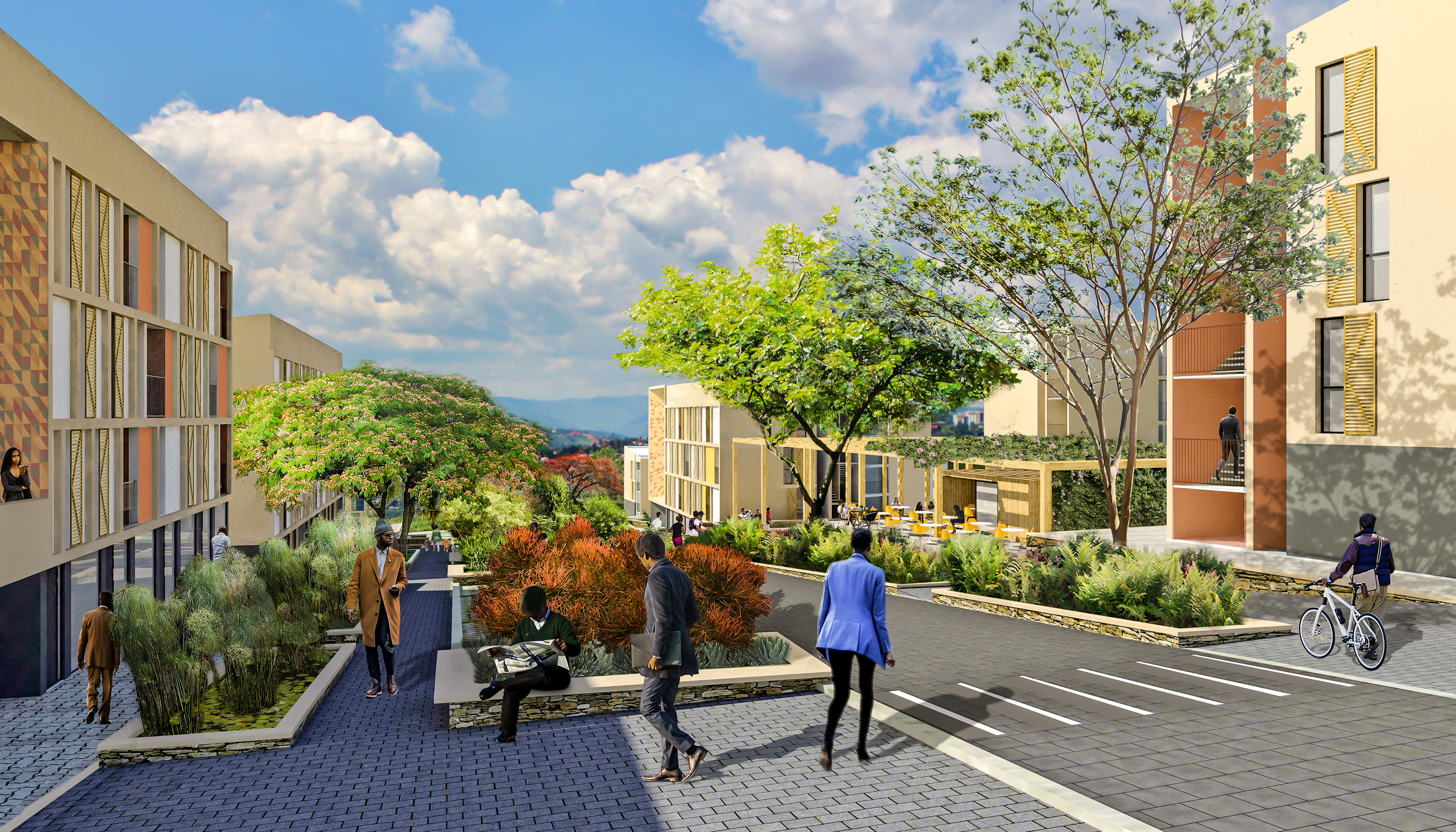
A render of the Masaka Affordable Housing from the street

In addition to housing, the development includes socially-responsive amenities to the neighborhood, such as storage for market produce, laundry areas, vegetable gardens or akarima k’igikoni, and community spaces for monthly community meetings.

An interior render of the Masaka Affordable Housing

The project pioneers the use of aerated autoclaved concrete construction as a cost-effective, Made-in-Rwanda building technology.

Masaka is the first private sector, profitable affordable housing project in Rwanda, hoping to catalyze broader engagement by developers and policymakers in the provision of affordable housing in Rwanda.