Size

Site: 20,000 hectares
Build: 220 sq. m.

Year

2015

Status

Completed

Client

African Wildlife Foundation

Services

Design

Partners

Nous Engineering Kama Associates

Andrew Brose

Andrew Brose

Design Director — South Africa Lab

Andrew leads the South Africa Lab, established to address regional issues of inequality in housing, environment, and health. He joined MASS in 2010 as a Design Fellow in Rwanda, where he worked on health, education, and housing projects across the region, including the Umubano Primary School, Mubuga Primary School, Butaro Doctors Housing, and Rwinkwavu Village Housing. In 2014, Andrew moved to the Democratic Republic of the Congo, to serve as the project manager for the Ilima Conservation School where he supervised the construction management and documentation of the school.

He received a Masters of Science in Architecture and Building Technology from MIT where he was the recipient of a TATA Center Fellowship and the 2018 Tucker Voss award for Building Technology. Andrew completed his Bachelor of Architecture at the University of Oregon.

Patricia Gruits, RA, LEED AP

Patricia Gruits, RA, LEED AP

Senior Principal & Managing Director — Boston

"I believe that the built environment impacts our lives and we can design the process to create positive social change."

Patricia Gruits is a Senior Principal with MASS Design Group leading both design and research projects in health, education, and equity. Since joining MASS in 2013, she has led the design of the Maternity Waiting Village in Malawi with the Malawi Ministry of Health, the African Leadership University, a series of primary schools in East Africa with the African Wildlife Foundation and the MSquared Foundation, and the development the Ellen DeGeneres Campus of the Dian Fossey Gorilla Fund.

Currently, Patricia leads design and research initiatives at MASS with a focus on planning, design, and evaluation. Her work is aimed at engaging and empowering stakeholders in the design process; supporting and substantiating the impact of design on health, social, and environmental outcomes; and translating research into design strategies and decision-making. She has coordinated the creation of the Purpose Built series— a set of tools for creating impact-driven design— and has implemented this approach in the design of affordable housing, healthcare, and urban design projects around the globe. Patricia has also managed a range of design projects aimed at proving the impact of the built environment on individual and community health in the United States, including a collaboration with the mayor’s working group to address issues of homelessness, addiction and recovery in Boston and partnered with community development corporations to create affordable and supportive housing.

Patricia collaborated with the Joint Center of Housing Studies at Harvard to create guidelines for Safe Interaction in Senior Affordable Housing in response to COVID-19, and has lectured at the Harvard School of Public Health as a part of the USAID sponsored Airborne Infection Control course. She has taught design studios focusing on social impact at the Boston Architectural College and RISD. Her work has been published in journals of architecture and health and was recently awarded the “Top 40 under 40” for Sustainable Design by Impact Design Hub.
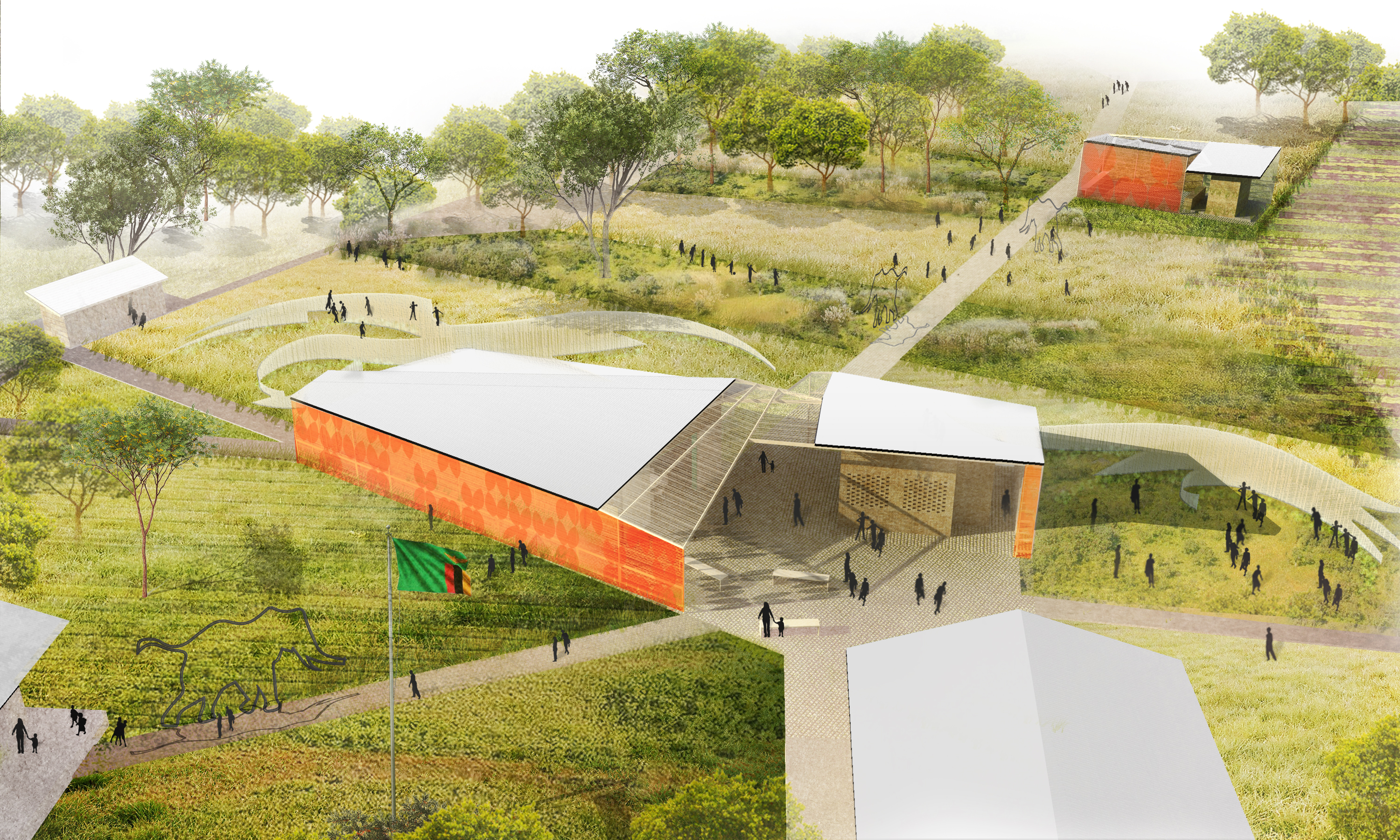

MASS and the African Wildlife Foundation have partnered to design and build Conservation Schools across the African subcontinent.

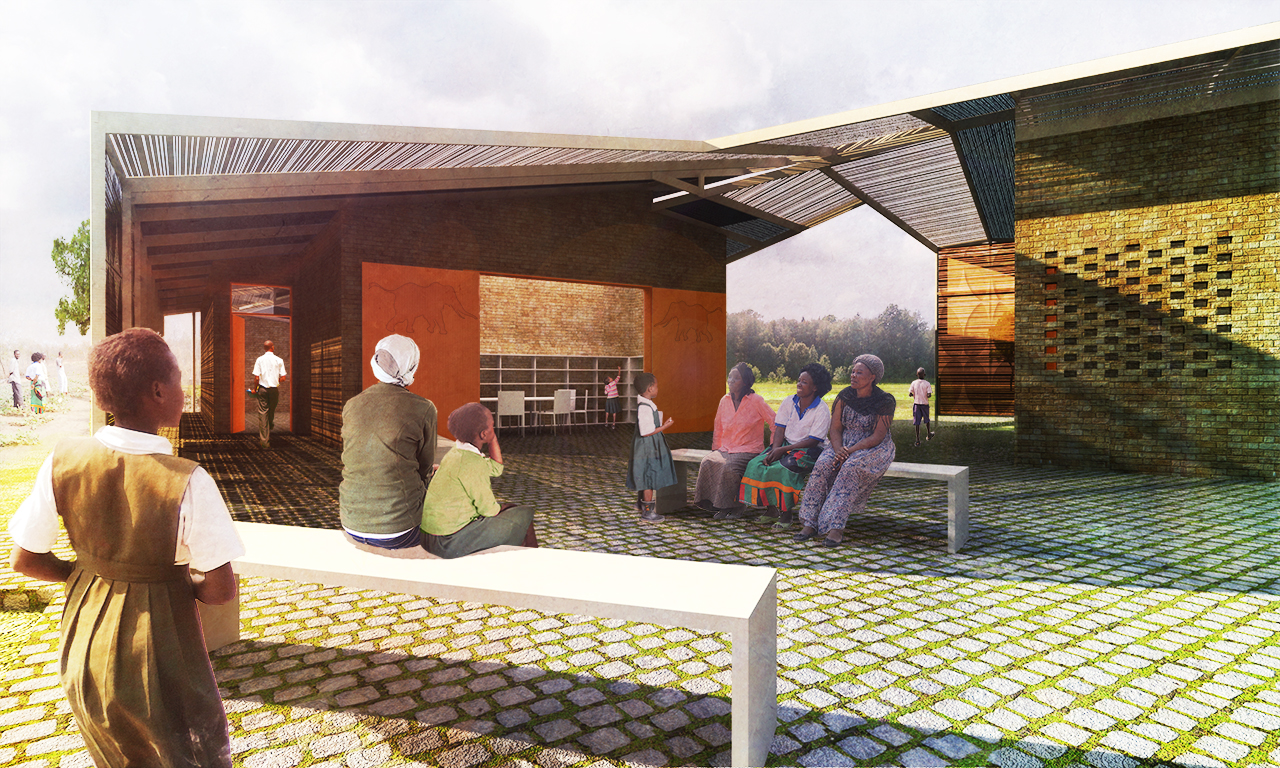
Rendering of Lupani African Conservation School, communal seating area

In the Kazungula Landscape, one key priority for AWF has been to establish a 20,000 hectare conservation area within the Sekute Chiefdom between the Chobe National Park in Botswana and the Kafue National Park in Zambia across the Zambezi river creating a wildlife corridor that restores, maintains, and protects wildlife movement to secure habitat and species diversity.

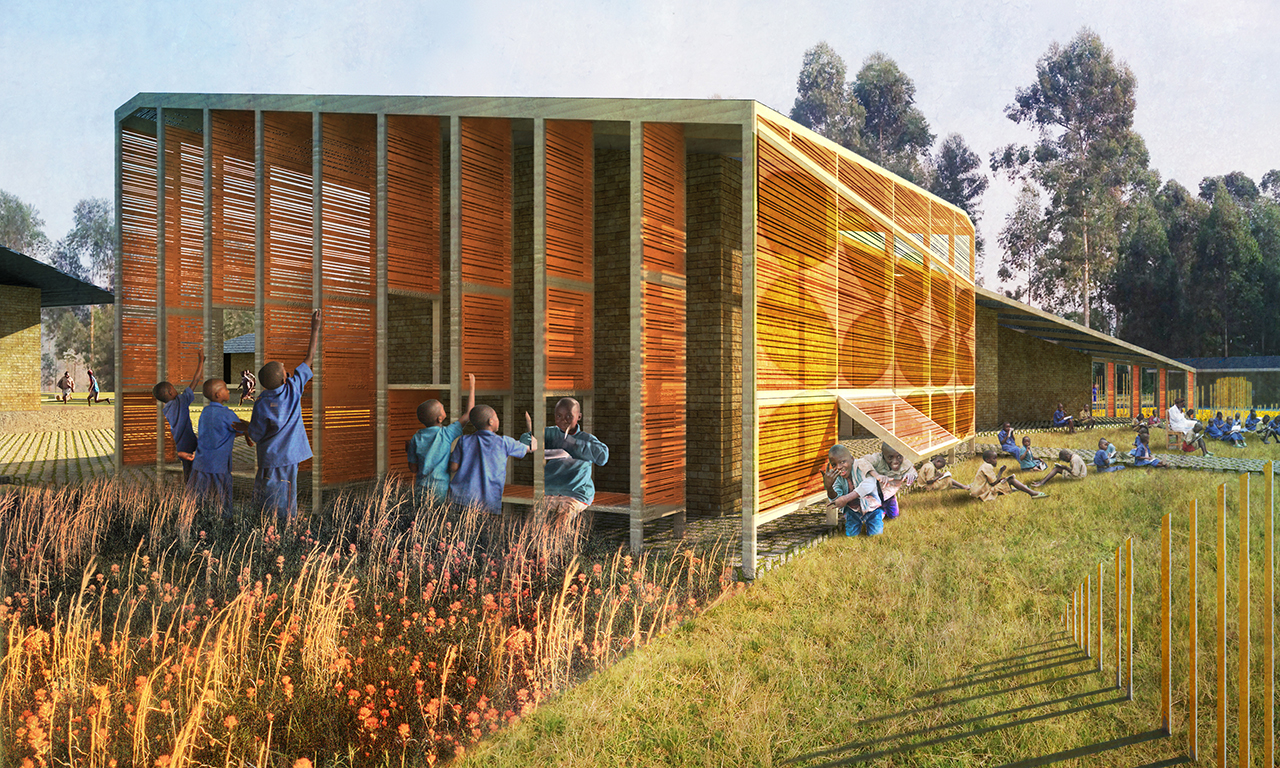
Rendering of Lupani African Conservation School, View of front facade with weaved screen on school building

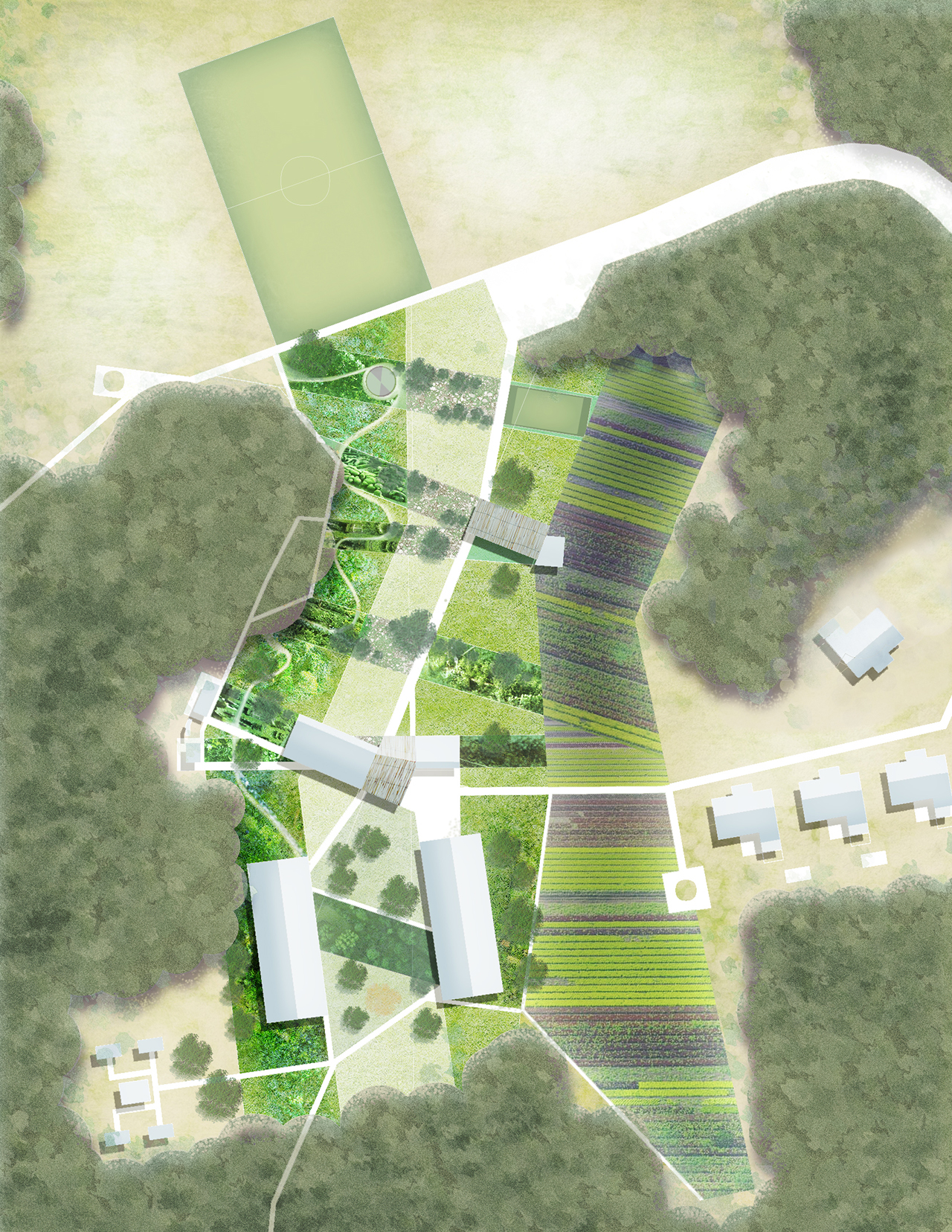
The Lupani Primary School is situated within Sekute Chiefdom making it an exemplar campus for developing a "learning landscape" to foster conservation education. The proposed design creates a procession for students and visitors through the campus which tells the narrative of AWF's conservation efforts in the region - the creation of agriculture and conservation zones and designation and expansion of elephant corridors.

Rendering of Lupani African Conservation School, Site and masterplan

The new building includes a Grade 7 classroom, library, administration office and teachers resource room. A bend in the building creates a main entry to the campus as well as an "Outdoor Classroom" that provides a covered area for students, parents and community gatherings. This strategy reinforces the campus landscape areas and defining new zones for learning and play.