
Year

2014

Status

Unbuilt

Client

AEGIS Trust

Services

Design

Partners

AEGIS Trust John McAslan & Partners

Christian Benimana

Christian Benimana, RA

Senior Principal & Managing Director — Kigali

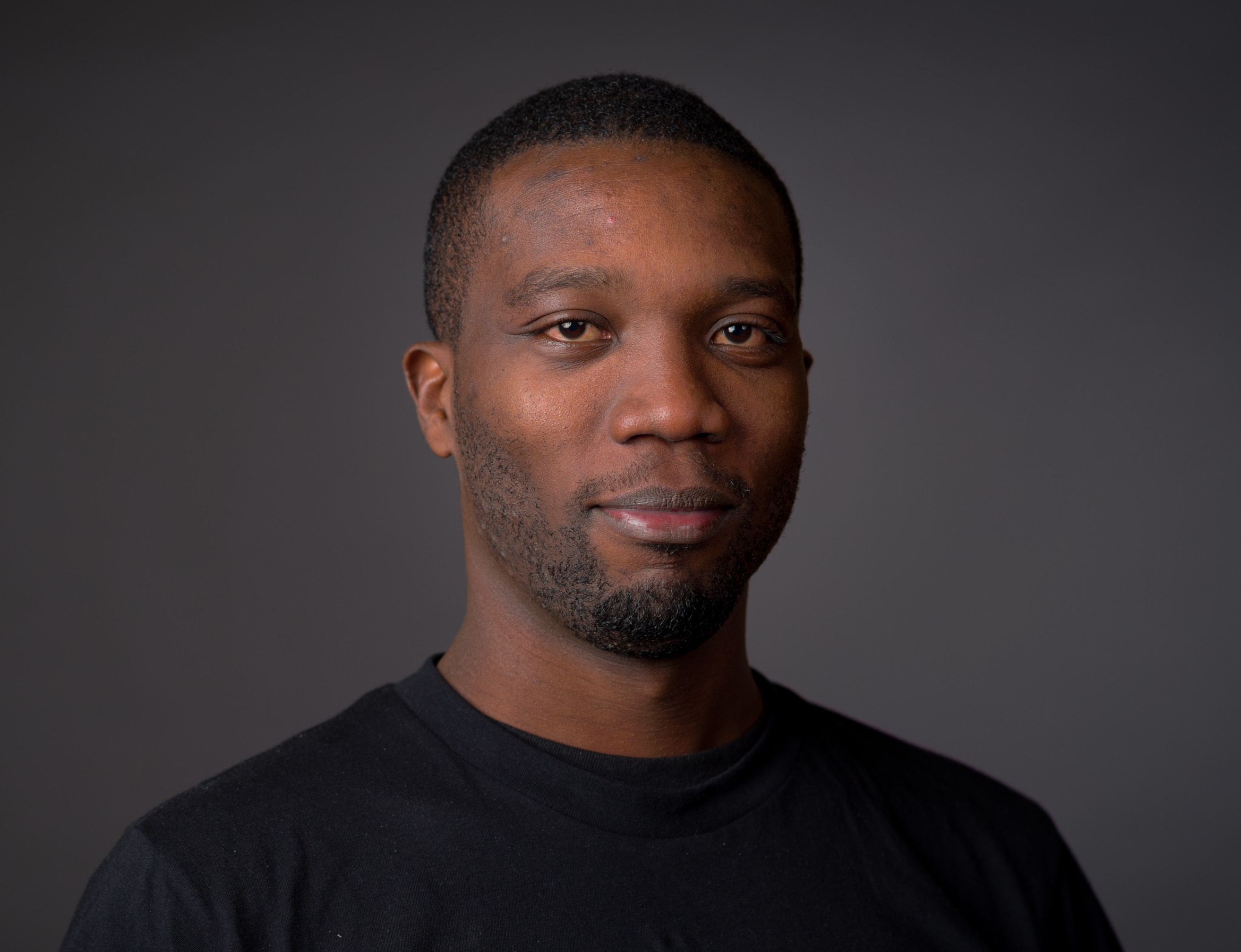
Christian Benimana joined MASS Design Group as a Global Health Corps Design Fellow in 2010. Today, Christian works as one of the firm's Senior Principals and Managing Directors, and is Director of the African Design Centre, a field-based apprenticeship that is set to empower leaders who will design a more equitable, just, and sustainable world. At MASS, he has been involved with design/build projects, development initiatives, operational and administration leadership. Christian has been listed among 10 architects and designers that are championing Afrofuturism and 2017 Quartz Africa Innovators. He has authored articles and book chapters including Re-Thinking the Future of African Cities in The African Perspective Magazine and Creating Design Leaders: The African Design Centre in Public Interest Design Education Guidebook.

Christian has taught at the Architecture School of the former Kigali Institute of Science and Technology (KIST) and his goal is to develop the next generation of African designers with socially-focused design principles. Before joining MASS, he worked with LongiLat Architecture and Research in Shanghai assisting with the Porsche Center in Shanghai and the Netherlands Pavilion in the 2010 International Expo. Christian holds a Bachelor of Science in Architecture from the School of Architecture and Urban Planning (CAUP) of Tongji University in Shanghai, China (2008), and has served as the Secretary General of the East Africa Institute of Architects.

Jean Paul Sebauhayi Uwase

Jean Paul Sebuhayi Uwase

Principal — Kigali

"I am a believer that everyone deserves beautiful Architecture, and it is my duty as an Architect to best serve the community."

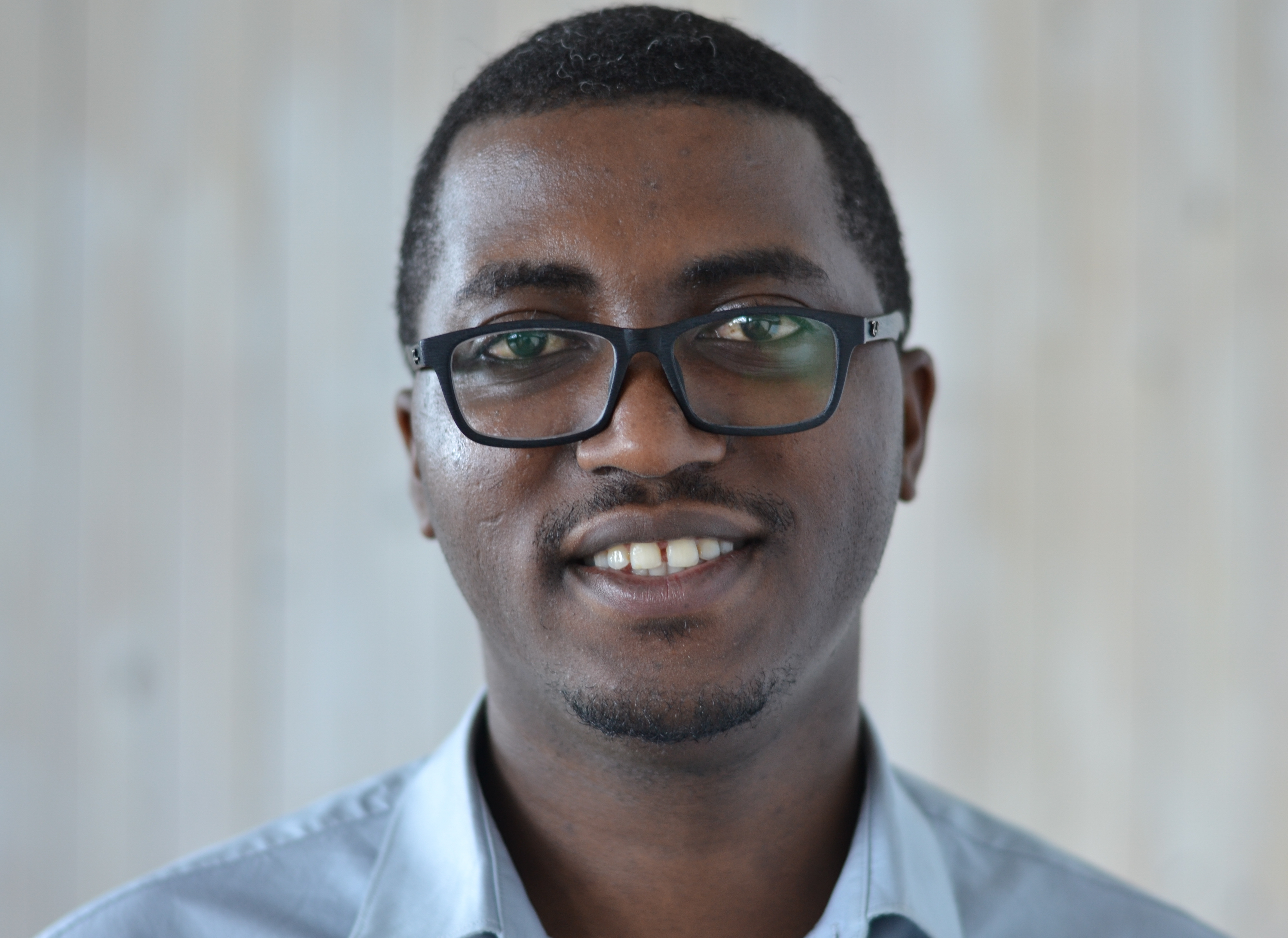
Jean Paul Sebuhayi joined MASS in 2013 and currently serves as a Principal in the Kigali office. He holds a Bachelor of Architecture from the Kigali Institute of Science and Technology and is a registered architect with the Rwanda Institute of Architects. Having been educated in the first class of architects in Rwanda where the numbers are still quite small, he believes that everyone deserves to experience beautiful design. Thus, he strives to best serve the community through consultation and engagement early in the design process.

At MASS, Jean Paul has led multidisciplinary teams to create sustainable designs for the Regional Centre of Excellence in Biomedical Engineering and eHealth, the Rwanda Institute for Conservation Agriculture in Rwanda, and Samajik Health Science Institute & Research Centre in Dhaka, Bangladesh. He has also supported design teams as an Architect for various other projects such as the Kigali Genocide Memorial, Masaka Affordable Housing, Butaro Doctors’ Sharehousing, and the Butaro Cancer Center of Excellence. Currently, Jean Paul is also supporting the team to carry out construction administration of the Regional Centre of Excellence in Biomedical Engineering and eHealth and Munini District Hospital, the first implementation of National design standards designed by MASS for Rwanda’s Ministry of Health in 2014.

Project Team

Michael Murphy, Patricia Gruits, Christian Benimana, Jean Paul Sebuhayi Uwase

Collaborators

AEGIS Trust
John McAslan & Partners

Following the 1994 Genocide against the Tutsi in Rwanda, the nation convened the Gacaca trials to facilitate community justice, to accurately document proceedings, and to begin to move toward reconciliation. At present, the records of these trials are distributed haphazardly throughout the country and because of this are at a great risk of loss, theft, and decay.

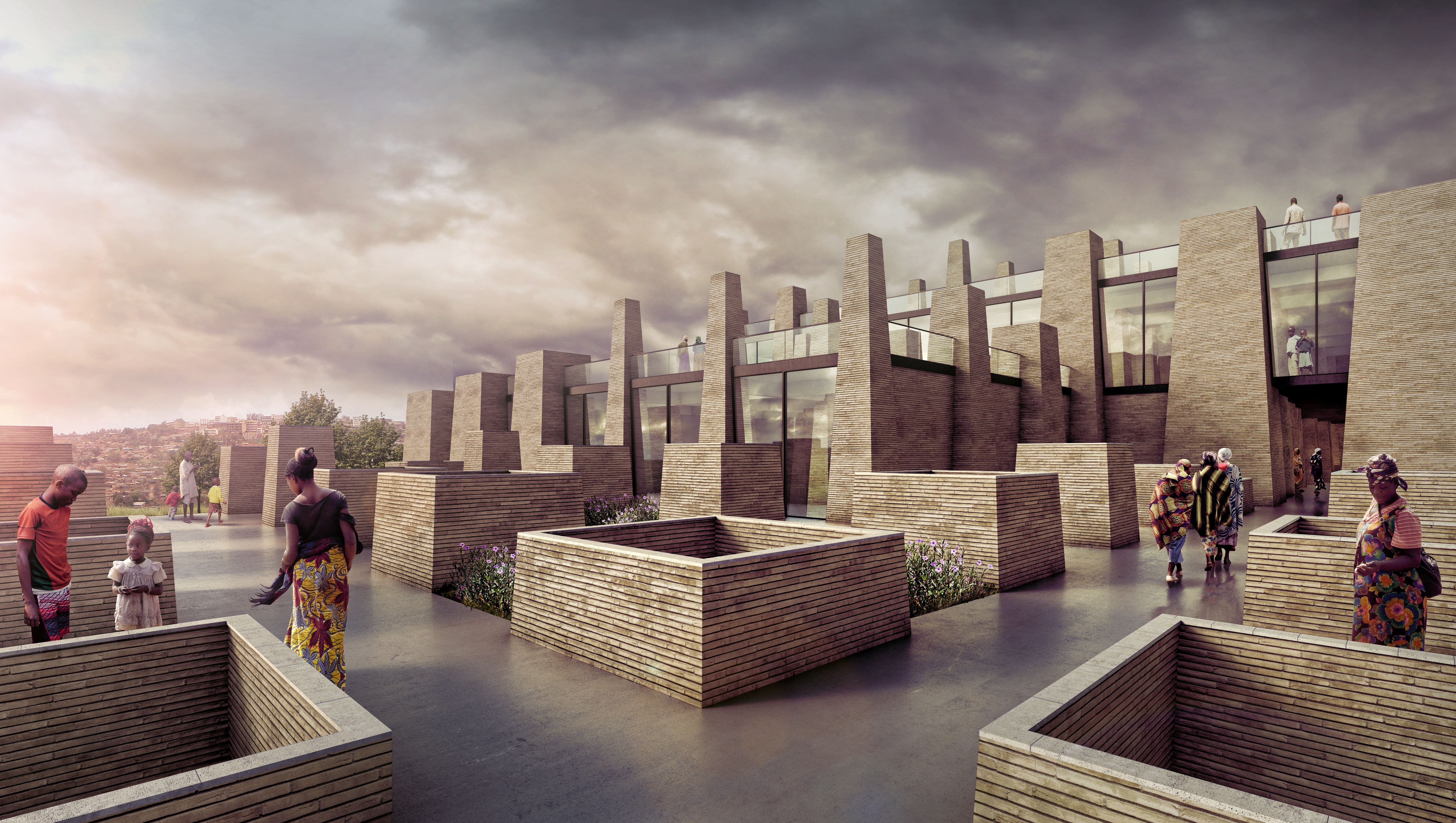
For the twentieth anniversary of the genocide, Aegis Trust and John McAslan + Partners invited MASS to collaborate on a design for the new archives at the Kigali Genocide Memorial. MASS began by designing a testimonial space—a collection of intimately-scaled, light-filled rooms shaped like pillars—where anyone could come to record their personal account. Other spaces for reflection, education, exhibition, and learning emerge around and within the pillars. A gallery, a memory bank, and a library capture, preserve, and share the stories and memories of the past.

When visitors leave the centre at night, the pillars transform into beacons of light, symbolizing the bright future of Rwanda which lies ahead.