
Size

Build: 800 sq. m. / 8,611 sq. ft.

Year

2015

Status

Completed

Client

African Wildlife Foundation

Patricia Gruits, RA, LEED AP

Patricia Gruits, RA, LEED AP

Senior Principal & Managing Director — Boston

"I believe that the built environment impacts our lives and we can design the process to create positive social change."

Patricia Gruits is a Senior Principal with MASS Design Group leading both design and research projects in health, education, and equity. Since joining MASS in 2013, she has led the design of the Maternity Waiting Village in Malawi with the Malawi Ministry of Health, the African Leadership University, a series of primary schools in East Africa with the African Wildlife Foundation and the MSquared Foundation, and the development the Ellen DeGeneres Campus of the Dian Fossey Gorilla Fund.

Currently, Patricia leads design and research initiatives at MASS with a focus on planning, design, and evaluation. Her work is aimed at engaging and empowering stakeholders in the design process; supporting and substantiating the impact of design on health, social, and environmental outcomes; and translating research into design strategies and decision-making. She has coordinated the creation of the Purpose Built series— a set of tools for creating impact-driven design— and has implemented this approach in the design of affordable housing, healthcare, and urban design projects around the globe. Patricia has also managed a range of design projects aimed at proving the impact of the built environment on individual and community health in the United States, including a collaboration with the mayor’s working group to address issues of homelessness, addiction and recovery in Boston and partnered with community development corporations to create affordable and supportive housing.

Patricia collaborated with the Joint Center of Housing Studies at Harvard to create guidelines for Safe Interaction in Senior Affordable Housing in response to COVID-19, and has lectured at the Harvard School of Public Health as a part of the USAID sponsored Airborne Infection Control course. She has taught design studios focusing on social impact at the Boston Architectural College and RISD. Her work has been published in journals of architecture and health and was recently awarded the “Top 40 under 40” for Sustainable Design by Impact Design Hub.

Andrew Brose

Andrew Brose

Design Director — South Africa Lab

Andrew leads the South Africa Lab, established to address regional issues of inequality in housing, environment, and health. He joined MASS in 2010 as a Design Fellow in Rwanda, where he worked on health, education, and housing projects across the region, including the Umubano Primary School, Mubuga Primary School, Butaro Doctors Housing, and Rwinkwavu Village Housing. In 2014, Andrew moved to the Democratic Republic of the Congo, to serve as the project manager for the Ilima Conservation School where he supervised the construction management and documentation of the school.

He received a Masters of Science in Architecture and Building Technology from MIT where he was the recipient of a TATA Center Fellowship and the 2018 Tucker Voss award for Building Technology. Andrew completed his Bachelor of Architecture at the University of Oregon.

Project Team

Sierra Bainbridge, Christian Benimana, Jonathan Bongi, Andrew Brose, Rachel Brose, Kelly Doran, Patricia Gruits, Michael Murphy, Jeancy Mulela, Alan Ricks, Nicolas Rivard, Christopher Scovel, Jean Paul Sebuhayi, Christian Uwinkindi, Tim White

Collaborators

Landscape Design: MASS Design Group
General Contractor: MASS Design Group
Structural Engineer and Sustainability Consultant: Arup
Mud-Construction Consultant: Scott Howard
Masonry: Ekongo Modogo, Ziko Lokuli
Carpentry: Camile Abiyo
Shingle Fabrication: Arthur Ilafa

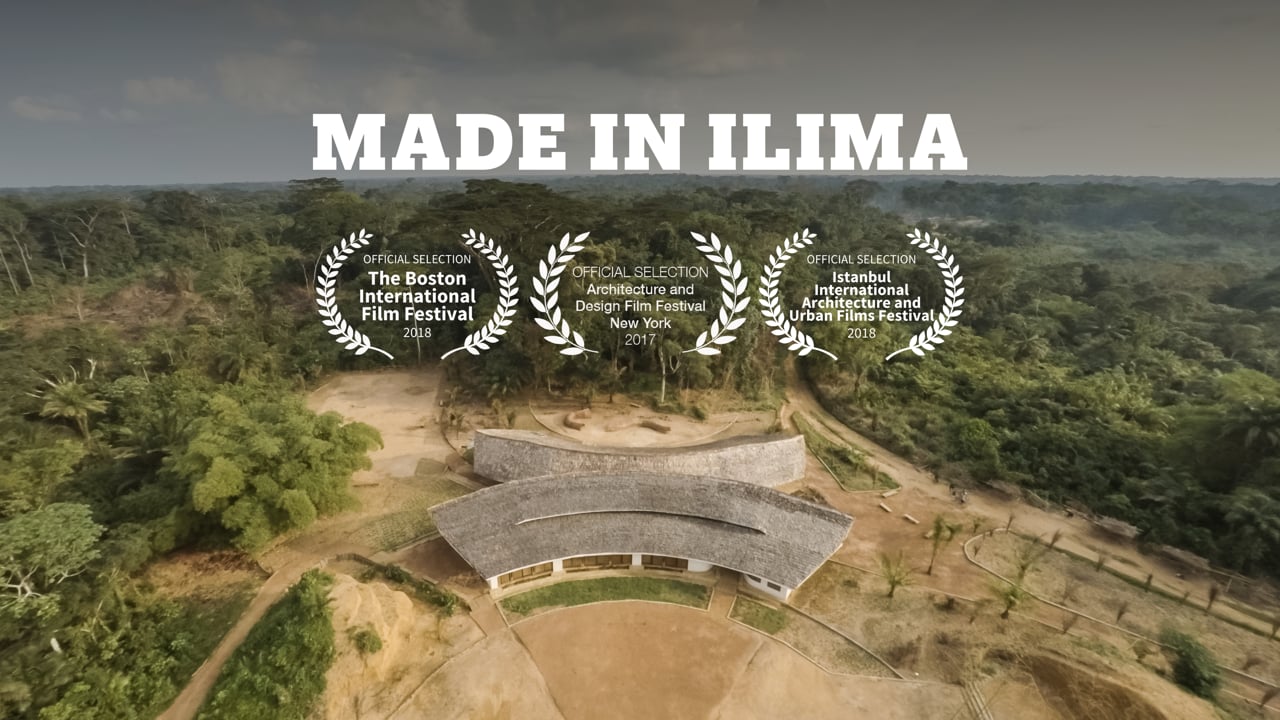
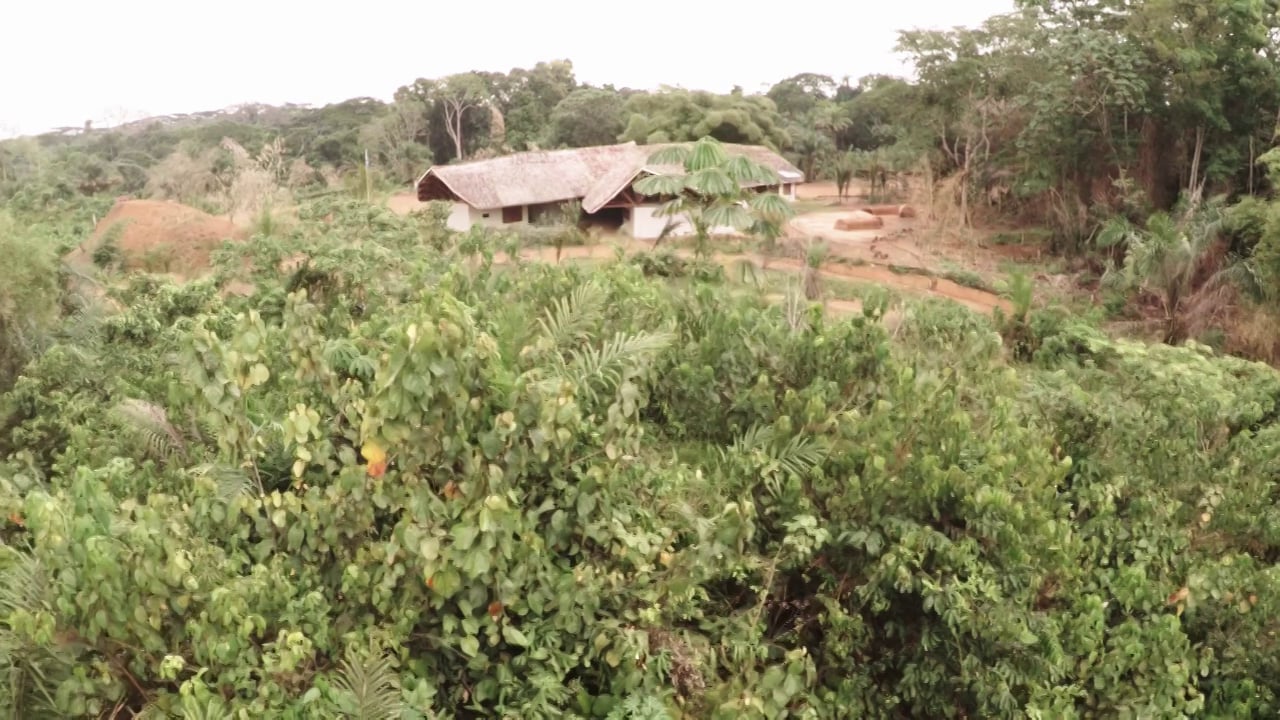
The Ilima community is one of the most isolated in the world, located deep in the jungle of the Democratic Republic of the Congo.

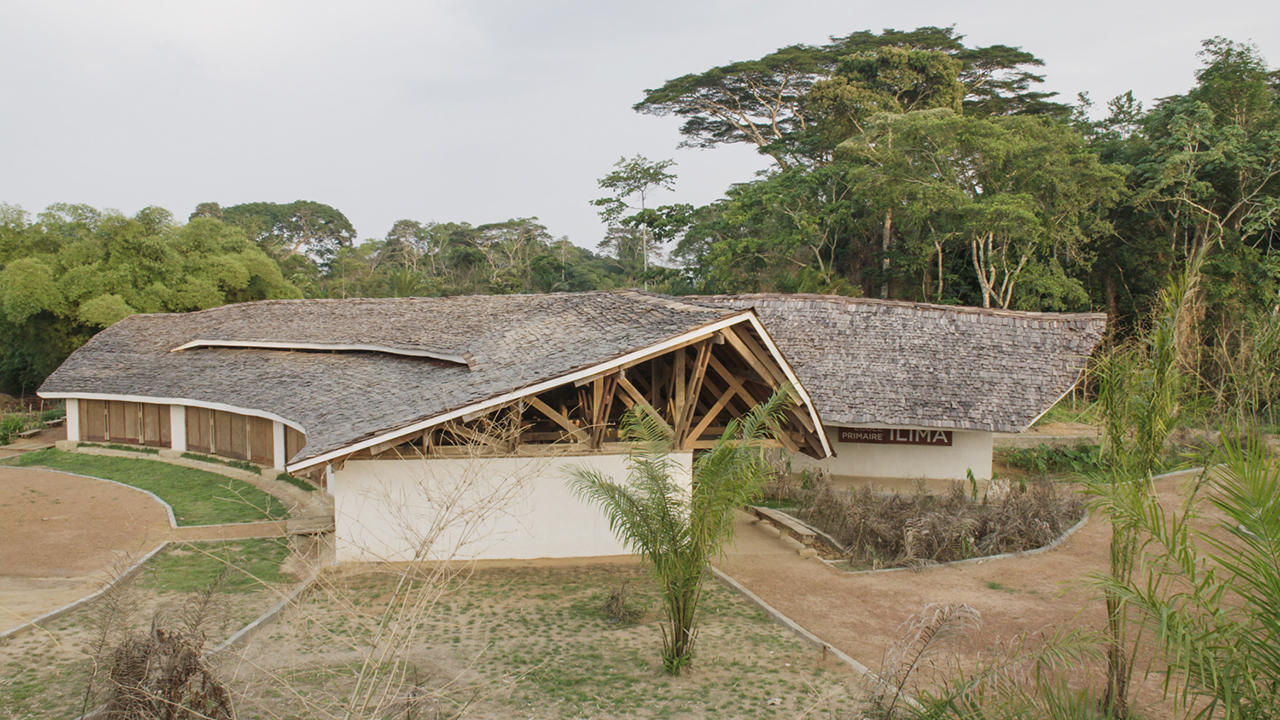
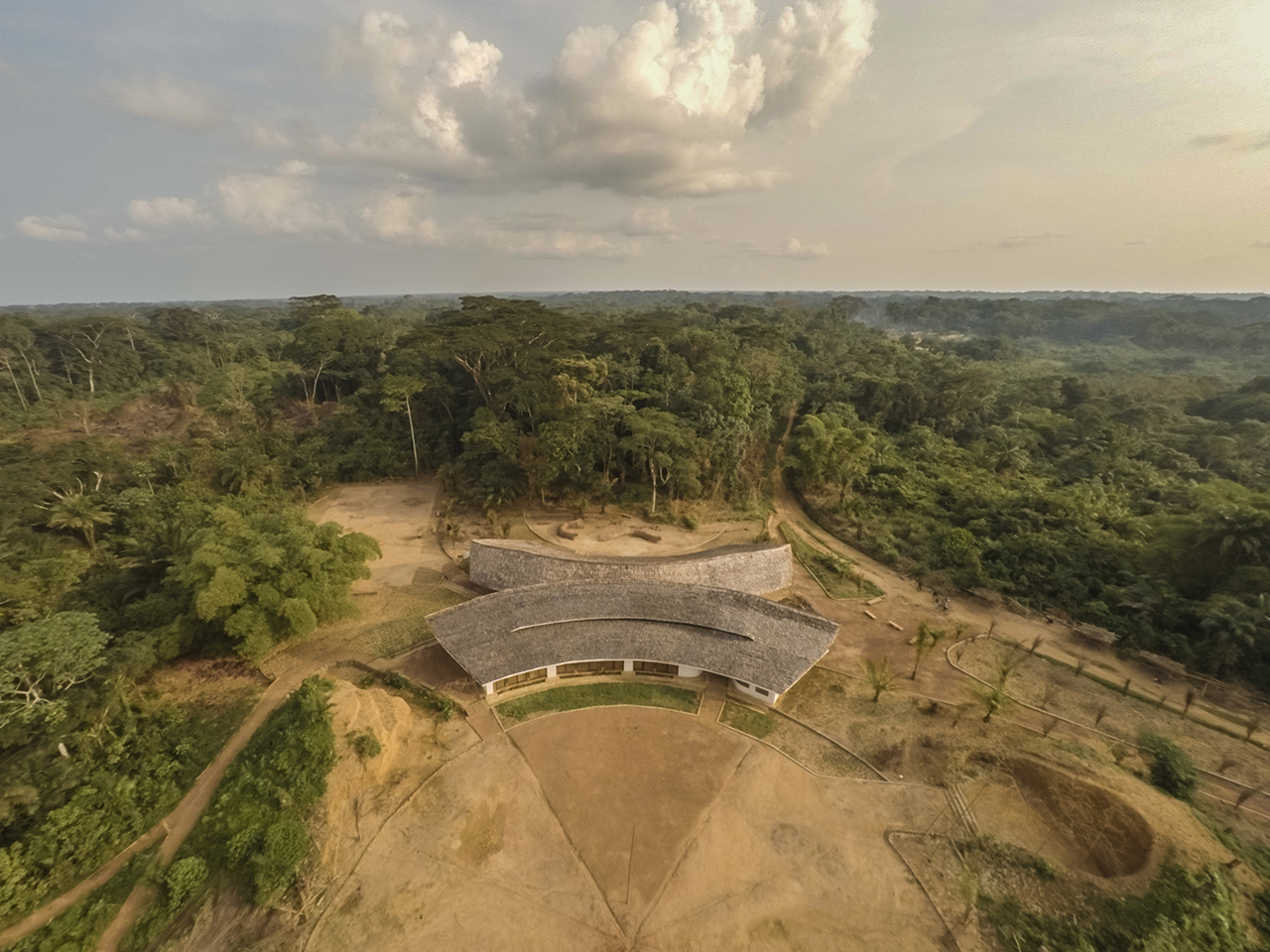
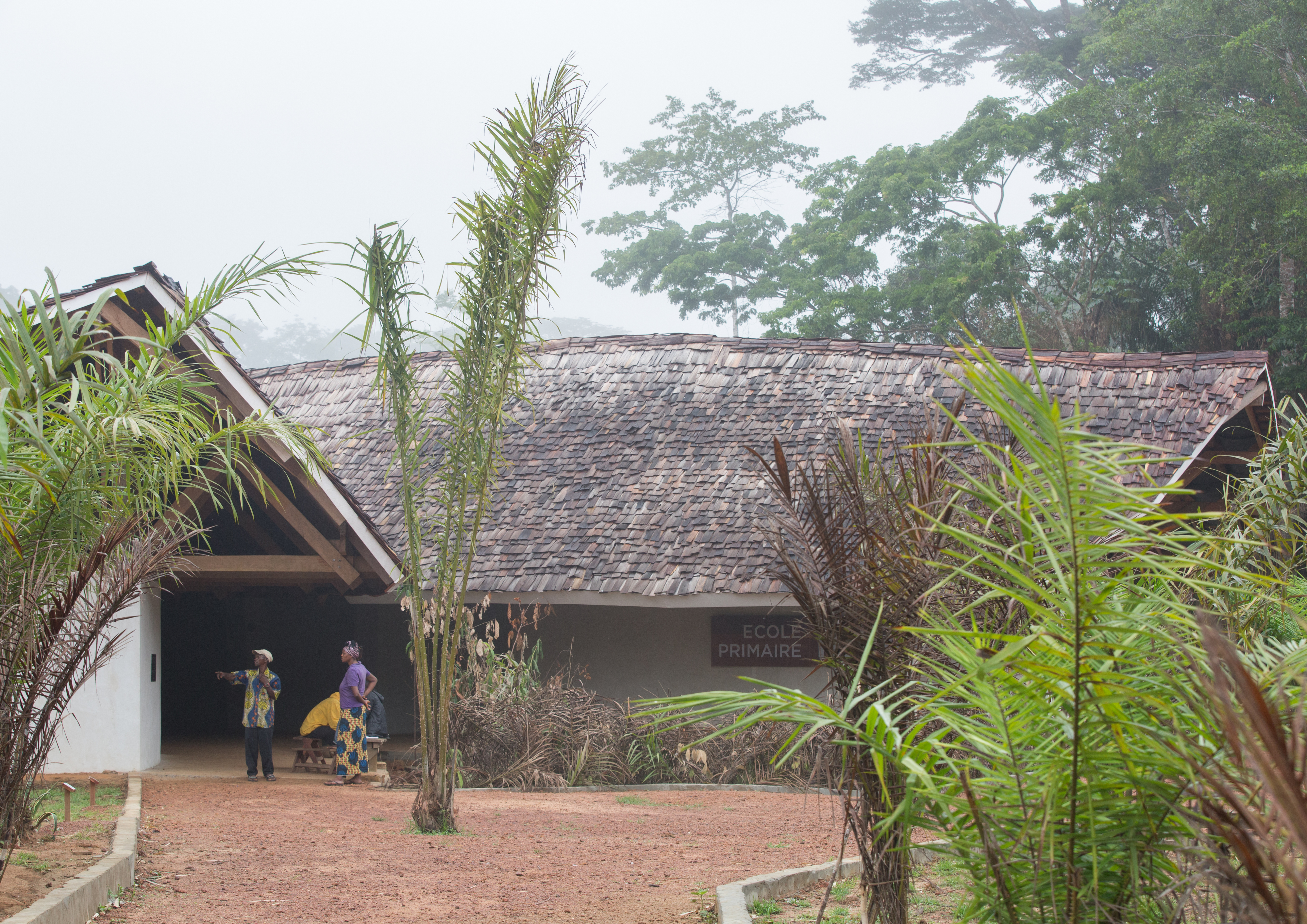
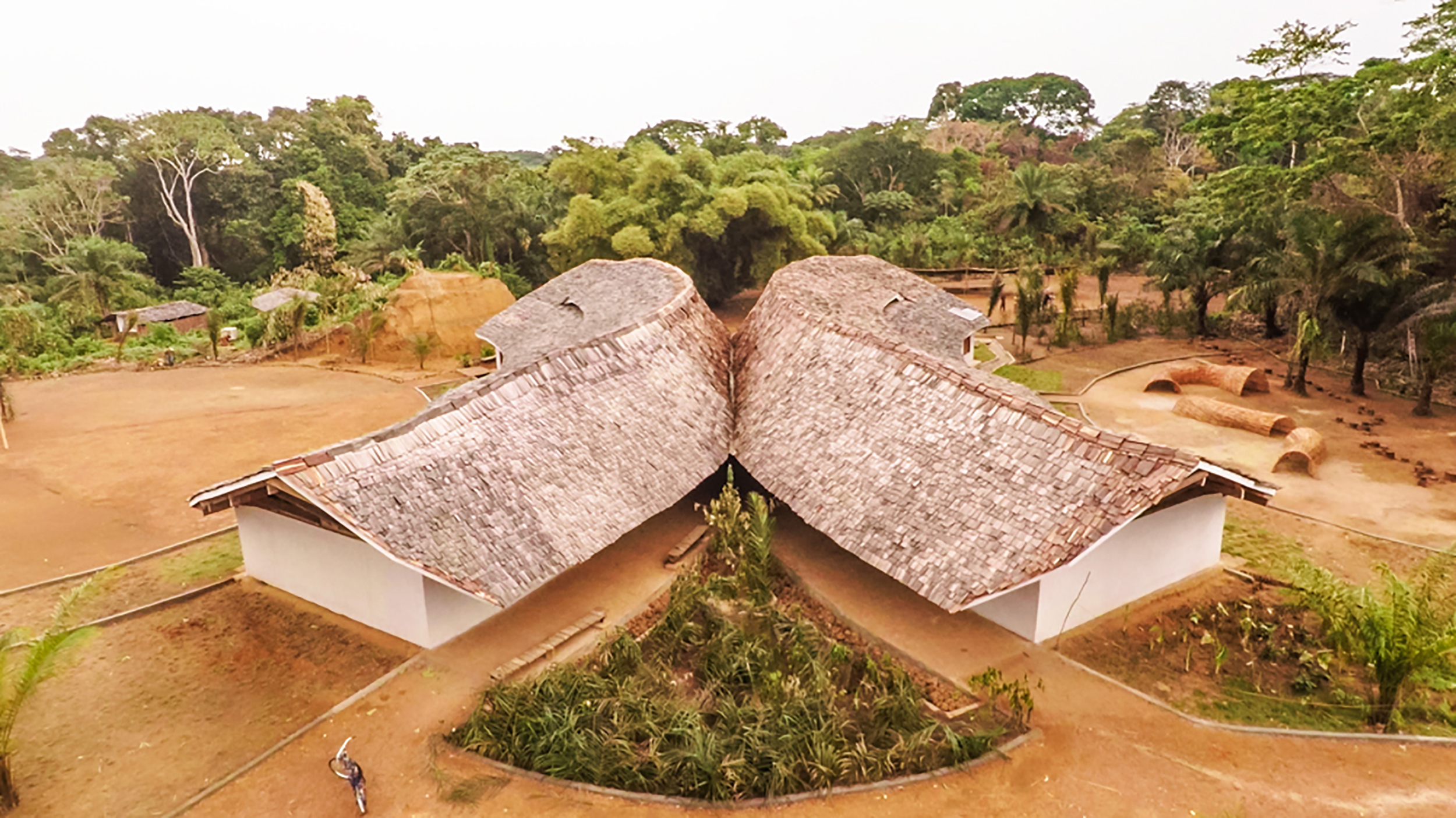
Photo of Ilima Primary School, View of whole building highlighting the pitched roof and structure

For generations, the people have coexisted with endangered wildlife in the surrounding forest, but as the pace of development has increased, this fragile ecosystem has suffered. The African Wildlife Foundation recognized Ilima as one of thirty-five locations in need of investment as part of their African Conservation Schools initiative.

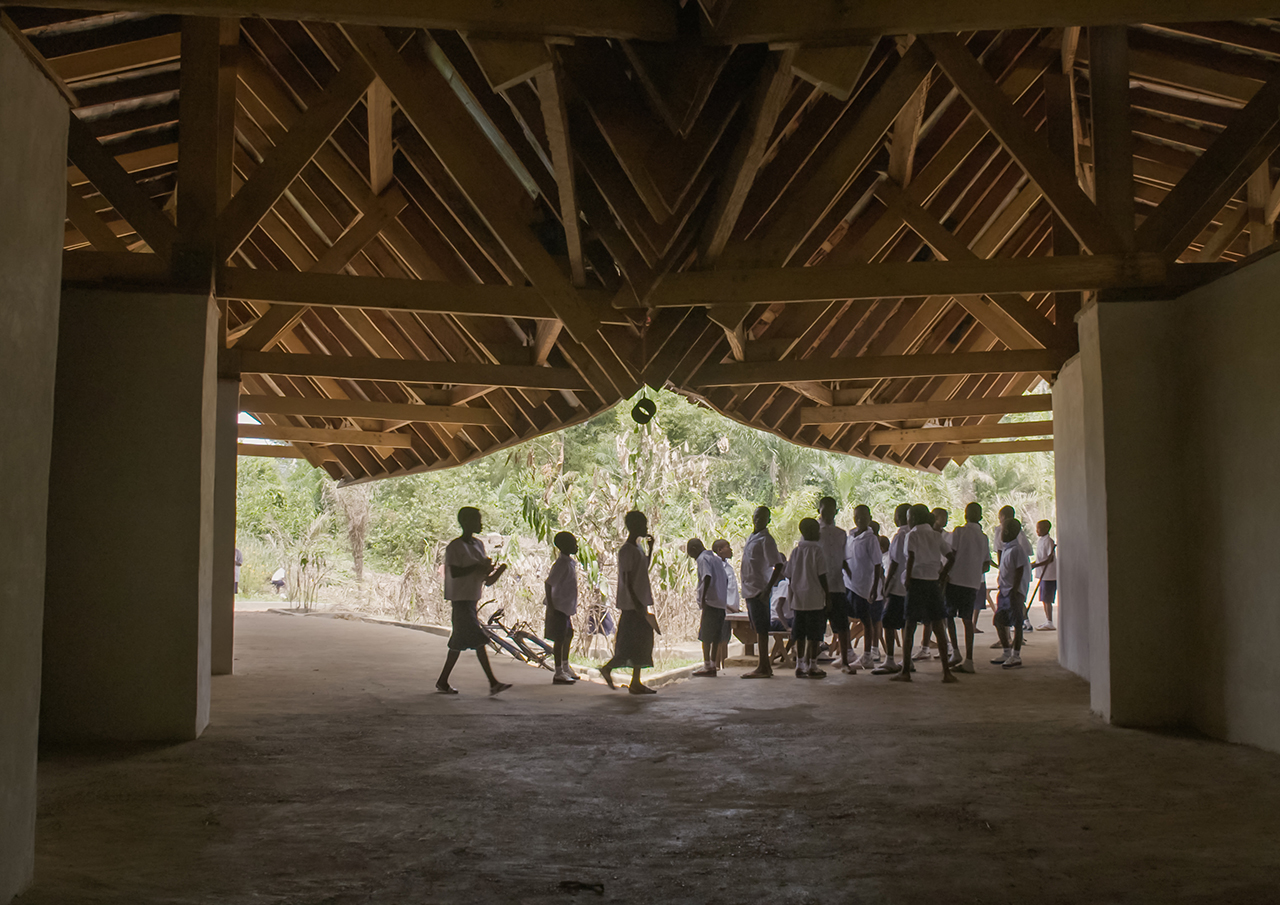
Photo of Ilima Primary School, View from the Hallway to the Exterior Landscacpe and of the school children gathering

The Conservation Schools amplify the foundation’s mission of protecting people and wildlife by focusing specifically on primary education and functioning as a paradigm for how wildlife conservations can improve lives through community empowerment.

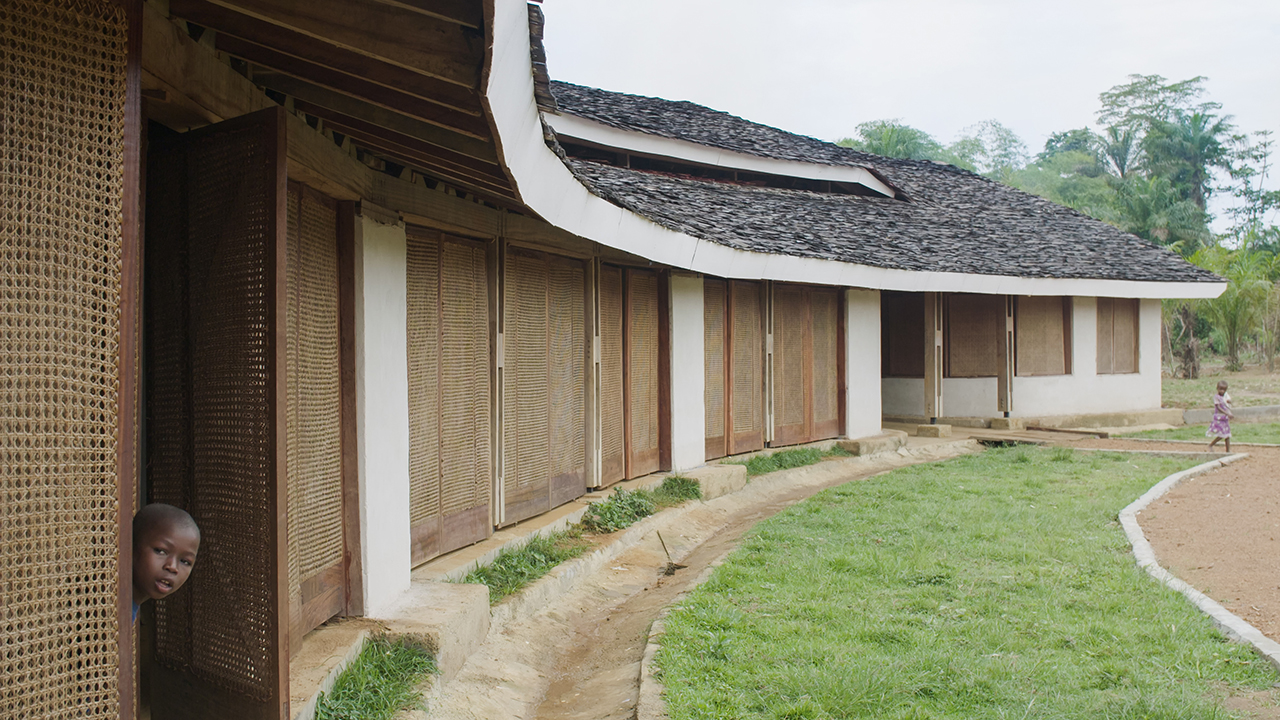
Photo of Ilima Primary School, View of the concave wall and custom screened doorways
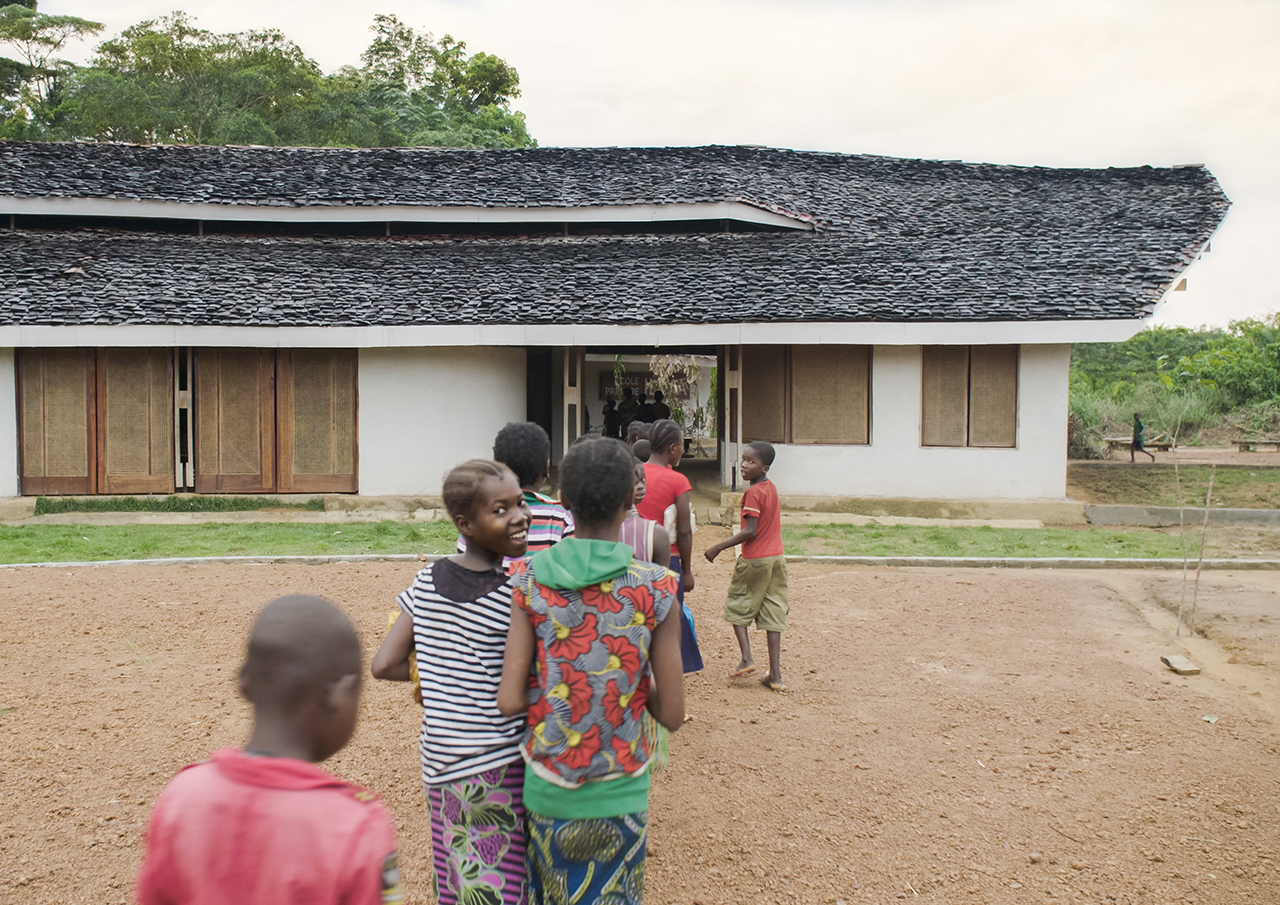
Photo of Ilima Primary School, View of hte school children lining up to go into the school from the Courtyard
Photo of Ilima Primary School, View of the School and surrounding Ilima jungle

The Ilima village sits between two landscapes: farmland and natural habitat. In the design of the campus, MASS identified an opportunity to connect these two landscapes by situating the school in the center, as a bridge between humans and wildlife.

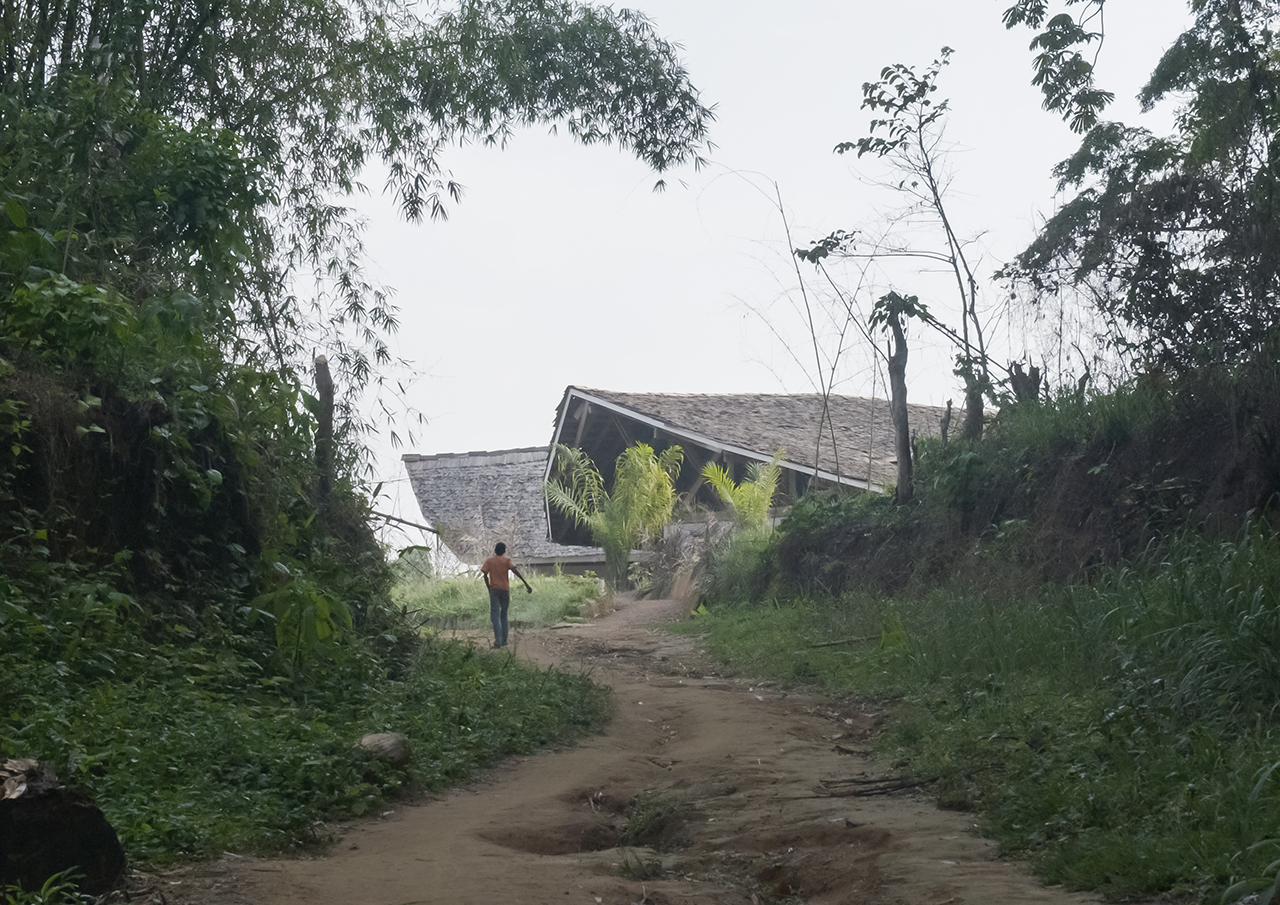
Photo of Ilima Primary School, View Up the Path from the Jungle to the Corner of the Building
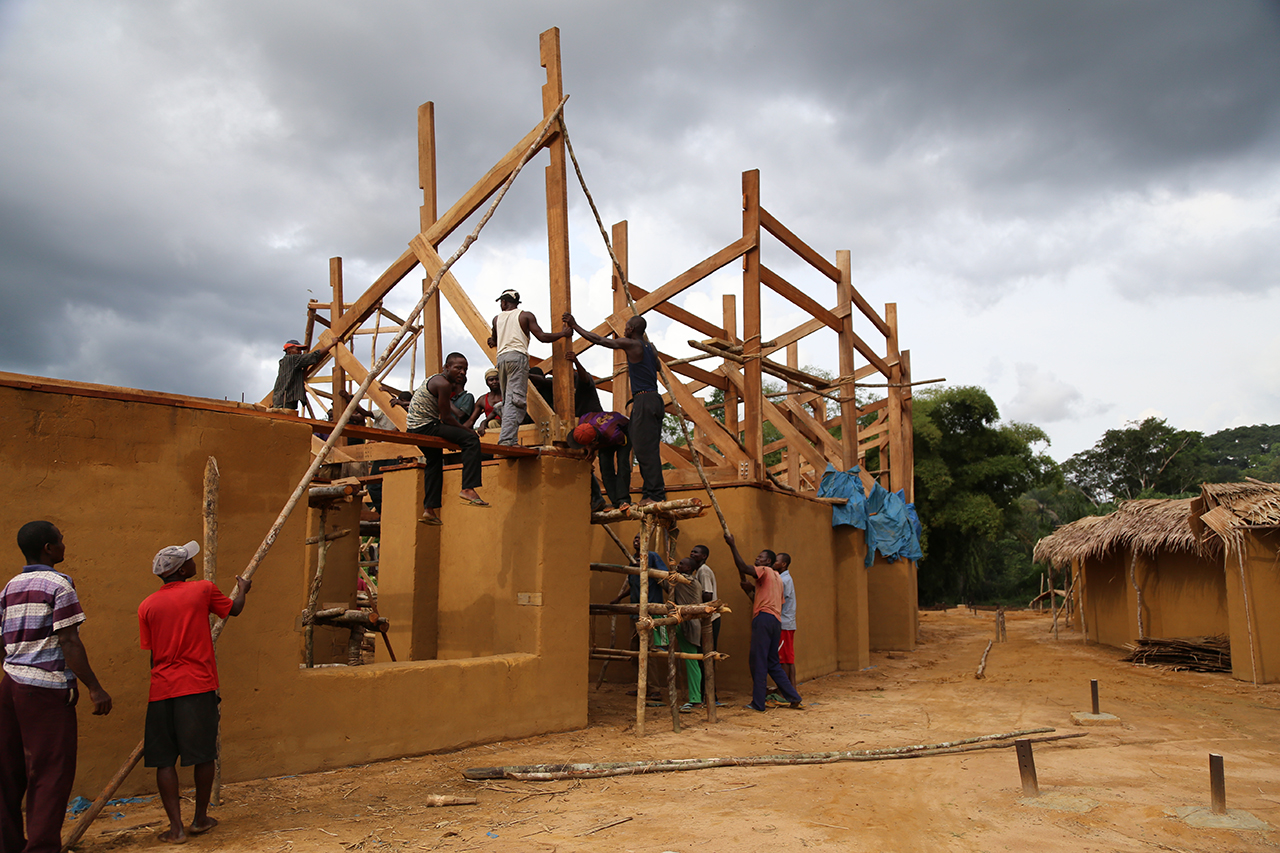
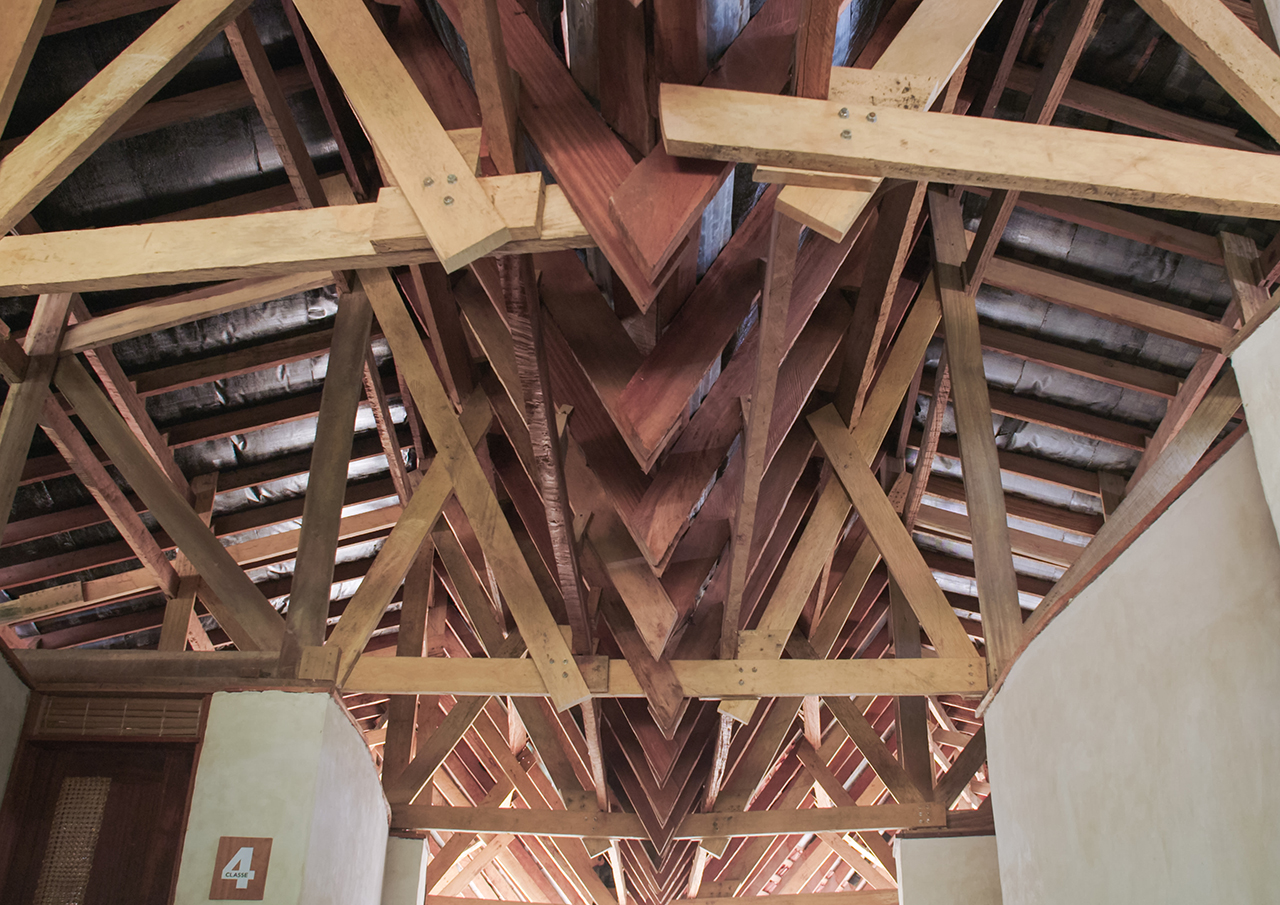
Photo of Ilima Primary School, Community Members hoisting the truss for the school roof
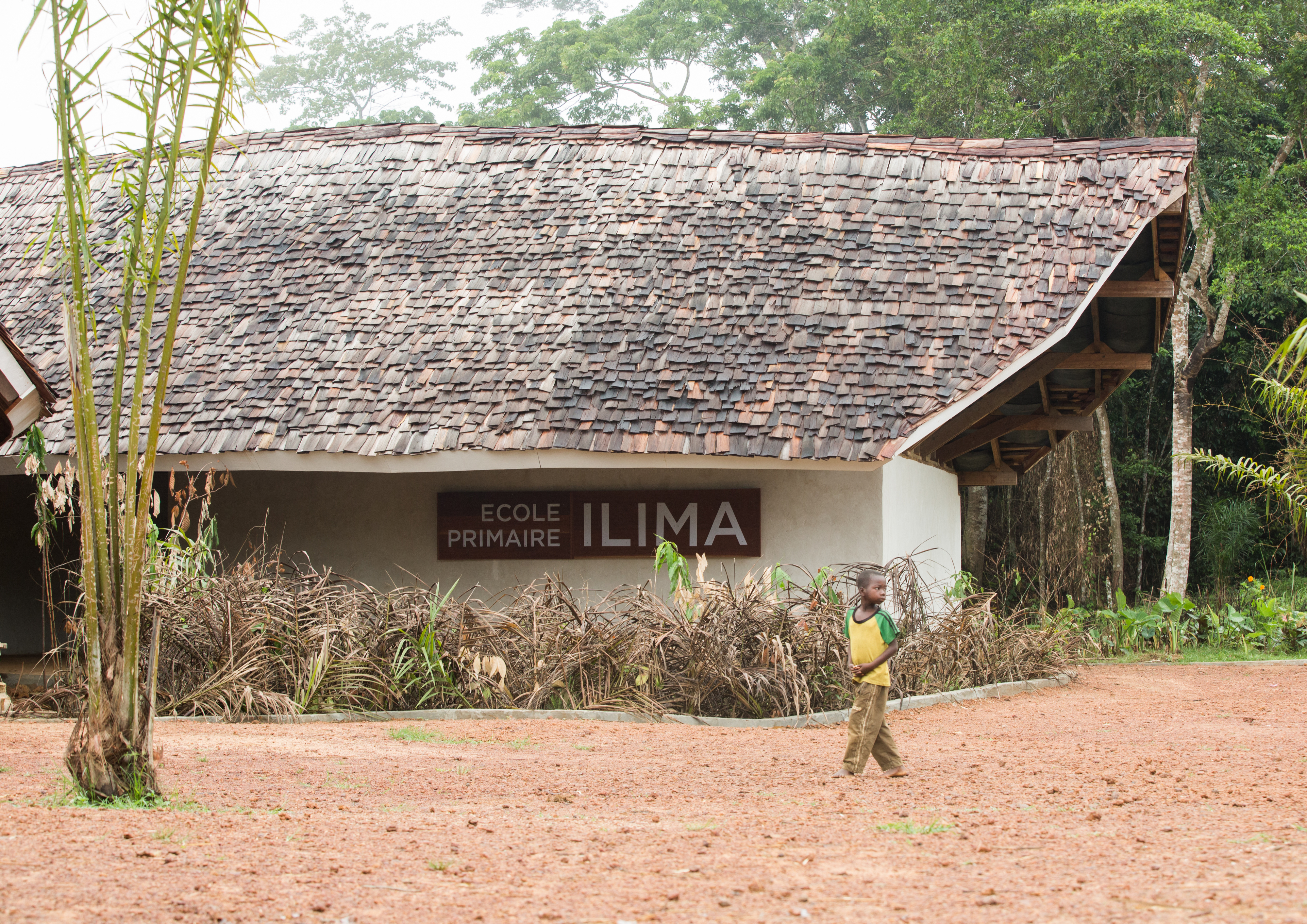
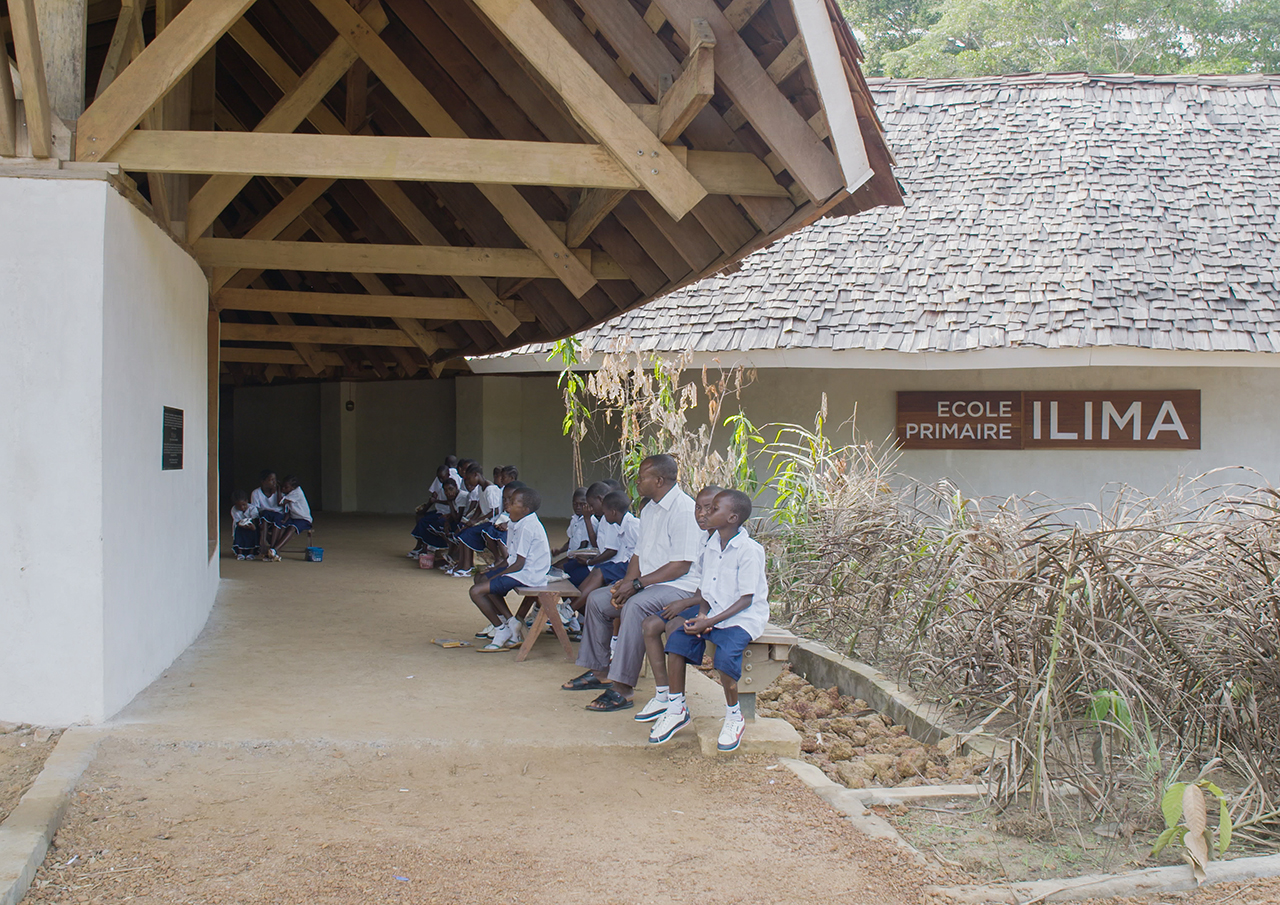
Photo of Ilima Primary School, A view of the school's sign near the entrance to the building

To reinforce this relationship and create thresholds between these landscapes, additional programming is placed around the school, including a dedicated entryway, community space, outdoor learning areas, and play spaces. Inside, the school has six classrooms, an office, reception area, and library.

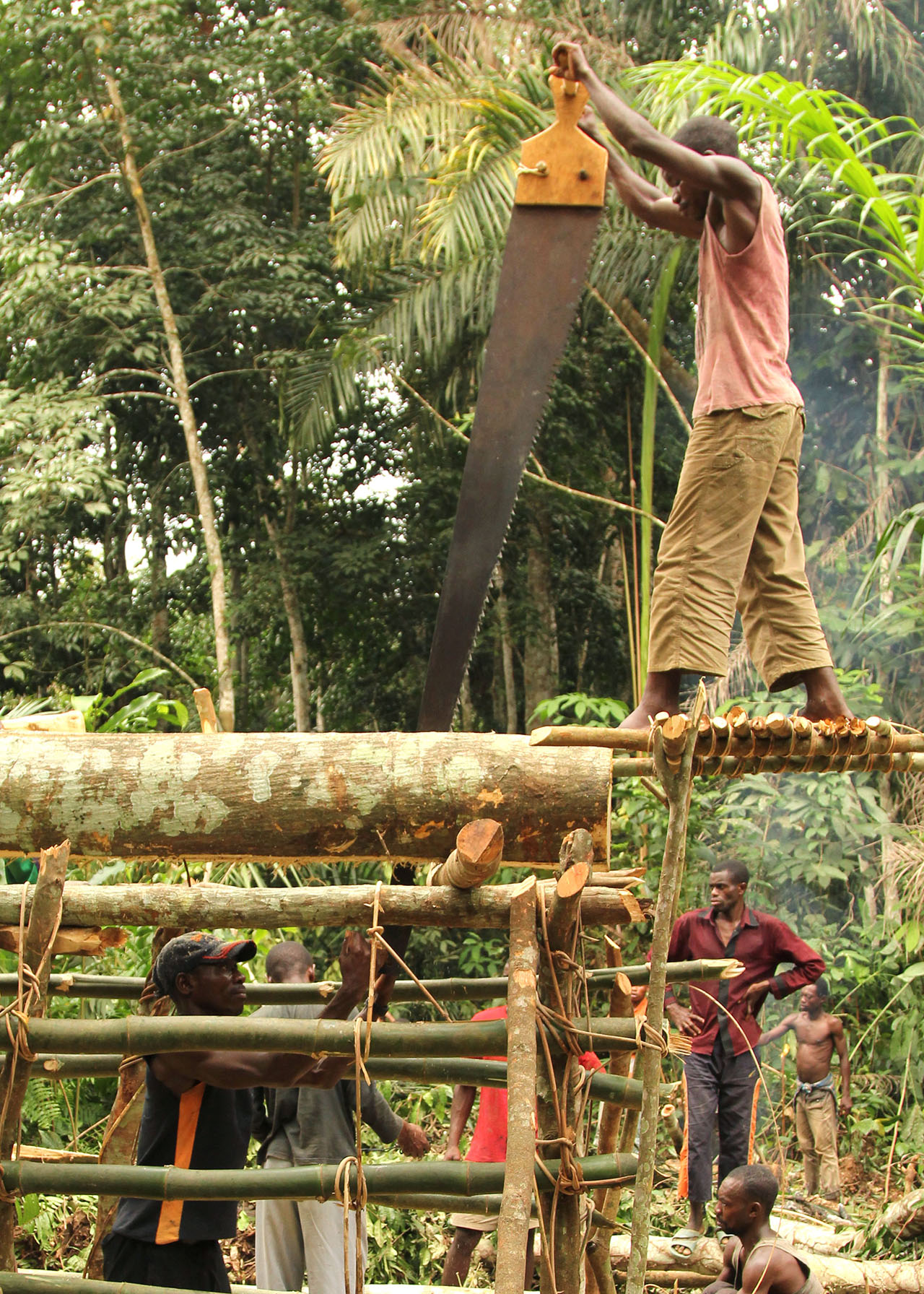
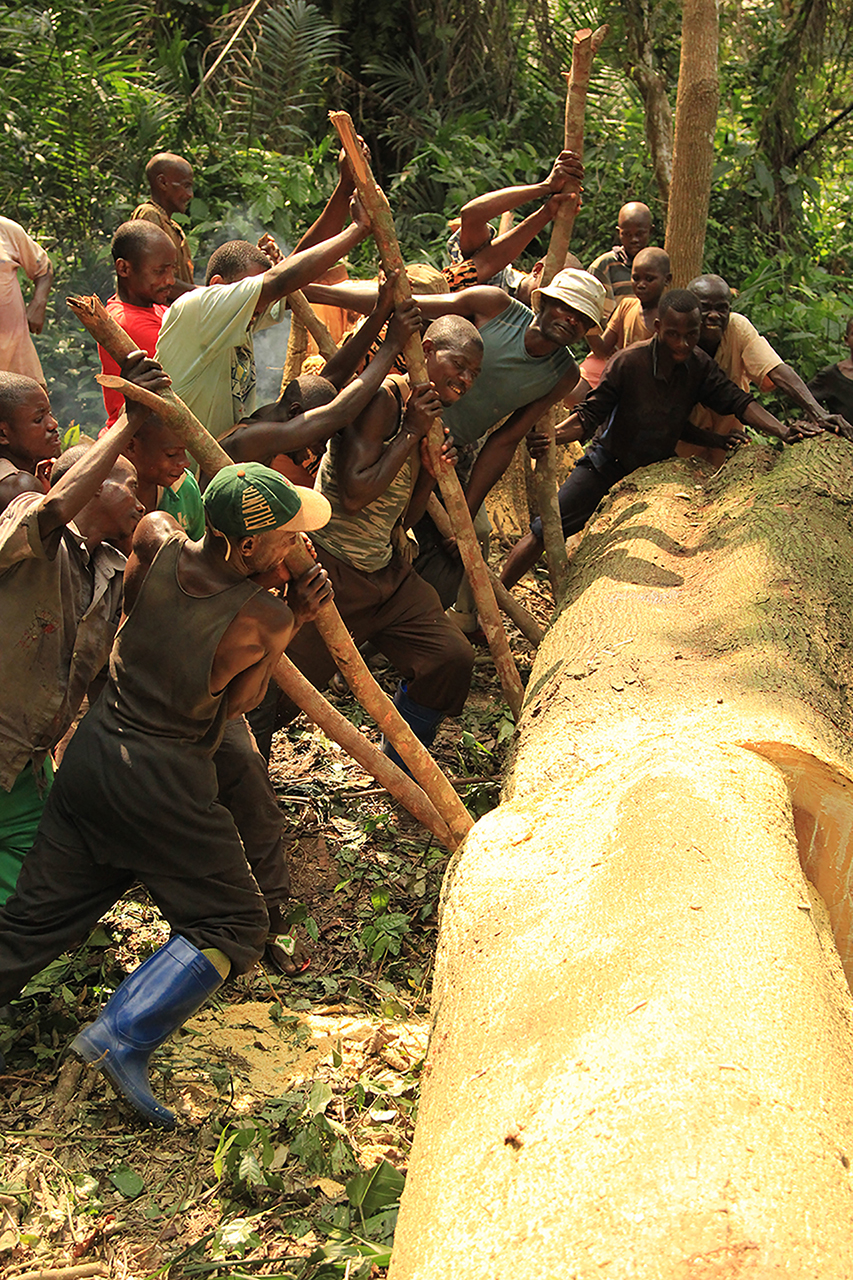
Photo of Ilima Primary School, Two carpenters working the manual saw to create lumbar

The school’s construction was grounded in the belief that conservation and development are most feasible when communities are given the opportunity to develop in harmony with surrounding natural environments. The construction employed custom shingles, mud bricks, and beams made exclusively from local materials harvested on and around the site.

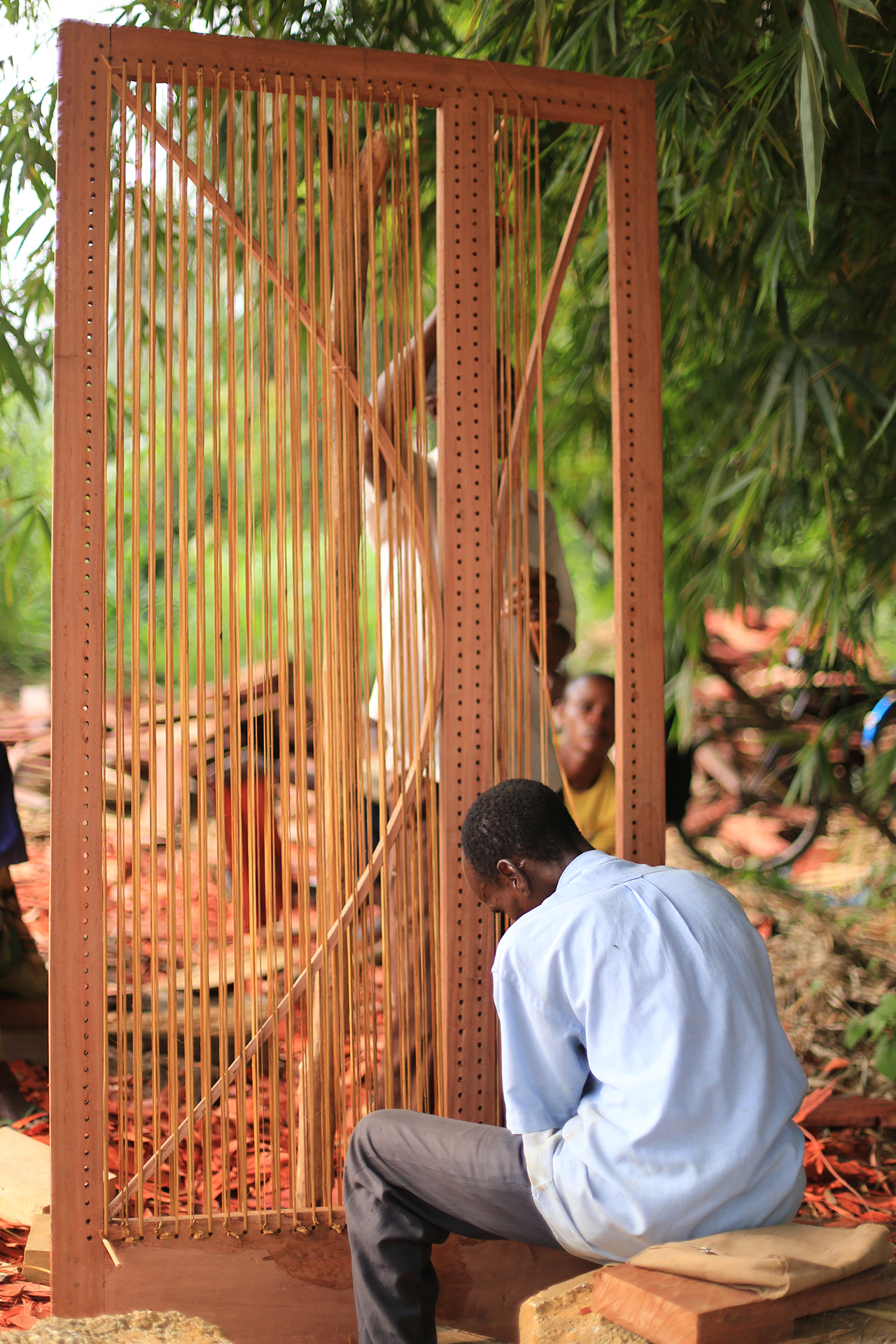
Photo of Ilima Primary School, Construction of weaved door

The school’s play equipment is also made from local materials using local techniques. Educational signage throughout the landscape turns every part of the school and campus into an opportunity for discovery and learning for the students, with the African Wildlife Foundation’s curriculum addressing strategies for wildlife conservation.

Photo of Ilima Primary School, A view of the school's sign near the entrance to the building
Photo of Ilima Primary School, The front entrance of the Ilima Primary School
Photo of Ilima Primary School, A view of students sitting near the entrance to the building

With all materials sourced from the region, and 99 percent of materials sourced from within ten kilometers of the site, the construction of Ilima Primary School resulted in hundreds of thousands of dollars spent regionally.

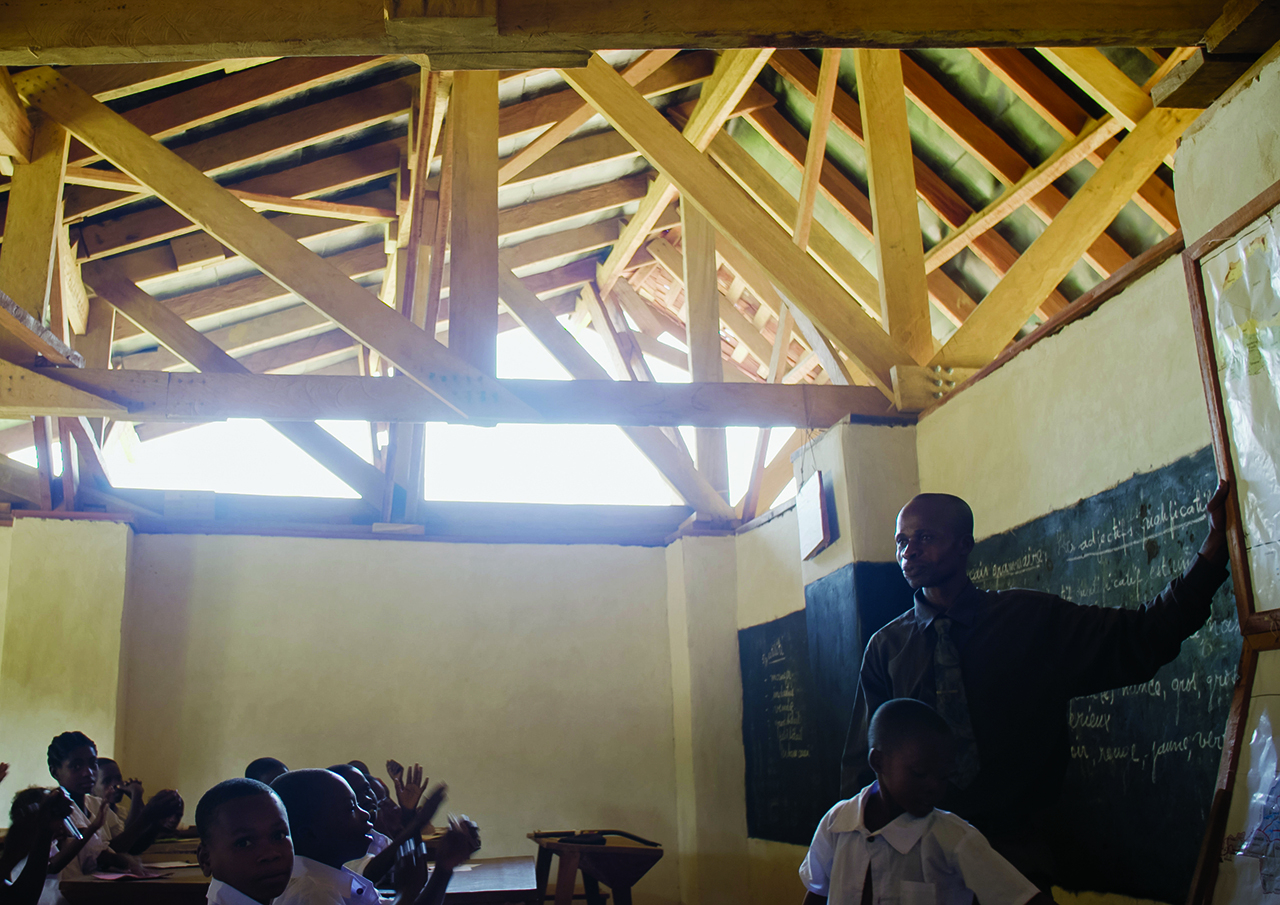
Photo of Ilima Primary School, Interior
Photo of Ilima Primary School, Members of the community pushing a log to start construction of lumbar

Throughout the project, 120 people were employed from the local community, 20 percent of whom were women. Construction also emitted 307,000 kilograms less carbon than the global average for a similarly sized school project.